
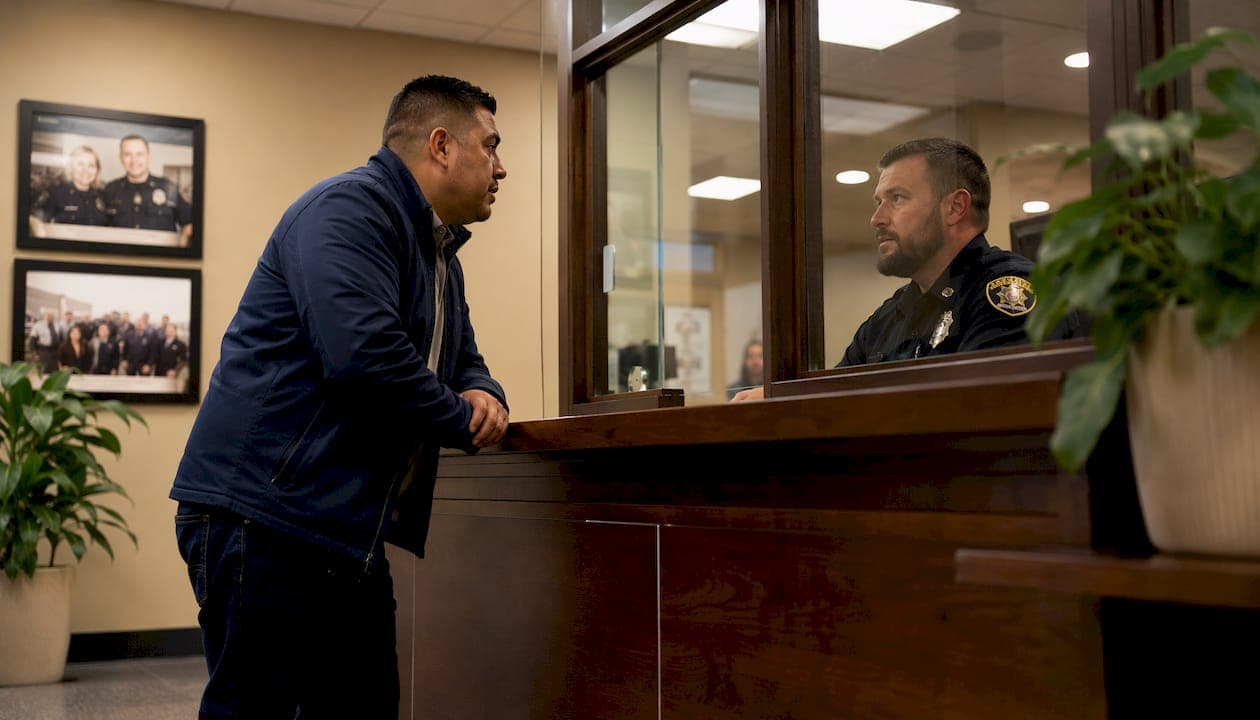
Bail for a trespassing arrest typically runs from $500 to $1,500 for a first-time misdemeanor offense in Dallas County, Texas, with aggravating factors like weapons or trespassing on a habitation pushing that figure higher, often starting at $1,500 to $3,000. A magistrate or judge sets the exact amount, usually within hours of booking. The fastest path to release is simple: confirm the booking details, find out the bail amount, and call a licensed bail agent right away.
Immediate next steps:
- Get the full name, date of birth, and booking number of the person arrested
- Confirm which jail or detention facility is holding them
- Ask the jail or check online for the bail amount set at magistration.
- Call a licensed 24/7 bail agent like Midnight Bail Bonds to start the release process
For most trespassing arrests, bail is available and the process moves quickly once a bond is posted. Simple trespass is rarely held without bail unless the case involves serious threats, a repeat felony pattern, or extreme flight risk.
Table of Contents
- What counts as trespassing and how charge type affects bail
- How much is bail for a trespassing charge?
- How judges decide bail for a trespassing arrest
- What penalties come with a trespassing conviction?
- How to post bail for a trespassing arrest, step by step
- How bail bonds work and what they cost
- When bail gets raised or denied
- How Midnight Bail Bonds helps with trespassing cases
- Questions to ask a bail agent and red flags to watch for
- Key Takeaways
- What families often get wrong about trespassing bail
- Midnight Bail Bonds is ready to help right now
- Useful sources and how to verify bail information
- FAQ
What counts as trespassing and how charge type affects bail
Criminal trespass, in U.S. state practice, means entering or remaining on property without the owner's consent or after being told to leave. That definition covers a wide range of situations, and courts treat them very differently at bail.
Common charge categories:
- Basic misdemeanor trespass — entering posted or fenced property without permission; no weapon, no dwelling. This is the lowest tier and carries the lowest bail.
- Trespass on a habitation — entering or remaining in someone's home or occupied structure. Most states treat this as a more serious offense, often a Class A misdemeanor or higher.
- Aggravated trespass with a weapon — carrying a deadly weapon during the trespass. This can elevate the charge to a state-jail felony in Texas or a wobbler in California.
- Trespass on critical infrastructure or railroad property — power plants, water treatment facilities, railroad tracks. Los Angeles County's bail schedule, for example, sets railroad trespass at $1,000 plus court costs.
- Trespass on restricted or government property — schools, military installations, wildlife management areas.
The key escalation triggers are habitation, a weapon, critical infrastructure, and prior convictions. Any one of those facts can move a charge from a low-level misdemeanor to a felony, which changes bail dramatically.
How much is bail for a trespassing charge?
Bail amounts vary by state, county, and the specific facts of the arrest. The table below shows sourced ranges across several jurisdictions.

| Charge Type | Jurisdiction | Typical Bail Range |
|---|---|---|
| Basic misdemeanor trespass (Class B) | Dallas County, TX | $500–$1,500 |
| Aggravated trespass (habitation/weapon, Class A) | Dallas County, TX | $1,500–$3,000 |
| Trespass (general, first offense) | California | $250–$2,500 |
| Criminal trespass (4th degree) | New Jersey | $1,000–$2,500 |
| Criminal trespass (disorderly persons) | New Jersey | $500–$1,000 |
| Criminal trespass (petty disorderly) | New Jersey | — |
| Railroad property trespass | Los Angeles County, CA | $1,000 + court costs |
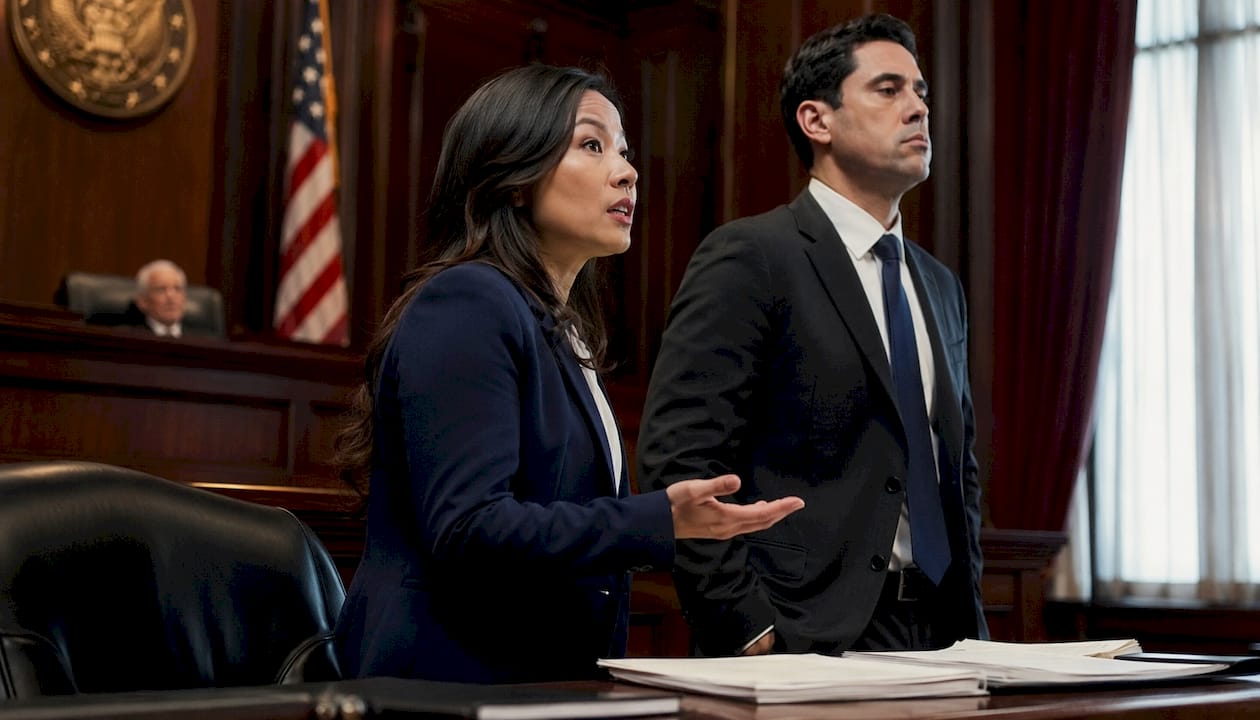
Magistrates set bail case-by-case, using the county bail schedule as a starting point. The schedule gives a baseline; the judge adjusts it based on the defendant's record, the specific facts, and any accompanying charges.
What pushes bail toward the higher end:
- Prior trespass or related convictions
- Trespass on an occupied dwelling or habitation
- A weapon present during the incident
- Concurrent charges (vandalism, assault, burglary)
- Failure to appear on a prior case
A first-time, non-weapon trespass on commercial property in California commonly lands near the lower end of the $250–$2,500 range. With a prior conviction or a weapon, bail typically starts around $1,500 or higher.
How judges decide bail for a trespassing arrest
The charge itself is only one input. Courts weigh several factors before landing on a number, and understanding them helps families anticipate what to expect.
Primary factors courts consider:
- Severity of the offense — felony trespass gets higher bail than misdemeanor trespass, full stop
- Criminal history — any prior record, even unrelated charges, signals higher risk to the court
- Flight risk — stable employment, local family ties, and length of residence in the area all reduce perceived flight risk
- Danger to the community — if the trespass involved threats, a weapon, or a specific victim, the court treats it more seriously
- Accompanying charges — a trespass arrest that comes with vandalism, assault, or a restraining order violation will carry a higher combined bail
- Property type — trespass on sensitive properties (habitation, critical infrastructure) drives bail up regardless of the defendant's history
The court's assessment of flight risk and danger often matters more than the bare charge. A repeat offender trespassing on a neighbor's property after a restraining order will face a very different bail hearing than a first-time trespasser who wandered onto posted land.
Pro Tip: Bring documentation to the bail hearing if possible. A pay stub, a lease agreement, or a letter from an employer showing stable local ties can meaningfully reduce a judge's flight-risk assessment. Defendants with verifiable community roots consistently see lower bail set.
What penalties come with a trespassing conviction?
Penalties inform bail because a judge considers the likely sentence when deciding how much financial incentive the defendant needs to return to court. Higher potential penalties generally produce higher bail.
| Charge Class | Typical Jail Time | Typical Fine |
|---|---|---|
| Petty/infraction trespass | No jail | — |
| Class A misdemeanor | Up to 1 year | — |
| Third-degree felony | 2–10 years | — |
Additional consequences beyond the sentence:
- A criminal record that appears on background checks for employment and housing
- Probation conditions that restrict where the defendant can go
- Escalation on a second offense — what was a misdemeanor can become a felony with a prior conviction
- Immigration consequences for non-citizens, which courts must consider at bail
The collateral consequences of even a misdemeanor conviction are real. Employers routinely screen for criminal records, and a trespass conviction on file can complicate housing applications for years.
How to post bail for a trespassing arrest, step by step
The fastest route to release is confirming the booking details and calling a licensed bail agent immediately. Every hour spent gathering information before calling is an hour the arrested person stays in custody.
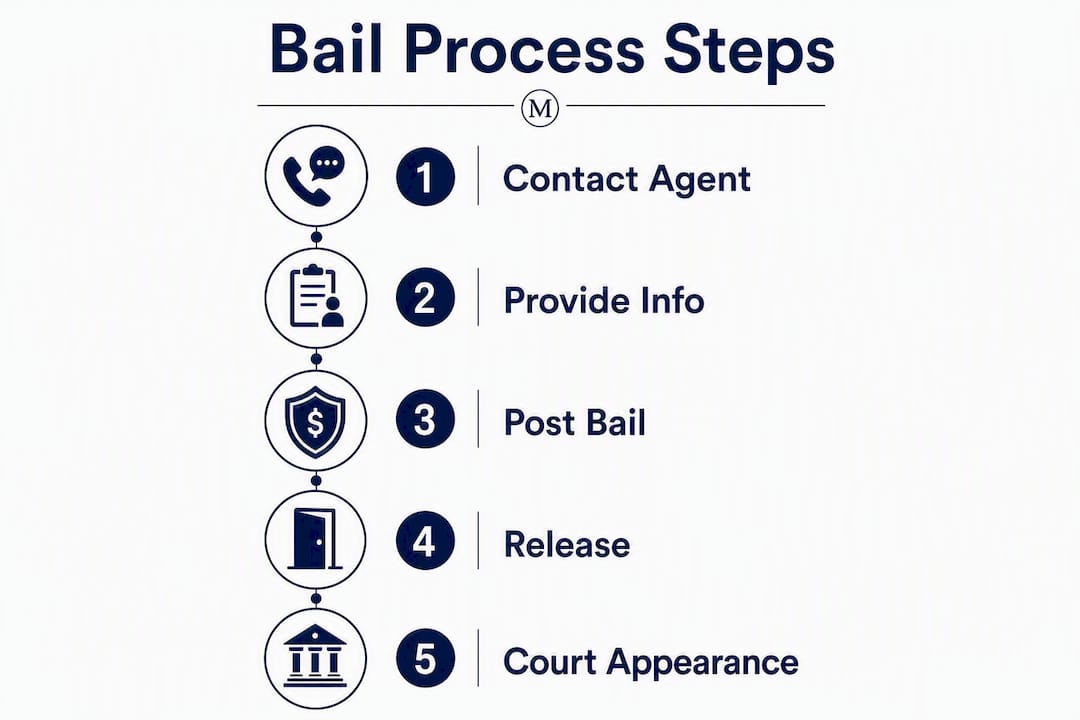
- Confirm the facility. Call the arresting agency or search the county jail's inmate lookup to find where the person is being held.
- Get the booking number and bail amount. Bail is usually set within a few hours of booking at a magistration hearing. The jail can confirm the amount once it is set.
- Decide: cash bail or bail bond. Cash bail means paying the full amount to the court. A bail bond means paying a non-refundable premium (typically 10%) to a licensed agent who posts the full amount.
- Call a licensed bail agent. Provide the full name, date of birth, booking number, facility name, and bail amount. The agent prepares the paperwork.
- Sign the indemnity agreement. The person arranging the bond (the indemnitor) signs a contract agreeing to be responsible if the defendant fails to appear.
- Agent posts the bond. The agent files the bond with the jail. Processing begins.
- Wait for release processing. The jail processes the paperwork and releases the defendant. After a bond posts, release commonly takes a few hours to 24–72 hours depending on facility volume.
Documents and payment methods that speed things up:
- Government-issued photo ID for the person posting bond
- The defendant's full legal name, date of birth, and booking number
- Accepted payment: cash, credit/debit card, Zelle, or financing through the agent
- Proof of address or employment (speeds indemnitor verification)
Pro Tip: Licensed agents with established relationships at local jails can flag a bond for priority processing. That relationship, not just the paperwork, is often what cuts a 24-hour wait down to a few hours. Ask any agent you call whether they have direct contacts at the specific facility.
How bail bonds work and what they cost
A bail bond is a financial guarantee that the defendant will appear in court. The agent posts the full bail amount with the court; the family pays the agent a non-refundable premium for that service.
The math is straightforward: the bond premium is generally a fixed percentage of the bail amount. This fee does not come back regardless of the outcome of the case.
Payment options and collateral:
- Cash, credit card, debit card, Zelle, and financing plans are all accepted by reputable agents
- Collateral (real estate, a vehicle, valuables) may be required for higher bail amounts or higher-risk cases
- Many agents, including Midnight Bail Bonds, offer no-collateral options for qualifying cases
- Payment plans let families spread the premium over time rather than paying it all upfront
Questions to ask any bail agent before signing:
- Are you licensed in this state? (Ask for the license number.)
- What is your exact fee, and is it state-regulated?
- Do you offer payment plans or financing?
- Is collateral required for this bail amount?
- Are you available 24/7, including nights and weekends?
- What happens to my collateral if the defendant fails to appear?
Payment plans work by splitting the premium into installments. The agent still posts the full bond immediately; the family pays the fee over an agreed schedule. No-collateral options are common for lower bail amounts and defendants with stable community ties. For larger bail amounts or defendants with prior failures to appear, an agent may require property or another asset as security.
When bail gets raised or denied
Bail is rarely denied outright for simple trespass. Judges reserve no-bail holds for cases involving a genuine threat to public safety or a near-certain flight risk.
Aggravating conditions that raise bail significantly:
- Carrying a deadly weapon during the trespass
- Trespassing on critical infrastructure (power grids, water systems, pipelines)
- Active restraining order or protective order against the defendant
- Prior failures to appear on any charge
- Concurrent felony charges (burglary, assault, stalking)
- Repeat trespass pattern targeting the same victim or property
Trespassing on a habitation or carrying a weapon can reclassify a Class B misdemeanor to a felony, raising bail from $500–$1,500 up to $1,500–$3,000 or higher, depending on county and other circumstances.
Warning: Misrepresenting information at a bail hearing or to a bail agent carries serious consequences. If a defendant fails to appear after bond is posted, the court issues a bench warrant, the bond is forfeited, and the indemnitor (the person who signed the bond) becomes liable for the full bail amount. The agent will then pursue recovery, which can include collateral seizure.
How Midnight Bail Bonds helps with trespassing cases
Midnight Bail Bonds is a licensed 24/7 bail bond service operating across California, available any hour of the day or night to start the release process for trespassing arrests.
What Midnight Bail Bonds offers:
- 24/7 availability — agents answer calls at 3 AM on a Sunday the same as a Monday morning
- Instant inmate lookup — the team can locate a detained person and confirm bail amount quickly
- Flexible payment plans — spread the premium over time; no need to come up with the full fee upfront
- No-collateral options — available for many qualifying cases, removing a major barrier for families
- Bilingual support — English and Spanish agents available
- Accepted payments — cash, credit card, debit card, Zelle, and financing
Midnight Bail Bonds operates under California's state-mandated premium model. The non-refundable fee is set by state regulation, so the rate is consistent and transparent. Client information is handled with full discretion.
To get started, have the following ready: the defendant's full legal name, date of birth, booking number, and the name of the facility. Call Midnight Bail Bonds and an agent will walk through the rest.
Questions to ask a bail agent and red flags to watch for
Not every bail agent operates the same way. A few quick questions before signing anything can protect a family from hidden fees or unlicensed operators.
Ask every agent:
- What is your state license number, and can I verify it online?
- Is the premium you are quoting the state-regulated rate?
- Do you have a written contract I can review before signing?
- What are the exact collateral requirements for this bond?
- What happens if the defendant misses a court date?
Red flags that signal a problem:
- Agent cannot or will not provide a license number
- Quoting a fee significantly above the state-regulated premium
- Requesting the full bail amount as a "fee" (that is cash bail, not a bond)
- Verbal-only agreements with no written contract
- Pressure to sign immediately with no time to review terms
- No physical address or verifiable business presence
To verify a bail agent's license in California, check the California Department of Insurance license lookup tool at doi.ca.gov. Every licensed bail agent in the state has a verifiable record there. In other states, the state insurance commissioner or department of financial services maintains equivalent databases.
Key Takeaways
Trespassing bail for a first-time misdemeanor typically runs within a moderate range, and a licensed bail agent can post bond for a non-refundable premium generally calculated as a fixed percentage, making the out-of-pocket cost proportional to the bail amount.
| Point | Details |
|---|---|
| Typical bail range | First-time misdemeanor trespass in Dallas County, TX usually runs from $500 to $1,500; aggravated cases involving habitation or weapons may be higher, often starting at $1,500 to $3,000. |
| Top factors that raise bail | Weapons, trespass on a habitation, critical infrastructure, prior convictions, and concurrent charges all push bail higher. |
| Bond premium cost | Bail agents charge a non-refundable premium generally calculated as a fixed percentage of the bail amount. |
| Payment options | Cash, credit card, debit card, Zelle, and financing plans are available through reputable agents. |
| Midnight Bail Bonds | Licensed 24/7 California bail bond service with no-collateral options, bilingual support, and instant inmate lookup. |
What families often get wrong about trespassing bail
Most people calling about a trespassing arrest assume the charge is so minor that bail will be trivial or even waived. That is often true for a first offense on commercial property. But the cases that catch families off guard are the ones where a single aggravating fact, a weapon in a pocket, a house instead of a field, a prior failure to appear, turns a $500 bail into a $3,000 bail overnight.
The other thing families underestimate is time. Every hour spent searching for information online is an hour the arrested person sits in a holding cell. The bail amount is not the only variable. Facility processing speed matters, and agents with direct contacts at a jail can move a release from 24 hours to a few hours. That is not a marketing claim; it is how jail processing actually works. A bond filed at 2 AM by an agent the jail staff knows gets processed differently than one filed cold by a first-time caller.
The practical advice is simple: call a licensed agent first, gather documents second. The agent will tell you exactly what they need. Spending 45 minutes researching online before making that call rarely changes the outcome and always delays it.
Midnight Bail Bonds is ready to help right now
When someone you care about is sitting in a California jail on a trespassing charge, the clock matters. Midnight Bail Bonds offers 24/7 licensed bail bond service across California, with flexible payment plans, no-collateral options for qualifying cases, and bilingual English/Spanish support. Accepted payments include cash, credit card, debit card, and Zelle, with financing available for families who need it.
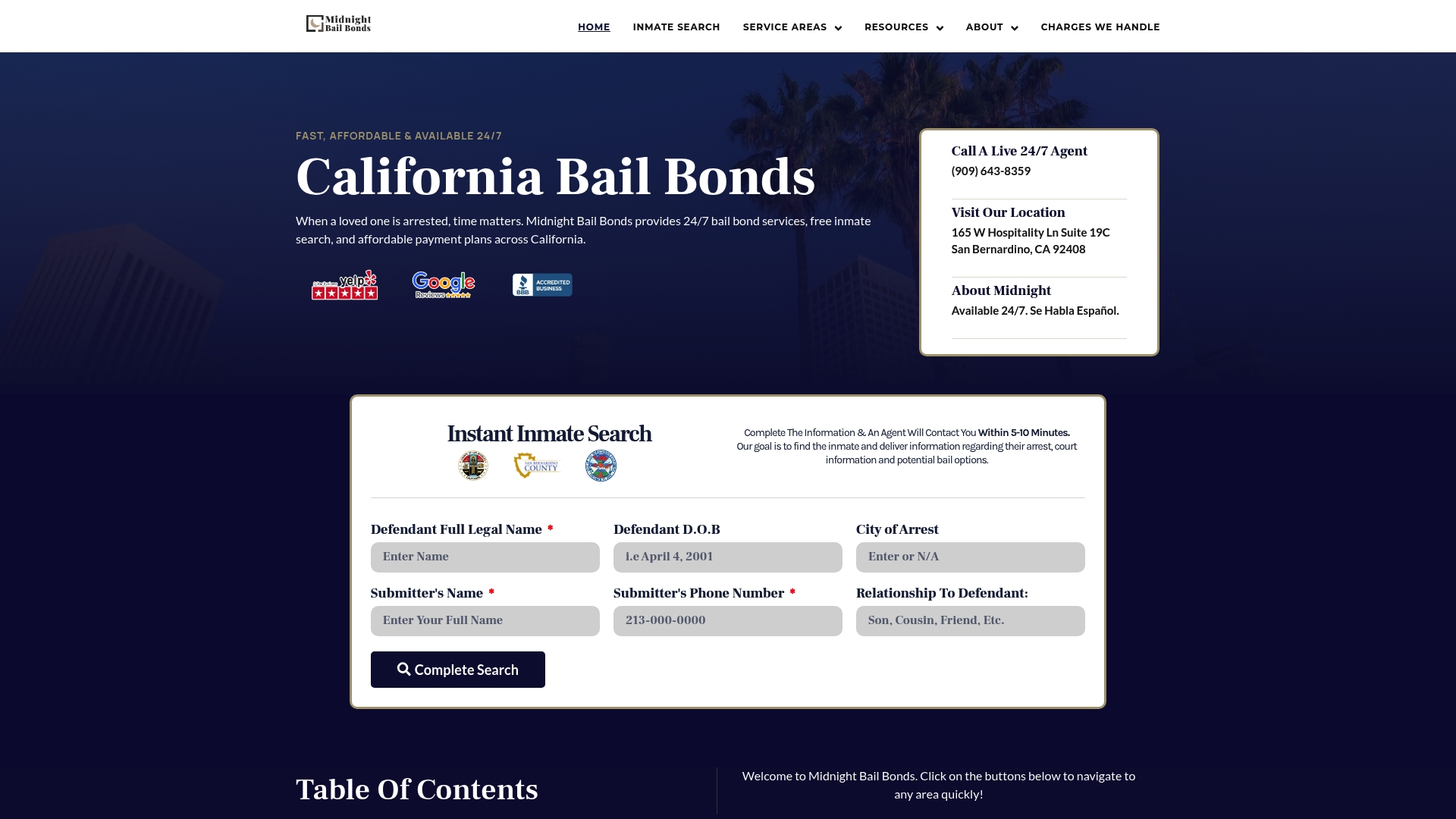
Call or contact Midnight Bail Bonds any time, day or night. Have the defendant's full name, date of birth, booking number, and facility name ready, and an agent will handle the rest. Visit midnightbail.com to start the process or use the instant inmate lookup to confirm booking details before you call.
This article provides general information about bail and is not legal advice. Bail amounts, laws, and procedures vary by state and county. Consult a licensed attorney for guidance specific to your situation.
Useful sources and how to verify bail information
Primary sources to check:
- County jail bail schedules — most county courts publish their current bail schedules online; search "[county name] bail schedule PDF"
- San Francisco Superior Court — publishes its felony and misdemeanor bail schedule annually, effective July 1, 2024
- Los Angeles County bail schedule — the LA County misdemeanor bail schedule lists specific amounts for trespass-related offenses
- State statutes — search your state's penal code for the trespass statute (e.g., California Penal Code § 602; Texas Penal Code § 30.05)
- State bail agent licensing board — California: California Department of Insurance at doi.ca.gov; other states maintain equivalent databases through the state insurance commissioner
Verification tips:
- Confirm the bail amount directly with the jail before calling an agent; amounts can change after a hearing
- Verify any agent's license number before signing a contract
- For legal strategy (challenging the charge, requesting a bail reduction hearing), consult a licensed criminal defense attorney
| Resource | What It Covers |
|---|---|
| County bail schedule | Baseline bail amounts by charge type for that jurisdiction |
| State penal code | Charge classifications, penalty ranges, and definitions |
| State insurance dept. | Bail agent license verification |
| Midnight Bail Bonds | 24/7 licensed bond service, inmate lookup, payment options |
FAQ
How much is bail for a trespassing charge?
Bail for a basic misdemeanor trespass typically runs from $500 to $1,500 in Dallas County, Texas. Aggravated cases involving a weapon or occupied dwelling often start at $1,500 to $3,000 or higher.
What factors make trespassing bail higher?
A weapon, trespass on a habitation, critical infrastructure, prior convictions, concurrent charges, or a prior failure to appear can all significantly raise the bail amount set by a magistrate.
How do I pay for a trespassing bail bond?
A licensed bail agent charges a non-refundable premium, commonly 10% of the total bail amount. Midnight Bail Bonds accepts cash, credit card, debit card, Zelle, and financing, with no-collateral options available for qualifying cases.
How long does release take after bail is posted?
Release after a bond is posted commonly takes from a few hours up to several days, depending on facility volume and processing speed. Licensed agents with jail contacts can often speed that timeline.
Can bail be denied for a trespassing charge?
Bail is rarely denied for simple trespass. Judges reserve no-bail holds for cases involving serious threats, a repeat felony pattern, or extreme flight risk, not routine misdemeanor trespass.