
Bail is set in the large majority of drug-related DUI arrests, and the amount depends heavily on the state, the county, and whether the charge stayed a misdemeanor or jumped to a felony. The fastest path out of custody is usually calling a defense attorney and a licensed bail bonds agent within the first hour, since both can start working before the initial court appearance. Watch for a parallel DMV or license action and any added possession charge, since both tend to push the total cost higher.
TL;DR:
- Bail amounts vary by county and charge severity, with higher payments for repeat offenses, injuries, or trafficking-level possession.
- Acting quickly with a defense lawyer and a bail bonds agent within the first hour can significantly reduce custody time.
- The initial court appearance within 24 to 48 hours is when bail is first set, factoring in safety risks and whether additional charges are stacked.
- Bail for a drug DUI with added possession charges usually requires confirming the county’s specific bail schedule and stacking rules before choosing payment methods.
- Reducing bail involves immediate legal action, such as filing a motion before the hearing, supported by proof of community ties and proposed conditions.
Table of Contents
- What Bail Looks Like in California, Florida, Nevada, Georgia, and Minnesota
- How and When a Judge Decides Your Bail
- What Pushes Drug DUI Bail Higher
- Cash Bail Versus a Bail Bond: Costs and Payment Options
- Asking a Judge to Lower Bail: What Actually Moves the Needle
- Staying Compliant After Release: Court Dates and DMV Actions
- How Midnight Bail Bonds Fits Into This Process
- The Part of This Process Most Families Get Wrong
- Get Fast, California-Specific Help With Drug DUI Bail
- Where These Numbers and Rules Come From
- Sources
- FAQ
What Bail Looks Like in California, Florida, Nevada, Georgia, and Minnesota
Bail schedules are set at the county level, so two people arrested for the same conduct in different counties of the same state can face different numbers. Still, some patterns hold across a handful of high-volume states.
- California: A first-offense misdemeanor drug DUI under Vehicle Code §23152(f) usually stays in the lower misdemeanor bail range, but a felony filing tied to injury or multiple priors pushes bail into a much higher bracket set by the county schedule.
- Florida: Counties publish their own standard bond schedules, and a typical first-offense DUI bond tends to sit at the lower end of that schedule unless the arrest involves a crash, a minor in the vehicle, or a prior DUI on record.
- Nevada: Las Vegas-area misdemeanor drug DUI bail generally lands in the low-to-mid range on the local schedule, with repeat offenses or an injury collision moving the case into felony territory and a much larger bond.
- Georgia: County sheriff schedules vary widely, and a first-offense case without aggravating facts usually falls into a moderate misdemeanor bracket, while stacked charges such as possession or reckless driving add separate amounts.
- Minnesota: Courts distinguish between conditional and unconditional bail, and a judge can set a comparatively low conditional amount tied to check-ins and testing, or a much higher unconditional figure when the person is seen as a flight or safety risk.
Because drug DUIs often carry an added possession or paraphernalia charge, the county bail schedule may apply a separate amount to that count on top of the DUI itself. Checking your county's own schedule, or asking a local bail agent to check it for you, is the only way to get a number you can act on.
How and When a Judge Decides Your Bail
Bail typically gets set fast, and knowing the sequence helps you act at the right moment instead of waiting for information that will not come.
- Most jurisdictions require an initial appearance in front of a judge or magistrate within roughly 24 to 48 hours of arrest, and that hearing is where bail is usually first addressed.
- The judge weighs public safety risk, the likelihood the person will show up for future court dates, and the severity of the charges, including whether a possession count was added to the DUI.
- The outcome is one of three paths: release on recognizance with no payment required, a set cash or bond amount, or conditional release tied to requirements like drug testing or check-ins.
Arriving at that hearing with an attorney already retained, even briefly, tends to produce a more favorable outcome than facing it alone.
What Pushes Drug DUI Bail Higher
A few specific facts move a case from an average bail amount into a much larger one, and spotting them early helps set realistic expectations.
- Prior convictions or an active warrant on file will raise the amount a judge sets, sometimes substantially.
- A possession charge involving trafficking-level quantities, rather than a small personal amount, tends to raise bail well beyond typical DUI ranges.
- An injury or fatality connected to the arrest generally moves the case into felony bail territory.
- Some counties add a separate bail figure for each charge, called stacking, while others apply one unified amount for related counts arising from the same arrest.
Pro Tip: Ask the arresting county directly, or have a bail agent ask, whether it stacks bail for multiple charges: that single fact changes whether cash or a bond makes more financial sense.
Cash Bail Versus a Bail Bond: Costs and Payment Options
Once bail is set, you have two practical routes: pay the full amount in cash directly to the court, or use a licensed bail bonds agent who posts the full bail on your behalf.
- Paying cash means the court holds the entire amount and refunds it, minus fees, once the case concludes, but it ties up the full sum for the length of the case.
- A bail bond requires paying the agent a premium, a percentage of the total bail that is set by state rule and is not refundable once the bond is written.
- In California, some agencies offer premium programs with lower upfront payments than the standard rate, which can reduce the cash needed to secure release.
- Payment methods commonly include cash, credit or debit cards, and financing plans, and collateral or a co-signer may be required depending on the total bail amount and the client's circumstances.
- Once the bond is posted, the person who signed for it is responsible for making sure the defendant appears in court, since a missed date can trigger forfeiture of the bond and liability for the co-signer.
Asking a Judge to Lower Bail: What Actually Moves the Needle
A bail amount is not permanent, and a well-prepared request can bring it down before trial even starts.
- Contact a defense attorney immediately so they can file a motion to reduce bail or argue for release on recognizance at the earliest possible hearing.
- Gather proof of community ties, such as steady employment, a lease or mortgage, and family responsibilities, since judges weigh these against flight risk.
- Ask counsel whether proposed conditions, like drug testing or travel restrictions, could persuade the judge to lower the amount instead of denying release outright.
- Watch filing deadlines closely, since a reduction motion filed late can miss the hearing where it would have mattered most.
Pro Tip: A bail bond can cover the gap while your attorney works on a reduction motion, so you are not stuck in custody waiting for a hearing date.
Staying Compliant After Release: Court Dates and DMV Actions
Getting out of custody is only the first step, and the weeks that follow carry their own deadlines.
- Expect an arraignment date, followed by pretrial hearings and eventual plea or trial deadlines, all tracked closely by your attorney.
- Many states run a separate administrative license action tied to a drug DUI, apart from the criminal case, and the timeline for responding to it is often short.
- Missing any scheduled court date can lead to bail forfeiture and a new arrest warrant, so confirming every date with your attorney and calendar is worth the five minutes it takes.
How Midnight Bail Bonds Fits Into This Process
For families in California, Midnight Bail Bonds keeps licensed agents available 24/7 and offers an instant inmate search to locate someone in custody fast. Flexible payment plans and no-collateral options in many cases lower the barrier to posting bail quickly, and its blog on first-offense DUI bail walks through the process in more detail.

The Part of This Process Most Families Get Wrong

Most advice about drug DUI bail focuses entirely on the number, as if knowing the range solves the problem. It does not. The real bottleneck is speed: bail schedules reward whoever moves first, whether that means an attorney filing a reduction motion before the window closes or a bail agent starting paperwork before a county schedule bumps the amount up over a weekend. Families often spend the first few hours calling around for a "typical" figure instead of calling someone who can act on the actual number in their county.
The other blind spot is the added charge. A drug DUI rarely travels alone. Once a possession count attaches itself to the DUI, the bail math changes, and readers who only prepare for a standard DUI bond get caught short. If you take one thing from this article, let it be this: confirm the exact charges and whether your county stacks bail before you decide between cash and a bond, not after.
— Jake
Get Fast, California-Specific Help With Drug DUI Bail
Some bail bond agencies run licensed agents around the clock across California, with DUI-specific bonds and drug charge bail bonds built for this kind of arrest.
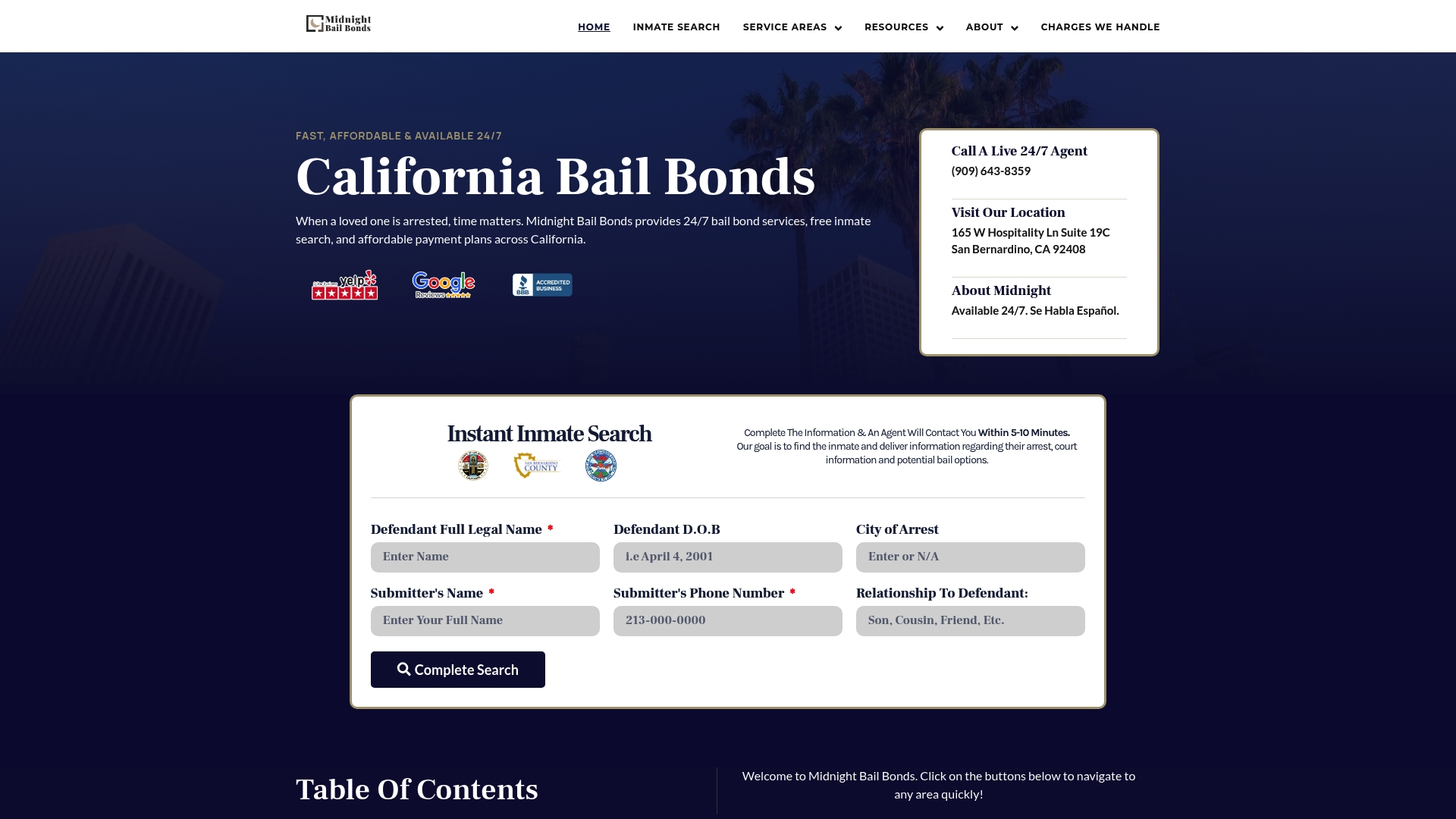
- 24/7 phone and online bail bonds so you can start the paperwork before you even leave for the jail.
- 1% Bail Bonds In California and 2% Bail Bonds In California programs that lower the upfront premium compared with the standard rate.
- No Collateral Bail Bonds In California available in many cases, plus bilingual support for families who need it.
The California's 10% Bail Premium is set by state rule and is not refundable once your bond is written, so ask an agent for the exact cost before you commit. Start with the DUI Bail Bonds in California page or call Midnight Bail Bonds directly to get someone out of custody tonight.
Where These Numbers and Rules Come From
- California Vehicle Code §23152(f): drug DUI misdemeanor and felony thresholds.
- FindLaw's overview of drug DUI law: testing, added charges, and penalty patterns.
Always confirm exact figures with your county court or sheriff's bail schedule, since amounts and stacking rules change by jurisdiction.
This article is general information, not a substitute for advice from a qualified lawyer. Consult a qualified legal professional about your own circumstances before acting on anything here.
Sources
FAQ
How much is bail for a drug charge?
Bail for a standalone drug possession charge varies by county and by the quantity involved, with trafficking-level amounts pushing bail far higher than a small personal-use charge. Checking the county's own bail schedule, or asking a bail agent to check it, gives the most accurate number for your case.
What is the most common plea for DUI?
Plea outcomes depend heavily on the evidence, the jurisdiction, and whether additional charges like possession are attached, so there is no single common plea that applies everywhere. A defense attorney reviewing the specific police report and test results is the only reliable way to gauge realistic plea options.
How much is bail for DUI in Florida?
Florida counties set their own standard bond schedules, and a first-offense DUI without aggravating facts such as a crash or a minor passenger usually falls at the lower end of that schedule. Prior DUI convictions or injury involved in the arrest move the amount considerably higher.
What is the minimum jail time for a DUI?
Jail exposure depends on the state and whether the charge is a first offense, but a first-offense misdemeanor drug DUI in California carries up to six months in county jail under Vehicle Code §23152(f). Actual time served often depends on plea negotiations and whether the court offers alternatives like probation.