

Yes, you can pay a licensed California bail bonds agent online right now. Call or contact Midnightbail directly, have the defendant's full name and booking number ready, and the release process starts immediately. The agent collects a non-refundable premium, typically 10% of the court-set bail amount; in some cases, an attorney referral may lawfully reduce the premium to 8%. The agent then posts the surety bond on the defendant's behalf. You never pay the full bail amount yourself.
Before you do anything else, run through these three checks:
- Confirm the agent's license with the California Department of Insurance
- Confirm the bail amount the court set (the booking sheet or jail's phone line has this)
- Confirm accepted online payment methods (card, Zelle, financing) before sending any money
Pro Tip: Have the defendant's full name, booking number, and detention facility name written down before you call. Agents can begin processing the moment you provide those three things.
Key Takeaways
Paying a bail bond premium online in California is straightforward when you verify the agent's license, have the booking details ready, and use a secure payment method with a written receipt.
| Point | Details |
|---|---|
| Verify the agent first | Check the agent's license on the CDI website before sending any payment. |
| Premium is typically 10% and non-refundable | The state-regulated rate is typically 10% of court-set bail, but attorney referrals may lawfully reduce it to 8% in qualifying cases; the premium is earned when the bond is filed, regardless of case outcome. |
| Have booking info ready | Defendant's full name, booking number, and facility name are required before an agent can file. |
| Use secure payment channels | Pay through HTTPS portals or Zelle; always get a written, itemized receipt. |
| Midnightbail is a licensed 24/7 option | Midnightbail accepts card, Zelle, and financing across California, with bilingual support and no-collateral options in many cases. |
Table of Contents
- How do you pay a bail bonds agent online, step by step?
- Which online payment methods do bail agents accept?
- How do payment plans work when you can't pay the full premium upfront?
- What does bail cost and how long does release take?
- How do you verify a licensed agent and avoid scams?
- What should you have ready before making the online payment?
- What happens after you pay?
- What if you have a problem with an online bail payment?
- Privacy and data protection when paying bail online
- A perspective on what families actually need at 2 AM
- Midnightbail: licensed, 24/7, and ready to start your release now
- Sources
- FAQ
How do you pay a bail bonds agent online, step by step?
Follow these steps in order. Skipping one usually adds hours to the release.
- Verify inmate details. Confirm the defendant's full legal name, booking number, and the exact detention facility. A wrong facility name sends the bond to the wrong jail. Midnightbail offers a free instant inmate search if you don't have the booking number yet.
- Confirm the bail amount and premium. The court sets the bail; the agent charges a premium on top of that obligation. In California, the standard rate is 10% of the total bail amount. Attorney referrals can sometimes reduce that to 8%.
- Verify the agent's license and get payment details. Ask for the agent's California Department of Insurance license number and a written fee disclosure before sending a dollar. The agent will then share a secure payment link or merchant details.
- Complete paperwork remotely. Co-signers sign digitally or by photo upload. You'll upload a government-issued ID. Most agents handle this entirely by phone and email.
- Make the payment and get a receipt. Use the agent's secure portal, card processor, or Zelle. The agent posts the bond once payment clears and paperwork is signed.
Pro Tip: Call the agent while you complete the online payment. Agents who know payment is in progress can begin preparing the bond filing simultaneously, cutting release time noticeably.
Which online payment methods do bail agents accept?
Most licensed California bail agents accept several online payment channels:
- Credit or debit card via a merchant portal (Visa, Mastercard, American Express)
- Zelle for direct bank-to-bank transfers when the agent permits it
- Online financing through third-party lenders the agent works with
- ACH or wire transfer for larger premium amounts
A few practical limits apply. Zelle has daily transfer caps that may fall below a large premium, so confirm limits with your bank first. Card processors sometimes place temporary holds on large transactions. Some agents still require in-person cash or collateral for very high bail amounts or high-risk charges.
Keep screenshots of every transaction confirmation. The agent uses proof of payment to file the bond, and you'll need that documentation if any dispute arises later.
How do payment plans work when you can't pay the full premium upfront?
A payment plan does not reduce the total premium owed. It spreads the payment across a schedule the agent agrees to in writing. Here's how the structure typically works:
- Down payment: A portion of the 10% premium is due before the bond is filed. The amount varies by agent and case.
- Installment schedule: The remaining premium balance is paid weekly or monthly, per the written agreement.
- Collateral or co-signer: For larger bail amounts, agents may ask for a co-signer who accepts financial responsibility, or collateral such as a vehicle title or property equity. Midnightbail offers bail without collateral in many cases.
- Default consequences: A missed payment can trigger the agent to surrender the defendant back to custody. Read the default clause before signing.
A UCLA study of bail bond contracts found that fewer than 15% of companies provided contracts online for consumers to review, and many contracts contained problematic clauses. Ask for the full contract before you sign anything.
What does bail cost and how long does release take?
Costs
The California Department of Insurance regulates bail bond premium rates. Agents must file their rates with the CDI and apply them uniformly. The market standard is 10% of the court-set bail amount. An attorney referral may lawfully reduce that to 8% in some cases, per California posting-bail guidance.
CDI Bulletin 137 distinguishes the premium from allowable out-of-pocket expenses. Agents may charge for documented expenses such as long-distance travel or court filing fees, but those charges must be disclosed in writing before you pay them.
| Cost item | What to expect |
|---|---|
| Bail bond premium | 10% of court-set bail (state-regulated) |
| Attorney-referral discount | May reduce premium to 8% in qualifying cases |
| Out-of-pocket expenses | Disclosed in writing; not part of the premium |
| Collateral | Required by some agents; Midnightbail waives it in many cases |
Timeline from payment to release
- Agent receives payment and signed paperwork
- Agent files the surety bond at the jail or court (typically within 1–4 hours of receiving complete documents)
- Jail processes the release (1–8 hours depending on facility, time of day, and booking volume)
- Defendant is released with a court date
Weekend bookings and high-volume facilities like Los Angeles County jails can push processing toward the longer end of that window. Agents with local familiarity, like those covering Los Angeles or Orange County, often know which facilities process faster and can time filings accordingly.
How do you verify a licensed agent and avoid scams?
Fraud targeting families in crisis is real. Use this checklist before paying anyone:
- Look up the agent's license number on the CDI bail bonds page
- Ask for a written fee disclosure before any payment
- Confirm the agent has a verifiable business address and phone number
- Request a signed contract and itemized receipt after payment
- Ask for digital confirmation that the bond was filed (timestamp and filing number)
Red flags: unsolicited contact through social media, requests to pay via gift cards or obscure apps, pressure to pay before seeing written terms, or refusal to provide a license number.
Pro Tip: If anything feels off, call the California Department of Insurance directly. Keep screenshots of every message and transaction record. Documentation is your protection.
What should you have ready before making the online payment?
Gather these before you call or submit an online form:
- Defendant's full legal name (as it appears on their ID)
- Booking number and detention facility name and address
- Bail amount and the charges listed on the booking sheet
- Co-signer's government-issued ID (driver's license or passport) for upload
- Payment method details (card number, Zelle handle, or bank routing info)
- Collateral documents if required (vehicle title, property deed photos)
Missing even one item, especially the booking number, can delay the filing by hours. Midnightbail's bail-out guide walks through exactly how to locate booking information if you don't have it yet.
What happens after you pay?
The agent files the surety bond directly with the jail or court. You should receive a receipt and a filing confirmation number. Hold onto both.
- Confirmation: Agent sends receipt and bond filing confirmation by email or text
- Release window: Jail processing typically runs 1–8 hours after the bond is filed
- Court date: The defendant will have a mandatory court appearance; missing it puts the bond at risk and triggers co-signer liability
- Co-signer obligations: You remain responsible for the defendant's court appearances until the case closes and the bond is exonerated
Pro Tip: Save digital and printed copies of the receipt and the full bail bond agreement. Text yourself the court date the moment you receive it.
What if you have a problem with an online bail payment?
Start with the agent directly. Most issues, a delayed receipt, a disputed charge, a filing error, resolve fastest when you contact the agent's 24/7 line with your transaction confirmation number in hand. Document every communication by email or text so you have a written record.
If the agent is unresponsive or you believe a fee was charged improperly, file a complaint with the California Department of Insurance. The CDI investigates premium violations and can take action against agents who charge undisclosed fees or fail to file bonds after collecting payment. Keep all receipts, screenshots, and signed contracts for that process.
Privacy and data protection when paying bail online
You'll share sensitive information during an online bail payment: government IDs, payment card numbers, and personal details about the defendant. A few practices protect you.
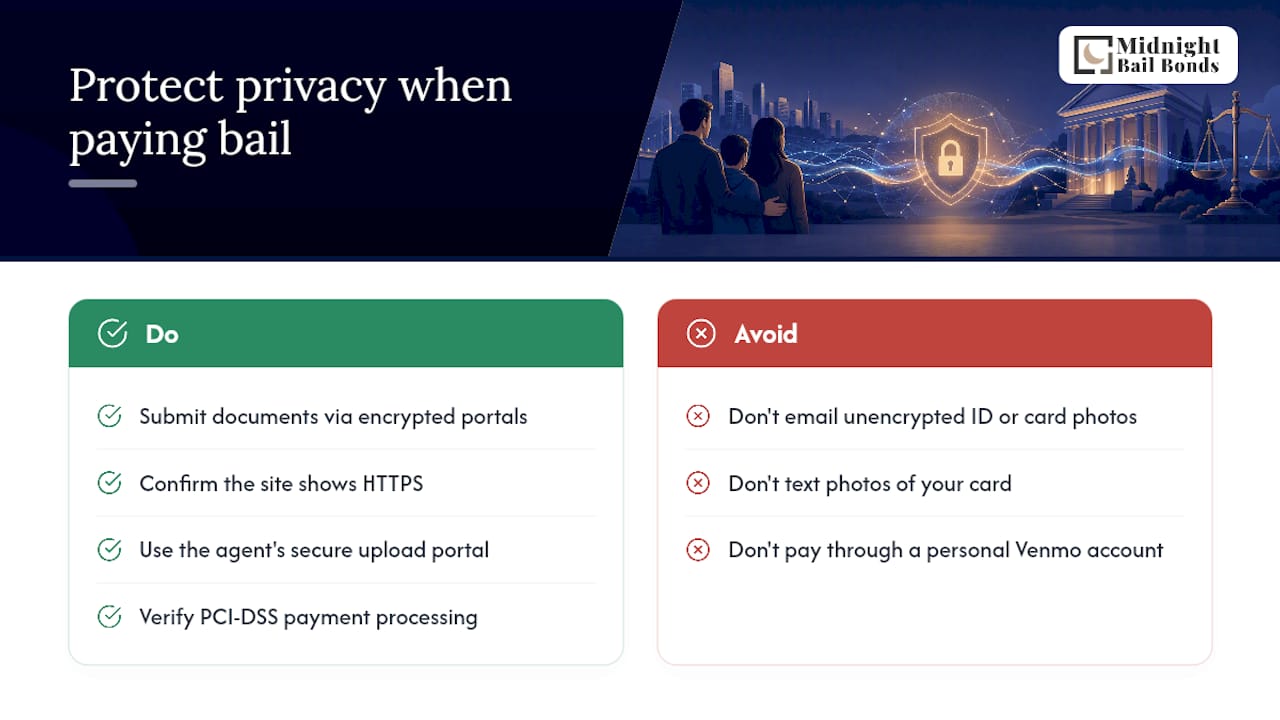
Only submit documents through encrypted channels. Confirm any web portal shows HTTPS in the address bar. Avoid emailing unencrypted photos of your ID or card details; use the agent's secure upload portal instead. Ask the agent how long they retain your personal data and whether it is shared with third parties beyond the surety company.
Reputable agents use standard merchant payment processors that are PCI-DSS compliant, meaning card data is handled under established security standards. If an agent asks you to text a photo of your card or pay through a personal Venmo account, that is both a security risk and a red flag about the agent's legitimacy.
A perspective on what families actually need at 2 AM
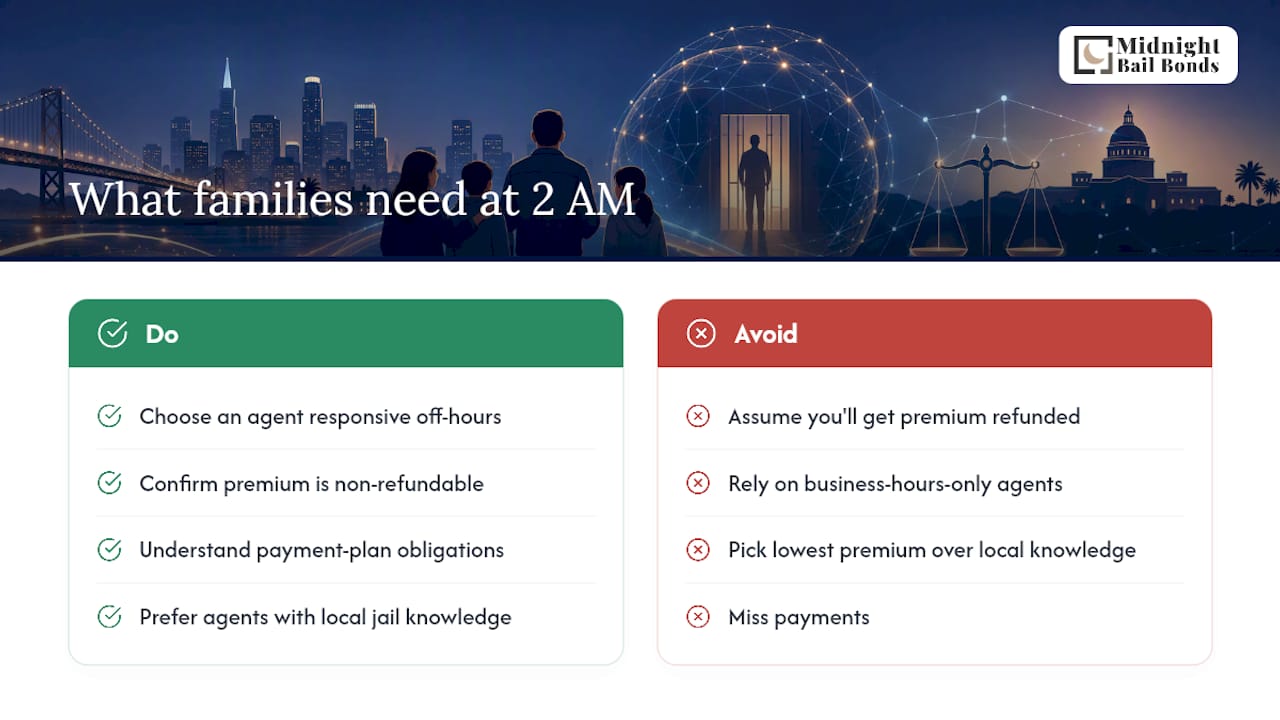
Most bail guides focus on the legal mechanics. What they underestimate is how much the process depends on the agent's responsiveness at the moment you need them, not during business hours.
The non-refundable premium is the detail that surprises families most. They assume that if the charges are dropped quickly, they'll get money back. They won't. That premium pays for the surety service, not the outcome. Understanding that upfront changes how you evaluate payment plans and collateral decisions. A plan that stretches payments over months still obligates you to the full amount, and a missed payment can send the defendant back to custody.
The other underestimated factor is local knowledge. An agent who knows the intake process at a specific facility—say, the Theo Lacy Facility in Orange County or the Benoit Detention Center in Indio—can time the bond filing to avoid shift changes that slow processing. That local familiarity is worth more than a marginally lower premium from an agent who has never worked at that jail.
Midnightbail: licensed, 24/7, and ready to start your release now
When someone you care about is in custody, the difference between a 2-hour release and an 8-hour one often comes down to which agent picks up the phone at midnight.
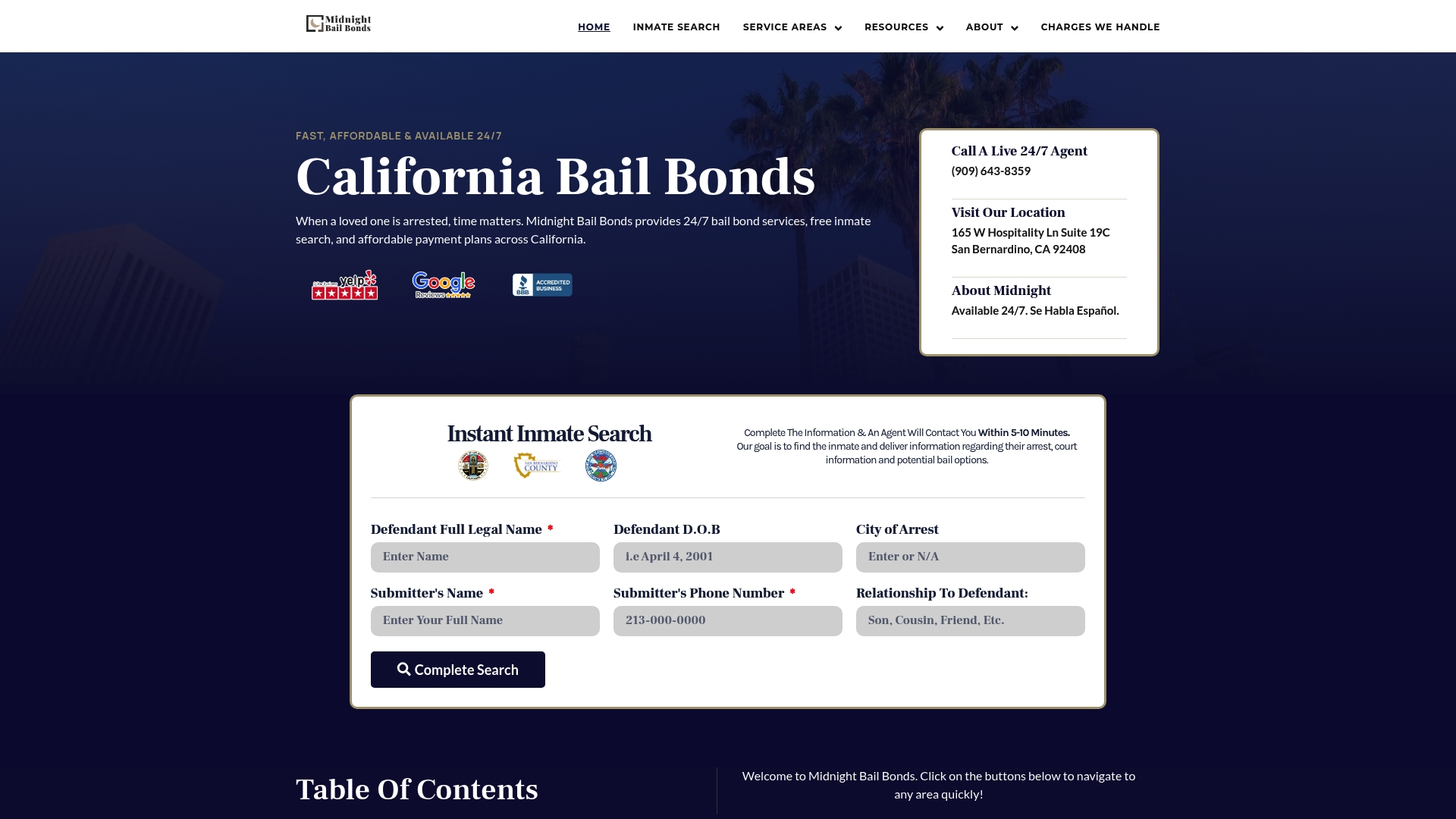
Midnightbail operates across California around the clock, with licensed agents who accept credit and debit cards, Zelle, and financing. Bilingual English/Spanish support is available, and in many cases the team can post bond without requiring collateral. The instant inmate search on the site means you don't need to have the booking number before you call.
To start the release process now, visit Midnightbail or call directly. Have the defendant's name and the detention facility ready, and an agent will walk you through the payment and paperwork immediately. Flexible payment plans are available if you can't cover the full premium upfront.
This article provides general information about bail bond processes in California and is not legal advice. Confirm current premium rates, licensing requirements, and your specific situation with a licensed bail agent or qualified attorney.
Sources
The figures and regulatory rules in this article come from official California sources. Use these to verify any claim independently.
- Bail Bonds
- How Do Bail Bonds Work? | Power Trial Lawyers Southern California
- How Does Bail Work - Posting Bail in California - PC 1276, 1276.5
FAQ
Can you pay a bail bond premium online in California?
Yes. Licensed California bail agents can accept online payments including credit and debit cards, Zelle, and financing. Contact the agent directly to confirm their accepted methods before sending payment.
Is the bail bond premium refundable if charges are dropped?
No. The premium is non-refundable once the bond is filed, regardless of the case outcome. You are paying for the surety service, not the result of the charges.
What information do you need to start the online bail process?
You need the defendant's full legal name, booking number, detention facility name, and the court-set bail amount. A co-signer's government-issued ID is also required before the agent can file.
How long does release take after paying a bail bond agent online?
After payment and paperwork are complete, agents typically file the bond within 1–4 hours. Jail processing then takes an additional 1–8 hours depending on the facility and time of day.
How do you verify a bail agent is licensed in California?
Look up the agent's license number on the California Department of Insurance bail bonds page. Midnightbail is a licensed, 24/7 option operating across California with verifiable credentials.