
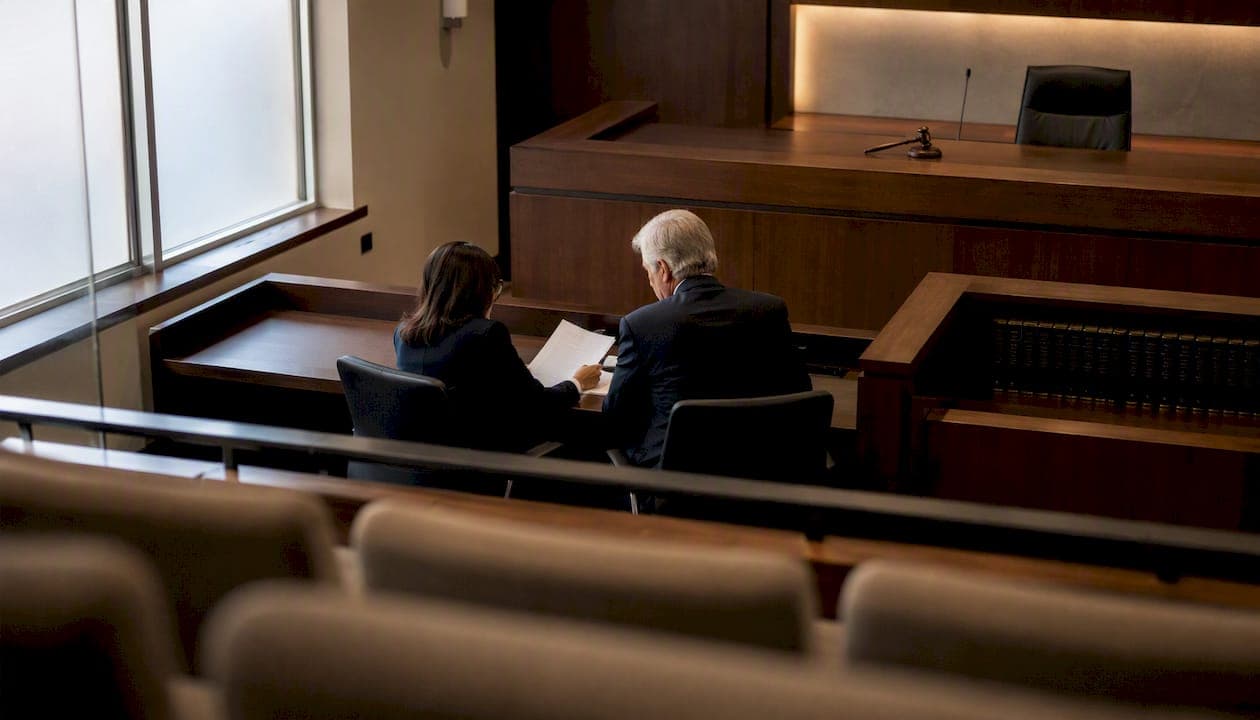
A bail hearing is the court appearance where a judge decides whether you stay in custody or go home before trial — and if released, under what terms. The decision comes down to three possible outcomes:
- Released on own recognizance (OR/personal recognizance): No money required; you sign a promise to appear.
- Released with conditions and a bail amount: Cash, surety bond, or property secures your return to court.
- Detained without bail: The judge finds you a flight risk or a danger to the community and orders you held.
If bail is set, your same-day priorities are clear: contact a defense attorney, reach a licensed bail bondsman, and start gathering documents that prove community ties. Every hour in custody counts.
Key Takeaways
The bail hearing process decides pretrial release or detention, and the outcome depends almost entirely on how well the defense presents community ties, stable residence, and a concrete supervision plan.
| Point | Details |
|---|---|
| Hearing purpose | A bail hearing decides release conditions, not guilt — keep all arguments focused on ties and risk. |
| California bondsman premium | The state-mandated rate is 10% of bail; that fee is non-refundable regardless of case outcome. |
| Reduction is possible | New facts like a confirmed job or changed living situation can support a later motion to lower bail. |
| Documents matter most | Bring a lease, pay stubs, employer letter, and character letters — organized in a single tabbed folder. |
| Midnightbail | Available 24/7 across California with flexible payment plans, bilingual support, and no-collateral options in many cases. |
Table of Contents
- What the bail hearing process is actually deciding
- When bail is set and how fast release can happen
- Step-by-step: what happens during the hearing
- What judges actually weigh when setting bail
- Types of release and how bail is posted
- Common bail conditions and what happens if you break them
- What to do when bail is denied or unaffordable
- How to prepare for a bail hearing
- How bail bonds work after the court sets an amount
- When you need an attorney at the bail hearing
- What actually moves judges in short hearings
- Midnightbail is available around the clock when bail is set
- Sources
- FAQ
What the bail hearing process is actually deciding
A bail hearing is not a mini-trial. According to FindLaw, the hearing determines pretrial release or detention and the conditions attached to that release — not whether the defendant is guilty. The Eighth Amendment prohibits excessive bail, but it does not guarantee bail in every case.
Present in the courtroom: a judge or magistrate, the prosecutor, the defense attorney (or a court-appointed public defender), the defendant, and often a pretrial services officer who has already run a background check. Family members and a bail bondsman may wait nearby but typically do not speak unless called.
The prosecutor argues for high bail or detention. The defense argues for release with manageable conditions. The judge weighs both sides against statutory guidelines and, in some jurisdictions, a pretrial risk assessment score.
When bail is set and how fast release can happen
The sequence moves quickly after arrest. Booking happens at the jail, then the defendant appears before a magistrate or judge — often at an arraignment or initial appearance — where bail is first addressed. In many California counties, that first appearance happens within 48 hours of arrest, sometimes sooner.
Once bail is posted, release from a local jail can take anywhere from a few hours to roughly a day, depending on the facility's processing workload. Federal cases run on a different clock: the Bail Reform Act governs federal pretrial detention, and detention hearings can be scheduled within a few days of arrest under federal statutory guidelines.
If the initial bail amount is unaffordable, a separate bail reduction hearing can be requested later. That hearing is often the more effective venue for a detailed evidentiary presentation, because the initial amount set at booking can be informal and subject to revision.
Step-by-step: what happens during the hearing
- Case is called. The clerk calls the defendant's name and docket number. The judge confirms the defendant and attorneys are present.
- Prosecutor presents the government's position. The prosecutor summarizes the charges, the defendant's criminal history, any prior failures to appear, and arguments for high bail or detention.
- Defense responds. The defense attorney presents evidence of community ties, stable residence, employment, and a proposed supervision plan. Nolo notes that the hearing focuses on flight risk and public safety, not guilt — so defense arguments stay narrowly on those two issues.
- Evidence and witnesses are offered. The defense may submit employer letters, lease agreements, character affidavits, or call a brief witness. The prosecution may respond.
- Judge asks questions. The judge may ask the defendant directly about employment, residence, or family obligations.
- Judge issues a decision. The judge announces the bail amount (or denial), any conditions, and the next court date.
The whole hearing often runs under 15 minutes on a crowded docket. That brevity is exactly why preparation matters so much.
What judges actually weigh when setting bail
FindLaw's bail hearing overview and Nolo's guidance both identify the same core factors judges consider. Here is what each factor means in practice and what evidence addresses it:
Flight risk: Does the defendant have strong reasons to stay? Counter this with a lease or mortgage statement, utility bills showing long-term residence, and letters from family members who live locally.
Danger to the community: Is the alleged offense violent or does it involve weapons? A proposed supervision plan — electronic monitoring, curfew, no-contact agreement — directly addresses this concern.

Criminal history and prior failures to appear: A clean record or a documented history of showing up to court appearances speaks for itself. Pull court records showing prior appearances if they exist.
Employment and financial ties: Pay stubs, an employer letter confirming active employment, or a signed job offer letter all demonstrate that the defendant has something concrete to lose by fleeing.
Ability to pay: Judges are supposed to set bail the defendant can realistically post. A financial affidavit showing income and expenses supports a lower amount.
Strength of the evidence: The prosecution may raise this; the defense generally avoids arguing the merits at this stage.
Pro Tip: Package your documents in a single, tabbed folder with a one-page cover sheet listing each item. Judges and clerks who are processing dozens of cases in a morning will move faster through organized materials, and a clean presentation signals that the defense is serious.
Types of release and how bail is posted
For most families, a surety bond is the practical path when bail is set above a few thousand dollars. FindLaw explains that a bondsman charges a non-refundable premium — in California, that rate is set by state law at 10% of the bail amount — and then guarantees the full amount to the court. If bail is $50,000, the family pays $5,000 to the bondsman and the defendant is released. That $5,000 does not come back regardless of the case outcome.
After the bondsman files the paperwork with the jail, release typically takes a few hours. Larger facilities can run longer. For a step-by-step walkthrough of how to bail someone out, the process is more straightforward than most families expect once the right contacts are in place.
Common bail conditions and what happens if you break them
Courts attach conditions to most releases. The most common ones:
- No contact with alleged victims or co-defendants
- Travel restrictions, including surrendering a passport
- Electronic monitoring (ankle bracelet) with curfew requirements
- Random drug or alcohol testing
- Regular check-ins with a pretrial services officer
- Stay-away orders from specific locations
Violating any condition is serious. The court can revoke bail immediately, issue a bench warrant, and order the defendant back into custody. Any money or collateral posted is at risk of forfeiture. If conditions feel unworkable — a no-contact order that prevents a defendant from returning home, for example — the defense attorney can file a motion to modify conditions, showing the court a workable alternative arrangement.
What to do when bail is denied or unaffordable
Denial is not the end. A bail reduction hearing gives the defense a dedicated opportunity to present a fuller evidentiary record. Nolo's guide on lowering bail confirms that new facts — a confirmed job offer, a change in living situation, a family member willing to serve as a third-party custodian — can justify a later motion even after an initial denial.
Steps to request a reduction:
- File a written Motion to Reduce Bail with the court, citing the statutory factors the judge must consider.
- Request a hearing date from the clerk or through the defense attorney.
- Gather documentary evidence: pay stubs, employer letter, lease, financial affidavit, character letters, and any affidavits from family members willing to supervise.
- Prepare a supervision plan that addresses the specific concerns the judge raised at the first hearing.
- Present at the hearing. L&L Law Group's guidance on bond reduction notes that the burden rests on the defendant to show the current bail is excessive — so the evidentiary record built at this hearing matters enormously.
Appellate review of bail decisions is deferential to the trial court, which means the reduction hearing itself is usually the best and most realistic opportunity to change the outcome. In some jurisdictions, courts may modify conditions rather than reduce the dollar amount — electronic monitoring instead of a higher cash requirement, for example. Florida criminal defense practitioners note this as a common and effective outcome when the defense presents statutory-factor-based evidence.
How to prepare for a bail hearing
Documents to bring or have ready:
- Government-issued photo ID
- Proof of residence (lease, mortgage statement, utility bills)
- Employment verification (pay stubs, employer letter on company letterhead)
- Proof of caregiving responsibilities (custody orders, medical records for a dependent)
- Character letters from employers, clergy, or community members
- Financial affidavit showing income and expenses
Who to line up before the hearing:
- A defense attorney, even for a first appearance. For serious charges like robbery or battery, counsel at the bail stage can make a measurable difference — see robbery bail guidance for charge-specific context.
- A family representative who can speak briefly to the defendant's ties and living situation if called.
- A licensed bail bondsman's contact information, ready to call the moment bail is set.
Courtroom behavior: The defendant should speak only when directly addressed by the judge. Arguing the facts of the case — "I didn't do it" — at a bail hearing consistently backfires. Judges have heard it before, and it shifts attention away from the community-ties evidence that actually moves the needle.
How bail bonds work after the court sets an amount
Once the judge announces a bail amount, the clock starts. Here is the practical sequence:
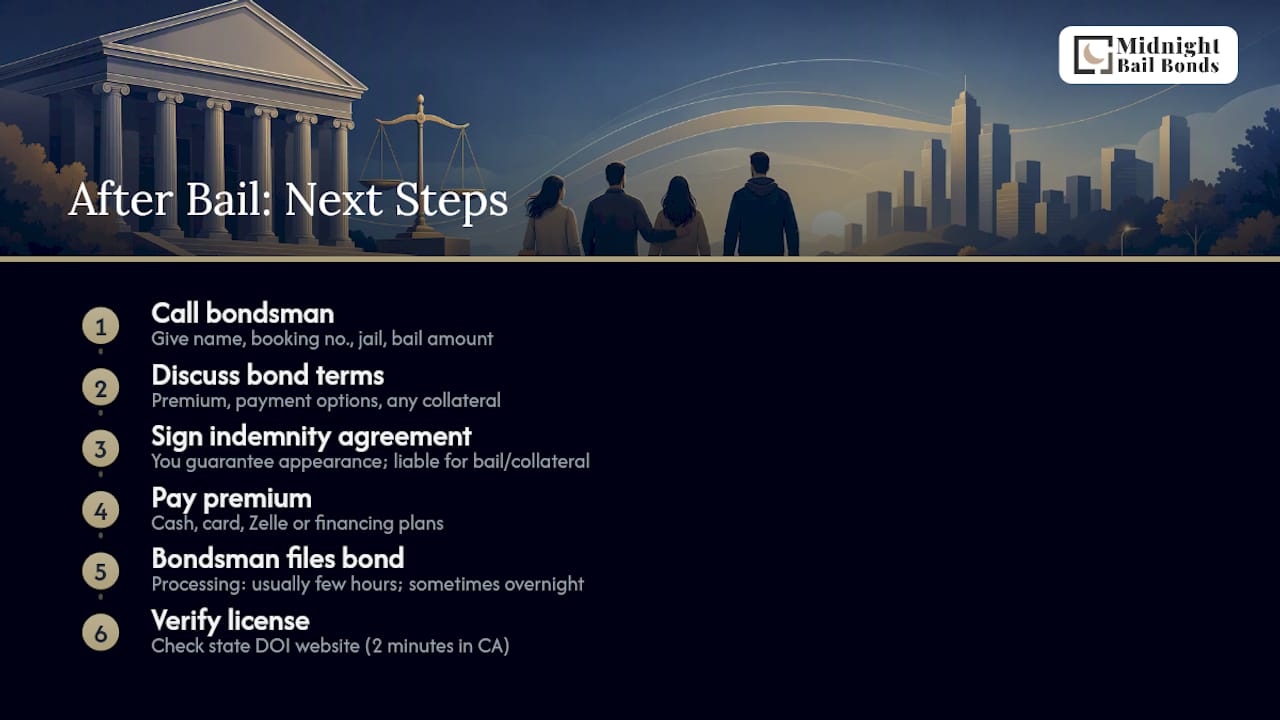
Call a licensed bail bondsman immediately. You will need the defendant's full legal name, booking number, the jail facility name, and the bail amount. The bondsman will explain the premium, payment options, and any collateral requirements.
Sign the indemnity agreement. As a co-signer, you are guaranteeing the defendant will appear at all court dates. If they fail to appear, the bondsman can pursue the full bail amount from you and any collateral pledged.
Payment options vary by bondsman. Cash, credit card, Zelle, and financing plans are common. Ask specifically about payment plans if the premium is a stretch.
The bondsman files the bond with the jail. Processing time varies by facility — a few hours is typical, though larger county jails can run longer overnight.
Before signing anything, verify the bondsman's license through your state's Department of Insurance. In California, that check takes about two minutes online and protects you from unlicensed operators.
When you need an attorney at the bail hearing
An attorney can file pre-hearing motions, negotiate with the prosecutor on conditions, present organized evidence, and propose a supervision plan the judge can approve on the spot. That combination routinely produces lower bail or better release conditions than a defendant presenting alone.
Attorney involvement is especially important when:
- The charge is violent, involves a weapon, or carries a statutory presumption against release
- The defendant has prior failures to appear on their record
- The prosecution is seeking detention without bail
- The bail amount set at booking is clearly disproportionate to the offense
When you call a lawyer, have the booking number, the jail name, the charges as listed on the arrest paperwork, and a brief summary of the defendant's employment and residence ready. That information lets counsel move fast.
What actually moves judges in short hearings
Most bail hearings run a few minutes. Judges are managing full dockets, and the defense rarely gets more than a brief window to make its case. What actually works in that window is not a long argument — it is a concise, corroborated package.
A one-page bail plan that names a specific address, a specific employer, a specific supervisor, and a specific check-in schedule gives a judge something concrete to approve. Vague assurances that the defendant "has family in the area" do not. The difference between those two presentations often determines whether someone goes home that day.
Bail can also be revisited. A denied reduction at first does not close the matter permanently. New facts — a job offer letter that arrived after the hearing, a family member who stepped forward as a custodian — are legitimate grounds for a new motion. Persistence, backed by documentation, changes outcomes.
Midnightbail is available around the clock when bail is set
When a judge sets bail in California and every hour in custody matters, Midnightbail provides 24/7 licensed bail bond service with agents ready to move the moment you call. Bail without collateral is possible in many cases.

Call or reach out any time of day or night. You will need the defendant's name, booking number, jail location, and bail amount. Bilingual English/Spanish support is available, and agents accept cash, credit, debit, and Zelle. Whether you are in Los Angeles, Long Beach, or anywhere across California, a licensed agent can start the paperwork immediately and walk you through every step until your family member is home.
Sources
Consult these primary and authoritative sources for jurisdiction-specific rules, statutory language, and official court forms:
- Bail Hearing Procedures - FindLaw
- What to Expect at a Bail Hearing - Nolo
- CRS report on pretrial release and detention
- Motion to Reduce Bond in Texas | L&L Law Group
- How to Get a Bond Reduced in Florida | Hunt Law | Tampa Criminal Justice
Bail procedures vary by county and by whether the case is state or federal. Always check your local superior court's website or ask defense counsel for jurisdiction-specific schedules and forms.
This article is general information, not a substitute for advice from a qualified lawyer. Consult a qualified legal professional about your own circumstances before acting on anything here.
FAQ
What happens at a bail hearing?
A judge hears brief arguments from the prosecutor and defense, reviews the defendant's background and community ties, and decides whether to release the defendant, set a bail amount with conditions, or order detention. The hearing typically takes only a few minutes.
How does bail work in California?
A judge sets a bail amount based on flight risk, public safety, and the defendant's ties to the community.
How do you request a bail reduction hearing in California?
File a written Motion to Reduce Bail with the court, attach documentary evidence of employment, residence, and community ties, and request a hearing date. The defendant bears the burden of showing the current bail amount is excessive.
Can bail be denied entirely?
Yes. Judges can deny bail when the defendant poses a significant danger to the community or is considered a serious flight risk, particularly for violent offenses or charges that carry statutory presumptions against release under state or federal law.
How quickly can someone be released after bail is posted?
Release from most local jails typically takes a few hours after the bondsman files the paperwork, though larger facilities may take longer, especially overnight. Having a bondsman's contact information ready before the hearing speeds up the process significantly.