
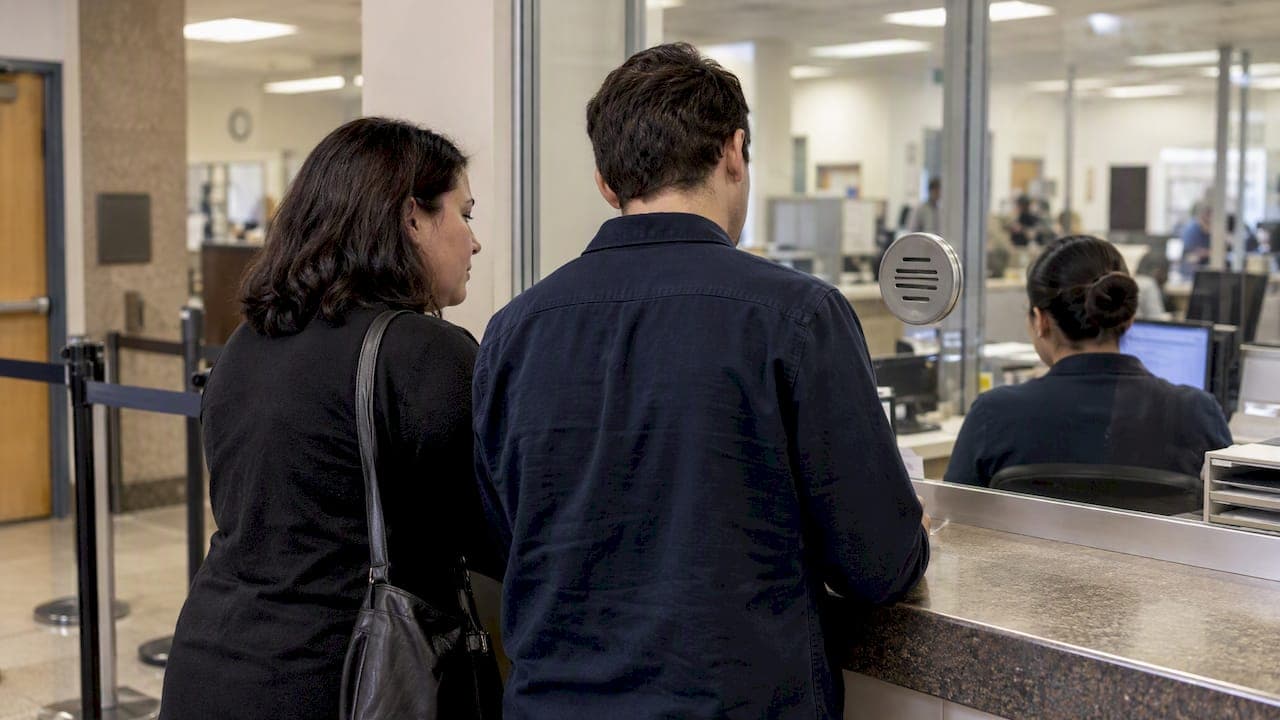
There is no single "FTA bail amount." The number depends on your jurisdiction, the offense class, and any existing court orders, so the fastest path to an answer is checking the local court docket or calling the clerk directly. If a warrant already exists, confirm it first, then decide whether to appear voluntarily or arrange bail through counsel or a licensed bail agent.
TL;DR:
- Bail amounts following an FTA depend heavily on jurisdiction, offense class, and court orders, making it essential to verify locally through court dockets or clerk calls.
- Criminal FTAs can add charges and separate bail figures, while traffic FTAs usually result in civil assessments rather than fixed bail amounts.
- County bail schedules serve as starting points; enhancements, prior convictions, or risk assessments can increase the bail beyond standard figures.
- Missing court can trigger bond forfeitures, civil collections, or judgments that linger beyond 180 days, so timely action is crucial to avoid further financial complications.
- Immediate steps include confirming the bail or warrant status, consulting the court clerk, and working with licensed bail agents for quick release options.
Table of Contents
- What failure to appear actually means and why the stakes vary
- How courts actually land on an FTA bail number
- Typical bail ranges once you sort by offense type
- The full financial exposure after a missed court date
- Finding your exact number and acting on it fast
- Petitions, relief from forfeiture, and when surrender makes sense
- What I'd tell a family calling about an FTA tonight
- A straightforward way to post FTA bail in California
- Where to verify these numbers yourself
- Sources
- FAQ
What failure to appear actually means and why the stakes vary
Failure to appear, often shortened to FTA, happens when someone misses a required court date. Courts and attorneys also call this a bench warrant situation or, in more serious cases, bail jumping. The label depends on what you were originally charged with and what the court decides to do about the missed date.
The consequences split into two very different tracks. A traffic or infraction FTA usually triggers a civil assessment, a fee added for missing the date, and the matter often stays administrative rather than criminal. A criminal FTA, tied to a misdemeanor or felony case, can produce a bench warrant, a new FTA charge on top of the original one, and a bail amount set specifically because you missed court.
Federal cases work differently again. Rather than relying on a printed bail schedule, federal courts lean on pretrial services and individualized risk assessments to decide release conditions, a point the U.S. Courts pretrial services materials document in detail.
The practical differences to keep in mind:
- Traffic and infraction FTAs often resolve through civil assessments and petitions, not a posted bail amount.
- Criminal FTAs can add a new charge and a separate bail figure to the original case.
- Federal FTAs are evaluated case by case through risk assessment rather than a flat schedule.
How courts actually land on an FTA bail number
Most counties and states publish a bail schedule, a reference document listing presumptive amounts by offense category. These schedules exist so that jail staff and judges have a starting figure before arraignment, especially when court isn't in session. They are starting points, not fixed prices.
Judges and, in some cases, law enforcement can move away from the schedule amount. A firearm enhancement, a prior strike, or specific facts tied to the FTA itself can push the number higher than the baseline figure for the underlying offense. California's county schedules commonly spell out these enhancement rules alongside the presumptive amounts, which vary by jurisdiction.

Risk-based tools add another layer, particularly where ability to pay is part of the analysis. Utah's courts use a risk score tied to FTA history to recommend a monetary amount rather than defaulting straight to a fixed dollar figure. The Utah PSA FTA risk guidance in Appendix J links risk categories to recommended amounts and explicitly cautions against over-relying on money as the only release condition.
A few forces shape the final number in any jurisdiction:
- The written bail schedule for that county or state, used as the default figure.
- Judicial discretion to raise or lower the amount based on the specific facts of the FTA.
- Risk-assessment scores, where used, that tie the recommended amount to flight risk and criminal history.
- Statutory caps or ability-to-pay rules that can limit how high a court can go for certain offenses.
None of this produces a single number that you can guess from home. It produces a process, which is exactly why checking the local schedule or calling the clerk matters more than searching for a universal figure.
Typical bail ranges once you sort by offense type
Ranges exist, but they move with jurisdiction and offense severity, so treat these as context rather than a quote. Infractions tend to sit at the low end or avoid a bail figure entirely in favor of a civil assessment. Misdemeanors commonly land in the hundreds to low thousands. Felonies start higher and can climb fast once enhancements apply.
Two real examples illustrate the spread. The San Diego Superior Court's traffic FTA guidance describes a $100 civil assessment under Penal Code §1214.1 for certain traffic FTAs, with no bail requirement to resolve the matter in court. On the felony side, the Marin County felony bail schedule lists a presumptive bail for unspecified felonies, with separate enhancement rules for firearms or prior strikes that can raise that baseline considerably.
A few patterns worth noting when you pull up your own county's schedule:
- Infractions often carry a civil assessment instead of a dollar bail figure.
- Misdemeanor FTAs commonly range from several hundred to a few thousand dollars, set by the local schedule.
- Felony presumptive amounts start higher, and enhancements can push them well past the baseline listed on the schedule.
If a docket shows "no amount set," that usually means the judge hasn't yet reviewed the case or is waiting on an arraignment. It is not the same as a $0 bail. Calling the clerk or checking back after the next scheduled hearing is the way to find out what comes next.
The full financial exposure after a missed court date
A bail figure is often just the first number on the list. Missing court can trigger several separate financial consequences, and they don't all resolve the same way or on the same timeline.
- Bond forfeiture. If bail was already posted and the defendant misses court, the court can declare the bond forfeited. California gives sureties and depositors a statutory window, generally 180 days plus a short mailing extension, to seek relief from that forfeiture under Penal Code §1305.
- Summary judgment. If no one acts within that window, the court can enter summary judgment against the surety, turning the forfeited bond into a collectible debt.
- Civil assessments and collections. Traffic and infraction FTAs can generate a civil assessment that, left unpaid, moves to collections, with consequences that can include wage garnishment or a tax refund intercept depending on the jurisdiction.
The 180-day period, extended by five days for mailing, is the practical deadline that determines whether a forfeited bond can still be fixed or becomes a final judgment.
For families dealing with the aftermath of an FTA, the deadline attached to the forfeiture notice often matters more than the original bail figure. Missing that window is what turns a recoverable situation into a collections problem. A closer look at how bail forfeiture plays out in California walks through the notice timing and what sureties need to do before that clock runs out.
Finding your exact number and acting on it fast
Guessing wastes time you don't have if a warrant is active. The fastest route to a real number involves a short list of checks, most of which take minutes.
- Search the county court's online docket or case lookup tool for the case number or defendant's name.
- Call the court clerk directly and ask whether a warrant was issued and what bail, if any, was set.
- Check the jail's inmate search tool if the person is already in custody.
- Ask defense counsel to pull the case status, since attorneys often get faster answers from the clerk's office.
If a warrant does exist, there are generally three paths: appear voluntarily to address the warrant, post the bail amount set by the court, or arrange a surrender and posting through a licensed bail agent. For certain traffic and infraction matters, Rule 4.106 offers a fourth option: petitioning to vacate or reduce the civil assessment without paying it first, a route built specifically for people who can show inability to pay.
Pro Tip: Call the clerk before you call anyone else. A five-minute phone call can tell you whether you're dealing with a civil assessment, a misdemeanor bail amount, or a felony warrant, and that answer changes everything about what to do next.
Once a dollar figure is confirmed, a licensed bail agent can often move faster than waiting for a court date, since bonds can typically be arranged any hour of the day rather than only during court hours.
Petitions, relief from forfeiture, and when surrender makes sense
Not every FTA obligation has to be paid in full or waited out. Several procedural remedies exist, each suited to a different situation.
- Petition the civil assessment. Under Rule 4.106, courts handling certain infraction FTAs must give defendants a chance to petition to vacate or reduce the assessment, and they are required to consider inability to pay before referring the matter to collections.
- Seek relief from forfeiture. If bail was posted and later forfeited, Penal Code §1305 allows a motion for relief within the statutory window, sometimes resulting in a court-ordered payment plan rather than a lump sum. Missing that window risks summary judgment.
- Surrender through a bail agent. A bail agent can surrender a defendant under Penal Code §1301, which returns the person to custody and can preserve the agent's ability to seek relief from forfeiture. Surrender resolves the bond, not the underlying FTA charge or any civil assessment still owed.
Counsel tends to be the better call when the issue is legal, such as disputing the FTA charge itself or arguing inability to pay. A bail agent is the faster option when the goal is simply getting someone out of custody quickly while those legal questions get sorted separately. For a deeper look at the surrender process itself, see how the 24 hour rule works under a PC 1275 hold.
What I'd tell a family calling about an FTA tonight
Verify the warrant before anything else. Then move fast: a missed court date rarely gets better with time, and the 180-day forfeiture clock doesn't wait for anyone to feel ready.
Bail bond services operating 24/7 across California often provide flexible payment plans and may arrange bonds without collateral, details that matter when a family is deciding between posting bail themselves or using an agent. California cases needing immediate posting are a good fit for that kind of service. Disputing the FTA itself, or petitioning a civil assessment, calls for an attorney instead.
— Jake
A straightforward way to post FTA bail in California
Once you know the number, the next decision is how fast you need the person out of custody. Some bail bond providers offer 24/7 bail bond services across California, with licensed agents answering calls directly at any hour rather than routing through a call center.
What that looks like in practice:
- Flexible payment plans may be available instead of requiring the full premium upfront.
- Bail bonds without collateral may be available in many cases, which matters for families without property to pledge.
- Bilingual support may be offered, so language isn't a barrier during an already stressful call.
- Failure to appear bail bonds arranged specifically for FTA warrants and the procedural steps that follow.
Licensed agents can often post bail faster than waiting for the next scheduled court date, which directly reduces time spent in custody. If you're trying to get someone released tonight, start the bail bond process with Midnight Bail Bonds or call to speak with an agent now.
Where to verify these numbers yourself
Check these official sources directly rather than relying on a generic online calculator, since courts use individualized rules, not a flat lookup table.
- Rule 4.106 on infraction civil assessments
- California Penal Code §1305 on forfeiture
- Marin County's January 2026 felony bail schedule
- Utah's PSA FTA risk guidance, Appendix J
Always confirm against your own county's published schedule and the clerk's office, since local rules govern the exact figure.
This article is general information, not a substitute for advice from a qualified lawyer. Consult a qualified legal professional about your own circumstances before acting on anything here.
Sources
- Rule 4.106. Failure to appear or failure to pay for a Notice to Appear issued for an infraction offense | Judicial Branch of California
- California Penal Code §1305. Forfeiture notice and procedures
- Felony bail schedule January 2026 — Marin County
- Utah courts — PSA FTA risk guidance (Appendix J)
FAQ
How long do you spend in jail for FTA?
There's no fixed length since it depends on the jurisdiction, whether bail is posted, and how quickly the warrant is addressed. Someone who posts bail or arranges a bond soon after an arrest can be released within hours, while an unresolved warrant can mean custody until the next court date.
How much is a bond for a failure to appear?
The bond amount tracks whatever bail figure the court sets for the FTA, which varies by offense class and jurisdiction rather than a fixed rate. In California, the bail agent's fee is governed by the state's 10% bail premium, a non-refundable cost for posting the bond.
What does FTA mean when you go to jail?
FTA stands for failure to appear, meaning someone missed a required court date, which can lead to a bench warrant for their arrest. Once arrested on that warrant, the person is typically booked and held until bail is posted or they're brought before a judge.
How much do you have to pay on a $500,000 bail?
Under California's bail premium structure, a bail agent typically charges 10% of the total bail amount as a non-refundable fee. That premium, not the full bail amount, is what a family pays to secure release through a bond, and payment plans can reduce the upfront cost.