
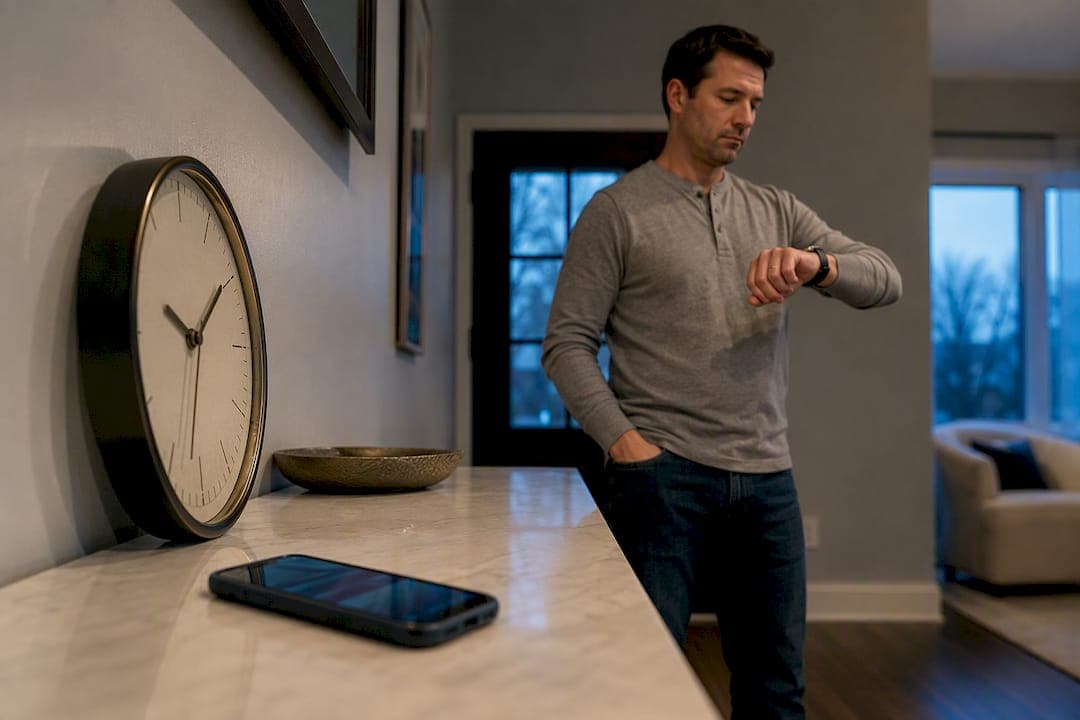
Booking is the administrative intake that creates an official arrest record. It includes identity checks, fingerprints, photos, health screening, property inventory, and a custody decision. It is not a conviction. A straightforward booking often runs from about half an hour to a couple of hours, though delays are common, and the outcome afterward is usually one of three things: release, a hold, or transfer into general population.
TL;DR:
- Immediate calls to the jail are usually unhelpful; waiting one to two hours allows officials to update custody status accurately.
- Key details such as the full legal name, date of birth, arresting agency, and booking number should be prepared before contacting the jail or bail agents.
- Classification decisions depend on charge severity, criminal history, medical needs, and protective concerns, affecting housing and visitation rights.
- Booking is an administrative record only, not a determination of guilt, which occurs later in court proceedings.
Table of Contents
- What Are the Steps in the Jail Booking Process?
- How Long Does Jail Booking Take?
- What Should Families Do Right After an Arrest?
- How Are Housing and Classification Decided?
- What Happens During Medical Screening and Searches?
- What Happens to Personal Property During Booking?
- Rights, Bail Basics, and Common Booking Questions
- A Family's-Eye View of the Waiting
- Getting Someone Out After Booking Is Complete
- Where to Verify Facility-Specific Rules
- Sources
- FAQ
What Are the Steps in the Jail Booking Process?
Every facility runs its own version of this, but the arrest booking procedure follows a fairly predictable order almost everywhere in the country. Knowing the sequence helps you understand where the person you're worried about actually is at any given moment, and why nobody can give you an answer five minutes after the patrol car pulls away.
- Reception and intake paperwork. A booking number is assigned, and identity gets verified against ID or prior records.
- Property removal and inventory. Everything on the person, wallet, phone, jewelry, is logged and a receipt is generated.
- Mug shots and fingerprints. Prints are typically run through state and federal databases, which is one of the slower steps.
- Warrant and database checks. This step sometimes surfaces holds from other counties or agencies, adding new complications.
- Health and mental health screening. Staff ask about medications, injuries, withdrawal risk, and suicide risk.
- Search procedures. A pat-down is standard; anything beyond that generally requires a specific, documented reason.
- Charge entry and custody decision. This is where citation, own recognizance, bail, or continued detention gets decided.
- Short-term holding or classification transfer. The person either waits in a holding cell or moves toward permanent housing.
The Nolo legal encyclopedia lays out this same sequence as the standard model used across most American jails, and the Cornell Legal Information Institute frames the whole process as purely administrative rather than a judgment on guilt.
Pro Tip: If you're trying to track someone through this, don't call the jail right when you hear about the arrest. Nothing exists in the system yet. Give it time before you start dialing.
How Long Does Jail Booking Take?
A clean booking with a cooperative arrestee, no outstanding warrants, and no medical complications can be completed fairly quickly. However, factors such as a busy time, a DUI test, or a warrant hit from another county can extend the process significantly.
- Pre-booking transport alone can take time before the person even reaches the facility.
- Shift changes, weekend dockets, and holiday staffing shortages slow everything down.
- Warrant mismatches, identity confusion, or a pending medical clearance can stall a file for hours.
- DUI chemical testing and other pre-booking steps can delay someone's actual arrival at the jail.
According to the Fresno County Sheriff's booking and classification page, pre-booking transport and onsite testing can push the gap between arrest and jail arrival to as much as four hours. That's before the booking clock even starts. The practical rule most county sheriff sites repeat, including Douglas County's guidance, is to wait one to two hours after the arrest before calling, and to have the person's full legal name and date of birth ready when you do.
What Should Families Do Right After an Arrest?
The instinct to call immediately is understandable, but it usually backfires. Jails frequently can't release custody information until booking is finished, sometimes by statute, so an early call just gets you a "not in the system yet."
- Check the arresting agency's site, the facility roster, or a statewide inmate locator using the person's full legal name and date of birth.
- Wait roughly one to two hours, then call with the name, date of birth, arresting agency, and booking number if you have it.
- Ask three things directly: is the person booked, what's the bail amount, and when do phone privileges start.
- Gather medication names and dosages so you can relay them to jail staff or an attorney if needed.
Midnightbail's inmate search tool can shortcut some of this legwork once booking is likely complete, letting you check status without repeated calls to a busy front desk.
Pro Tip: Write down the booking number the second you get it. You'll need it again for the bail agent, the attorney, and possibly the court clerk, and re-explaining the situation three times wastes time you don't have.
How Are Housing and Classification Decided?
Once someone stays in custody past booking, a classification interview determines where they'll actually be held. This isn't random. It's based on a handful of specific factors.
- Charge severity and criminal history weigh heavily in the decision.
- Protective concerns, gang affiliation, known enemies, matter just as much as the charge itself.
- Medical and mental health needs can route someone to a specialized unit instead of general population.
- Outcomes range from general population to protective custody, a medical unit, or transfer to another facility entirely.
Classification also affects when phone and visitation access opens up. A transfer to another facility can add another full day before anyone can locate the person again.
What Happens During Medical Screening and Searches?
Every jail intake process includes a basic health screen, not as a courtesy, but because untreated medical issues create liability and safety risks fast.
- Staff ask about current medications, withdrawal risk, recent injuries, and suicide risk.
- Pat-down searches are routine and happen to nearly everyone booked in.
- Strip searches require documented, policy-based reasonable suspicion in many jurisdictions, not a blanket rule.
- Same-sex staff typically conduct more invasive searches, and medical personnel get involved when injuries or intoxication are visible.
Nolo notes that these searches exist primarily to keep contraband out of the general population, not to punish the person being booked.
What Happens to Personal Property During Booking?
Everything in someone's pockets at the time of arrest gets logged, and that inventory becomes the paper trail if anything goes missing later.
- Property is inventoried and a signed receipt is issued to the arrestee.
- Most items sit in storage until release, unless something is flagged as evidence or contraband.
- Cash is documented through kiosks or receipt systems, and the arresting officer typically hands off custody of the property at intake.
- Undisclosed items found later, especially medications, can turn into an evidence problem rather than a simple oversight.
If something doesn't match the receipt at release, raise it calmly with facility staff right away rather than waiting.
Rights, Bail Basics, and Common Booking Questions
A few things matter more than anything else once someone's been arrested, and most confusion during the jail booking process traces back to not knowing these plainly stated facts.
- Booking creates a custody record. It doesn't decide guilt; that happens in court.
- Phone access typically opens up after booking finishes, and calls to an attorney carry legal protection.
- If bail is set, get the exact booking number and bail amount before calling a bonds agent.
- Call an attorney promptly if the charges are serious or if an unexpected hold from another jurisdiction shows up.
A Family's-Eye View of the Waiting
Watching this process from the outside is genuinely stressful, and most of the anxiety comes from not knowing what's happening rather than anything actually going wrong. Keep a short list ready: full legal name and date of birth, booking number once assigned, arresting agency, and any medications the person takes. Most delays are procedural, not a sign anyone did anything wrong, so a follow-up call to the facility usually clears things up faster than panic ever does.
— Jake
Getting Someone Out After Booking Is Complete
Once booking wraps up and a bail amount is set, the clock on getting someone home actually starts moving. Licensed agents are available 24/7 across California to start the paperwork the moment you have what you need.
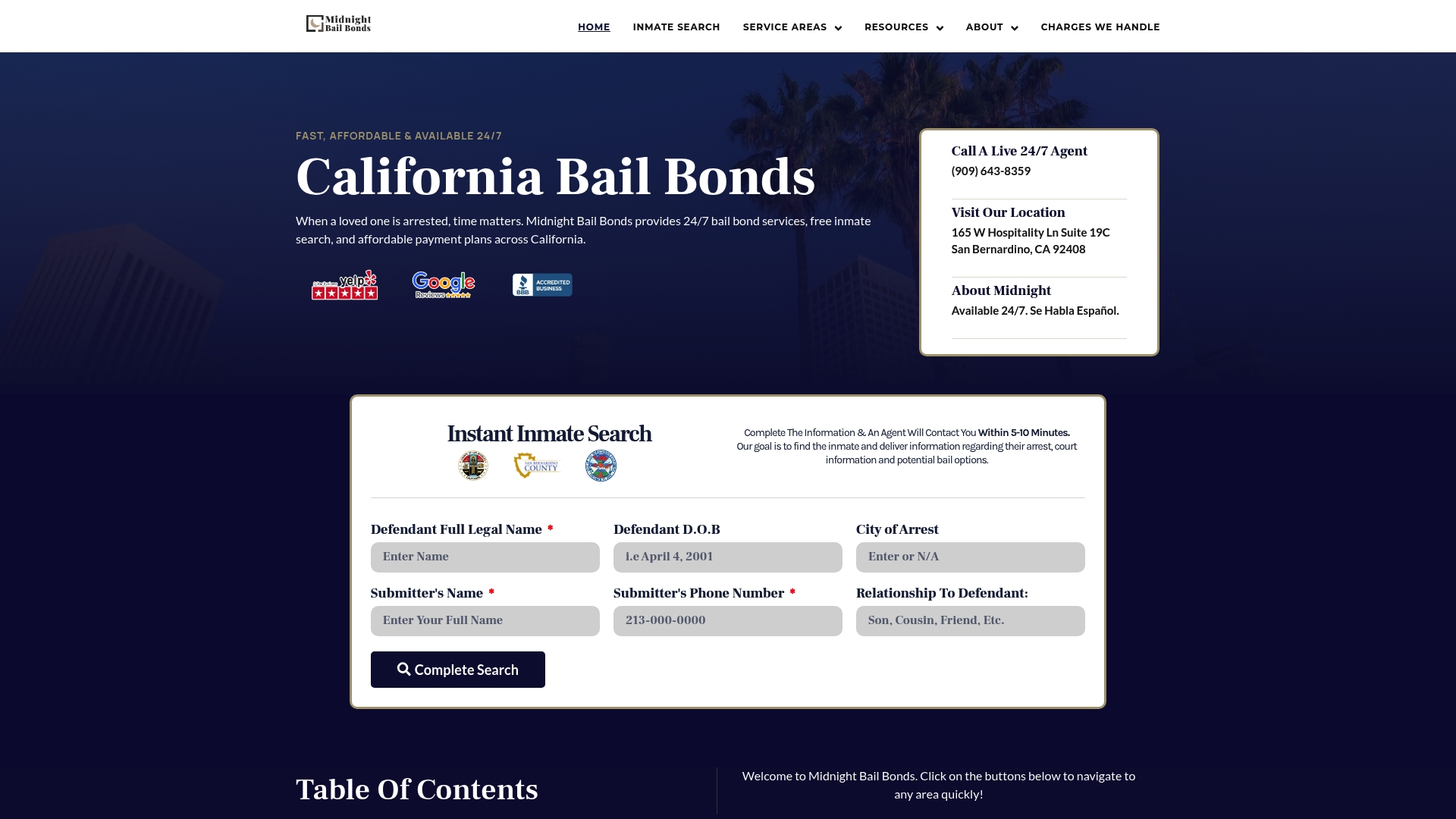
A bonds agent's job is straightforward: verify the booking number and bail amount, walk you through payment options, and post the bond so your family member isn't sitting in a cell longer than necessary. Some bail bonds services offer bail without collateral in many cases, flexible payment plans, and bilingual support for families who'd rather not navigate this in a language that isn't their first. Before you call, have three things ready: the booking number, the facility name, and the bail amount. If you don't have all three yet, start with the inmate search tool to confirm booking status, then reach out through Midnightbail's main line to get the bond process started.
Where to Verify Facility-Specific Rules
Booking policies vary by jurisdiction, so check the source that governs your situation directly.
- Cornell's Legal Information Institute for legal definitions and terminology.
- Nolo's booking explainer for a plain-language walkthrough.
- Your county sheriff's own booking and classification page for local timelines and specific rules.
Sources
- booking | Wex | US Law | LII / Legal Information Institute
- What Happens During Booking? - Nolo
- Booking & Classification - Fresno County Sheriff
- Arrest Process/Booking - Douglas County
FAQ
How long does the booking process take in jail?
A straightforward booking often runs from about half an hour to a couple of hours, though delays are common, and pre-booking transport and testing can add up to four hours before the person even arrives at the facility.
What are the main steps in the booking process?
Booking generally includes identity verification, property inventory, fingerprints, mug shots, warrant checks, health screening, a search, and a final custody decision of release, bail, or detention, as outlined by Nolo.
What happens right after someone gets booked into jail?
They're either released on citation or own recognizance, allowed to post bail, or moved into a holding area pending classification into general population or a specialized housing unit.
When can I call the jail to check on someone?
Wait one to two hours after the arrest, since most facilities can't release custody status until booking finishes, then call with the person's full legal name and date of birth ready, per Douglas County's guidance.
Does getting booked mean someone is guilty?
No. Booking is purely administrative and creates a record of custody. Guilt is determined later in court, not at intake, according to the Legal Information Institute.