

The fastest way to get someone out of jail is to have a licensed bail bond agent post the surety bond, or pay the full bail in cash if you have it. Before you call anyone, write down the defendant's full legal name, date of birth, booking number, exact charges, and the jail's name. Then call a 24/7 bondsman like Midnight Bail Bonds and have a valid photo ID ready to sign paperwork the moment they call you back.
TL;DR:
- Most bail bonds can be posted within minutes if the defendant’s full legal name, booking number, charges, and jail location are accurately provided proactively.
- Paying a nonrefundable 10% premium to a bondsman is typical; cash bond payments directly to the court can be refunded minus fees but require available liquid funds.
- Co-signers must understand they guarantee the defendant’s court appearance and risk losing collateral if the defendant skips court, including potential legal costs for recovery.
- Bond process delays often happen after posting due to verification, court holds, or missed court dates, making immediate action critical if the defendant misses a hearing.
- Families who prepare all needed information beforehand and contact a licensed bondsman before arraignment significantly reduce custody time, often achieving release within hours.
Table of Contents
- What Information Do You Need Before You Call?
- How Do You Post Bond as Fast as Possible?
- How Much Will Bail Actually Cost You?
- What Are You Actually Agreeing to as a Co-Signer?
- What Happens Right After Release?
- What If You Can't Afford Bail at All?
- How Can You Support the Defendant While They Wait?
- Are There Charges Where Bail Isn't an Option?
- A Bondsman's View on Cutting Custody Time
- Get Someone Released Now With Midnight Bail Bonds
- Sources
- FAQ
What Information Do You Need Before You Call?
Bondsmen and jail staff move fast when you hand them clean, accurate information. Show up with gaps in the story, and you've added an hour or more to a process that should take minutes.
Start with the defendant's details, since a mismatch here stalls everything else:
- Full legal name exactly as it appears on the booking record, plus date of birth
- Booking or inmate number and the specific charges filed
- The exact jail facility name and city, since counties often run several
Next comes your own paperwork as the person arranging bail. You'll need a valid government-issued photo ID and proof of how you know the defendant, since agents ask this to set up the indemnity agreement correctly. Decide upfront how you plan to pay: cash, credit or debit card, Zelle, or financing through the bond company. If you're posting a large sum, some agents will ask where the money came from, so be ready to explain it.
Finally, think about collateral before you're asked. If the agent requires it, gather titles or deeds now, and only pledge what you're truly willing to lose. A good agent will tell you who qualifies to post bail and what identification they'll need from you specifically.
How Do You Post Bond as Fast as Possible?
Once you have the basics, the process itself is short. Most families move through it in under an hour once an agent is engaged, though jail processing afterward varies.
- Confirm custody and the bail amount. Use an inmate search tool or call the jail or court clerk directly. Bail is sometimes set by a fixed schedule before arraignment, so this step can happen before a judge ever sees the case.
- Call a licensed bail bond agent immediately. Give them the jail name, booking number, and charges. Ask directly whether the agent can be present at arraignment. A bondsman who shows up right when bail is set can post it moments later, which shortens custody time far more than waiting until after the hearing to start calling around.
- Complete the application and sign the indemnity agreement. This document makes you, the co-signer, legally responsible for the defendant showing up to every court date. Read it before you sign it. Don't just skim it.
- Pay the premium or post cash. If you're using a bondsman, you'll pay a percentage of the total bail. Ask about payment plans or no-collateral options if the full amount up front isn't realistic.
- Wait through the jail's release process. Even after the bond is posted, jails run verification checks, and courts may require holds like a Nebbia hearing to confirm the source of funds if the amount looks unusual. This step alone can add hours in some counties.
Pro Tip: Call the bondsman before the arraignment hearing, not after. Agents who already have your paperwork can often post bond within minutes of the judge setting bail, instead of you scrambling to find an agent once the defendant is already sitting in a holding cell.
For a broader walkthrough of this exact sequence, Midnightbail's guide on how to bail someone out of jail covers each step in more depth.
How Much Will Bail Actually Cost You?
The number that matters most is the premium, the fee you pay a bondsman for posting the bond on your behalf.
- Premiums commonly run around 10% of the total bail amount, though some states cap this figure lower by law, according to Investopedia.
- This premium is generally nonrefundable. You don't get it back even if the case is dismissed the next day.
- Collateral, if required, gets returned once the case concludes and the bond is exonerated, but a lien can sit on that property the entire time.
- Payment methods vary by agent: cash, card, Zelle, and financing plans are common, and missed installment payments on a financing plan can trigger the agent to pull the bond.
If you happen to have the full bail amount in cash, paying it directly to the court instead of using a bondsman means you get the entire sum back at case end, minus court fees, as long as the defendant makes every appearance. That makes cash cheaper in the long run. But most families don't have $10,000 or $25,000 sitting liquid, which is exactly why bondsmen exist and why premium financing gets used so often.
What Are You Actually Agreeing to as a Co-Signer?
Signing an indemnity agreement puts you in a three-party contract: you, the defendant, and the bond company. You're the one guaranteeing the defendant shows up to court, not just a witness to the paperwork.
If the defendant misses a court date, the consequences land on you. The court can order the bond forfeited, which means you or the bond company owe the full bail amount. Recovery agents may get involved to locate the defendant, and legal commentators have raised concerns about how aggressively some bond companies pursue skipped defendants. Any collateral you pledged is now at risk too.
Before signing anything, check for these details:
- Clauses about the company's right to surrender the defendant if they believe a court date will be missed
- Who pays recovery costs if the defendant has to be tracked down
- What happens if you miss a payment on a financing plan
Pro Tip: Pledge the smallest amount of collateral you're comfortable losing entirely, and get every term of the agreement in writing before you sign. If an agent won't put a promise in writing, don't rely on it.
What Happens Right After Release?
Once the defendant walks out, the priorities shift fast. Arrange transportation immediately. Then get the defendant in touch with an attorney the same day, even if that's just a public defender's office for now.
- Write down every court date the moment you receive it, and set reminders well before each one.
- Note any release conditions, since violating them can undo the bond just as fast as missing a hearing.
- The bond stays active until the court formally discharges the case, which is when you can request proof of exoneration and get any pledged collateral released.
- If a court date gets missed, call the bondsman and the attorney immediately. Fast action sometimes prevents forfeiture from being finalized.
Midnightbail's breakdown of what happens after bail covers exoneration timing and collateral return in more detail.
What If You Can't Afford Bail at All?
Not every family has access to a bondsman's premium, let alone cash bail outright. You still have options, and none of them require giving up.
Ask the court to appoint a public defender if the defendant doesn't have private counsel. A public defender can request a bail reduction hearing, arguing the amount is too high given the defendant's finances, ties to the community, or the nature of the charge. Judges grant these more often than families expect, particularly for lower-level, nonviolent charges.
Some counties also run pretrial services programs that evaluate defendants for release on recognizance, meaning the defendant is released with a written promise to appear rather than any payment at all. Eligibility depends heavily on the charge, criminal history, and local court policy, so ask the public defender or court clerk directly whether the case qualifies.
A handful of jurisdictions have also adopted bail reform measures that reduce or eliminate cash bail for specific low-level offenses. These rules vary enormously from one county to the next, so don't assume anything based on what you've read about a different state's system.
If none of these routes work and the family still can't cover a premium outright, ask a bondsman about financing plans or no-collateral options before assuming bail is simply out of reach. Many agents structure payments specifically for families in exactly this situation.
How Can You Support the Defendant While They Wait?
Whether release takes an hour or several days, the defendant needs contact with the outside world in the meantime, and jails have strict rules about how that happens.
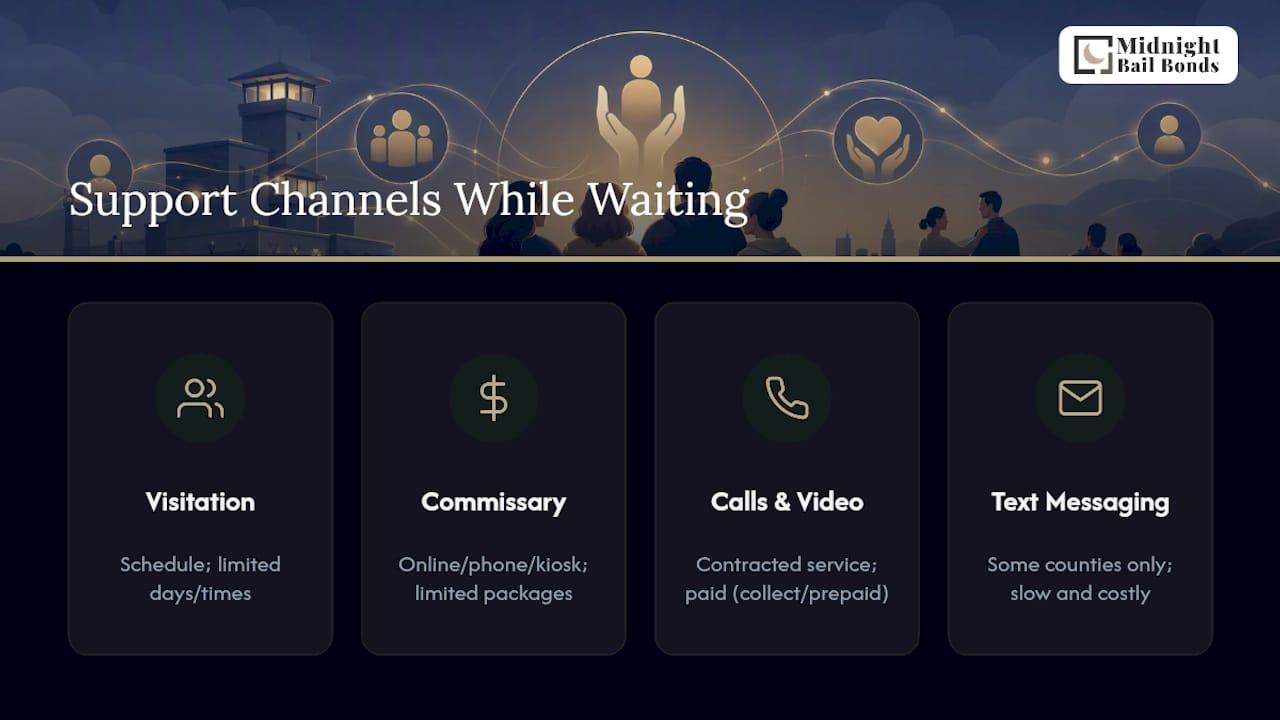
Visitation almost always requires scheduling in advance, and most jails limit visits to specific days, time windows, and a set number of visitors per session. Call the facility directly or check its website before showing up, since walk-in visits are rejected at most county jails.
Sending money works through the jail's commissary system, usually via an online portal, phone deposit line, or a kiosk at the facility itself. That money lets the defendant buy food, hygiene items, and phone time. Sending physical packages is far more restricted. Many jails only accept items ordered directly through an approved vendor, and anything mailed independently often gets rejected or destroyed.
Phone calls and video visits typically run through a jail-contracted service, and they aren't free. Rates vary by facility, and calls are usually collect or prepaid. Text-based messaging services exist in some counties too, though they're often the slowest and most expensive option per message.
If you're unsure which of these apply to a specific jail, the inmate search and facility guide is a faster way to confirm the rules than calling and waiting on hold.
Are There Charges Where Bail Isn't an Option?
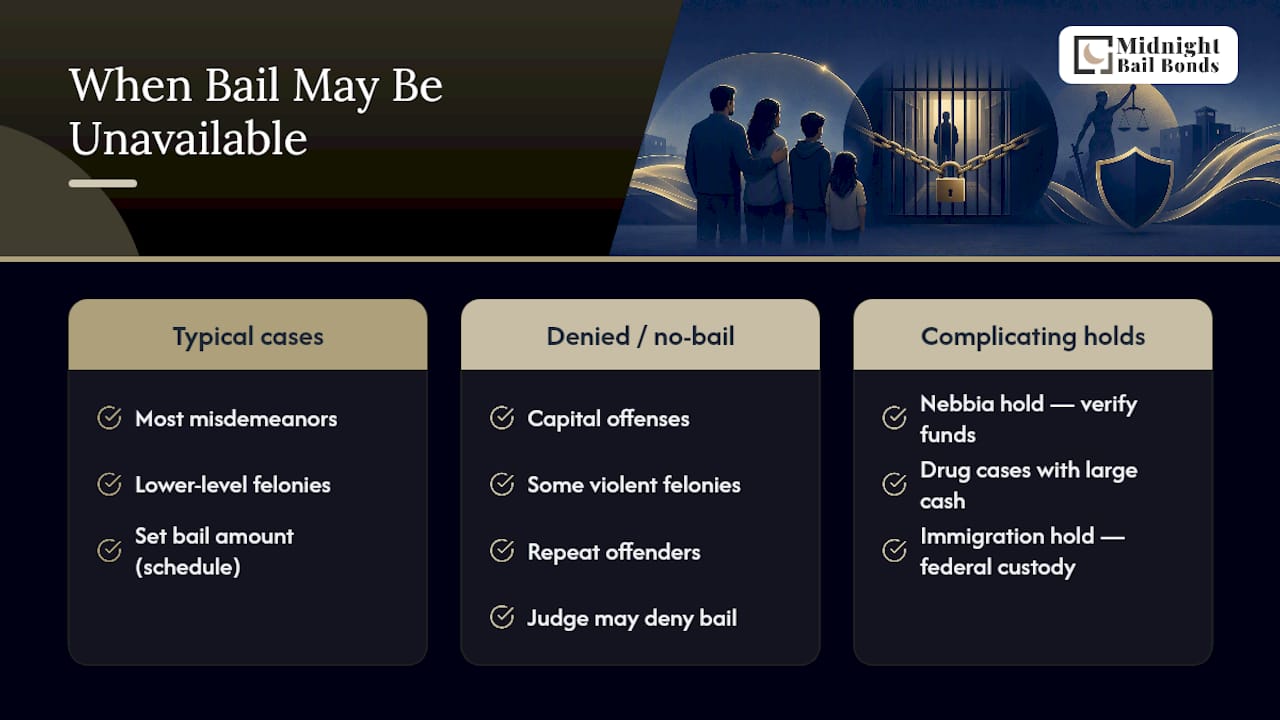
Bail eligibility depends heavily on the charge and, in some cases, the defendant's history. Most misdemeanors and lower-level felonies come with a set bail amount, sometimes determined by a county bail schedule before a judge even sees the case.
Certain charges complicate this. Capital offenses, some violent felonies, and cases involving repeat offenders can lead a judge to deny bail entirely, or to hold what's sometimes called a "no-bail" status pending a hearing. Some jurisdictions also impose special holds, like a Nebbia hold, requiring proof that bail funds come from a legitimate source before the court will accept payment, particularly in drug-related cases where large cash sums raise questions.
Immigration holds add another layer of complexity. A defendant can post bail on the criminal charge and still remain in custody if federal authorities have placed an immigration hold, which state bail bonds have no power to resolve.
None of this is something you should try to navigate alone. If bail seems unusually high, denied outright, or tied to an unfamiliar hold, ask the defense attorney to explain the specific legal basis before assuming the worst. What looks like a dead end from the outside is often a procedural step with a clear next move.
A Bondsman's View on Cutting Custody Time
Most of the time families lose comes down to one thing: information gaps. The families who get their person out fastest are the ones who call before they've fully processed what's happening, with the booking number already in hand, ready to answer questions instead of asking them.
Working 24/7 with bilingual agents and an instant inmate search, I've watched a bondsman showing up at arraignment turn a multi-hour ordeal into a release within the same hour bail gets set. Flexible payment plans and no-collateral options matter too, since the biggest delay I see isn't legal complexity. It's a family scrambling to find money at 2 a.m. when a payment plan would have solved it in one phone call.
— Jake
Get Someone Released Now With Midnight Bail Bonds
Midnight Bail Bonds posts bonds 24/7 across California, with bilingual agents, flexible payment plans, and no-collateral options for families who can't pledge property. Unlike waiting on a public defender's calendar or scraping together cash at odd hours, you get a licensed agent on the phone right now, ready to move the moment bail is set.
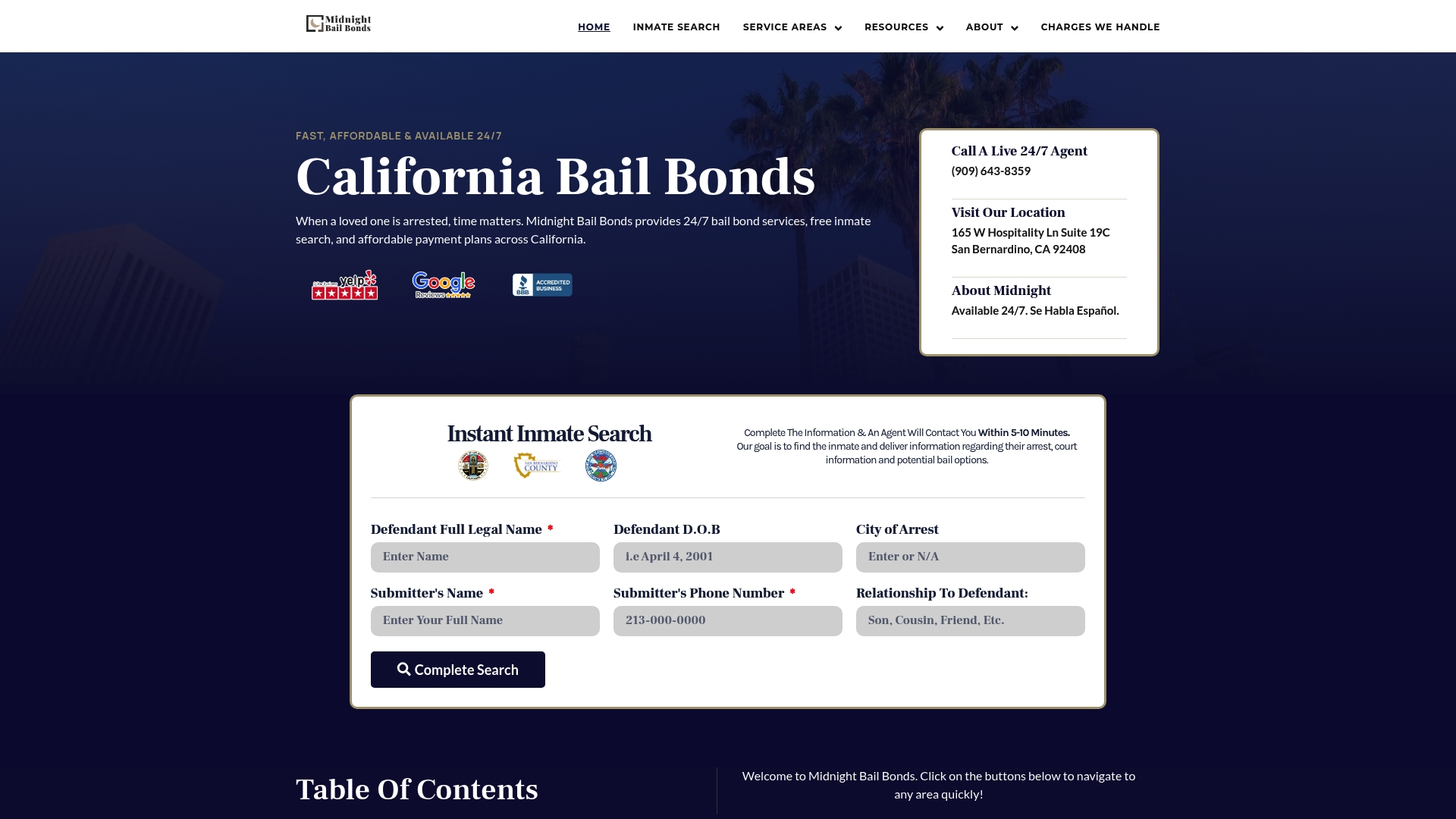
Start with the inmate search tool to confirm custody status and bail amount, or if you're in Orange County, check the Orange County inmate search directly. Before you call, have these three things ready:
- The defendant's full legal name and booking number
- The exact jail facility name and location
- A valid government-issued photo ID for yourself
Then call Midnight Bail Bonds and get the process moving tonight, not tomorrow morning.
Sources
- Investopedia — Bail bond definition and explanation
- University of Washington Law — Bail and bail bondsman (2025)
FAQ
How Fast Can You Get Someone Out of Jail?
With a bondsman ready at arraignment and paperwork prepared in advance, release can happen within an hour or two of bail being set, though jail verification checks sometimes add extra time.
What Percentage Do Bail Bondsmen Typically Charge?
Premiums commonly run around 10% of the total bail amount, and this fee is generally nonrefundable regardless of the case outcome.
Can You Get Your Collateral Back After Posting Bail?
Yes, collateral is returned once the court exonerates the bond at the end of the case, but any lien placed on the property stays active until that happens.
What If the Defendant Can't Afford Bail at All?
A public defender can request a bail reduction hearing, and some defendants qualify for release on recognizance or local bail reform programs depending on the charge and county.
Does Midnight Bail Bonds Offer Payment Plans?
Yes, Midnight Bail Bonds offers flexible payment plans and no-collateral options in many cases, along with 24/7 bilingual agents across California.
What Happens if the Defendant Misses a Court Date?
The bond can be forfeited, making the co-signer liable for the full bail amount, so contacting the bondsman and attorney immediately is critical to limit the damage.