
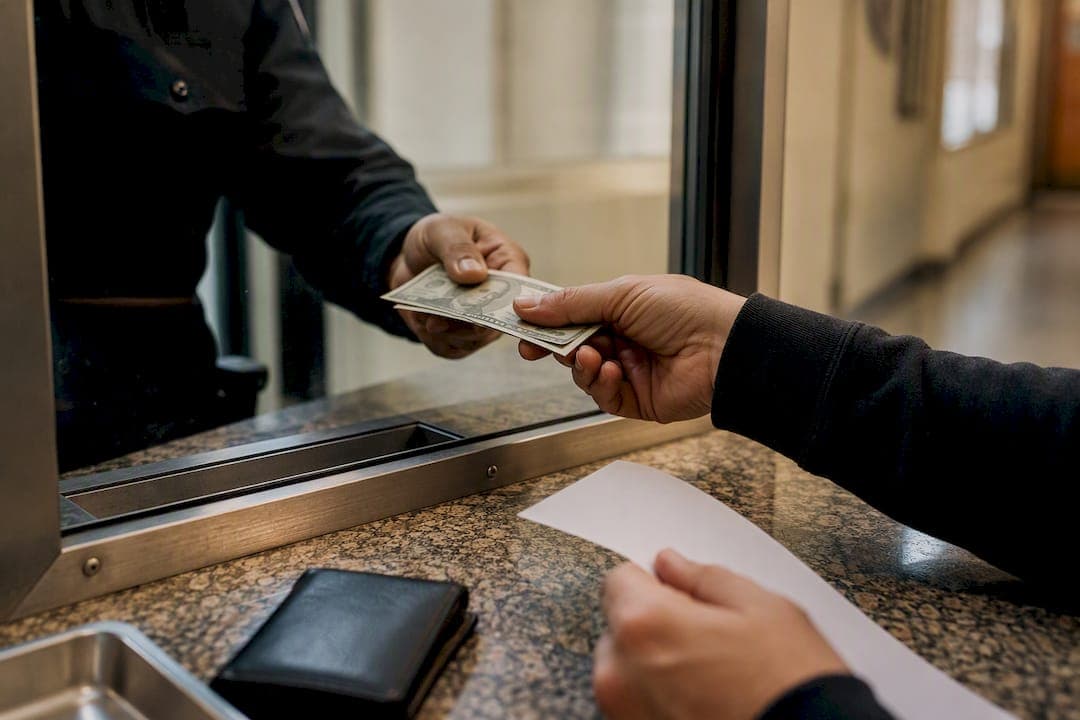
Four types of people or entities can post bail: the defendant, a family member or friend acting as surety, a licensed bail bondsman, or in counties that offer it, a pretrial services program. Bail typically gets posted one of three ways: full cash, a percentage or cash-option deposit, or a surety bond through a bail agent.
Whoever signs for someone else's release takes on real legal weight. A person who posts bail for another is called a surety, and under most state rules, that surety becomes responsible for making sure the defendant shows up to every court date, according to New Jersey Courts. Rules on exactly who qualifies, and which payment methods a county accepts, shift from state to state and sometimes county to county.
- Defendant: can post their own bail if they have the funds or assets available.
- Family or friend (surety): can pay cash, arrange a bond, or post property, but accepts liability if the defendant skips court.
- Licensed bail bondsman: posts a surety bond on behalf of the defendant in exchange for a nonrefundable premium.
- Pretrial services: in some jurisdictions, supervises release without requiring any money at all.
Key Takeaways
Posting bail is legally available to the defendant, a family member or friend acting as surety, or a licensed bail bondsman, and each option carries different costs and liability.
| Point | Details |
|---|---|
| Multiple people can post bail | The defendant, a family member, a friend, or a licensed bail bondsman can each legally post bail. |
| Surety means real liability | Signing as surety makes you responsible for the full bail amount if the defendant misses court. |
| Bondsman fees are nonrefundable | Expect to pay a premium of about 10% of the total bail, which you don't get back regardless of outcome. |
| Always keep the receipt | Your payment receipt is the only proof you have if a refund or forfeiture dispute comes up later. |
| Rules shift by county | Bail schedules, accepted payment methods, and judge discretion vary, so confirm details with the local clerk. |
| Midnightbail offers licensed help | Bilingual agents, flexible payment plans, and bail without collateral in many cases speed up release across California. |
Table of Contents
- Who Can Post Bail and What Methods Are Accepted?
- Who Is Legally Responsible Once Bail Is Posted?
- Why Use a Bail Bondsman, and What Does It Cost?
- What Happens After Bail Gets Posted?
- Do Bail Rules Change From State to State?
- How Do You Bail Someone Out Right Now?
- When Should You Call a Lawyer Instead of a Bondsman?
- What This Process Actually Rewards
- Get Help Posting Bail Right Now
- Where to Check Official Bail Rules
- Sources
- FAQ
Who Can Post Bail and What Methods Are Accepted?
Nearly anyone with the money or a willingness to sign a contract can post bail, but each jurisdiction dictates the acceptable methods and who is allowed to use them. Full cash payment is the most straightforward: the defendant, a relative, or a friend hands over the entire bail amount, usually at the jail's booking window or the courthouse clerk's office. You'll walk away with a receipt, and that receipt is your only proof the payment happened, so don't lose it.
Some states allow a percentage or "10% cash option," where the court accepts a fraction of the full bail amount as a deposit instead of the whole sum. Courts that offer this often require written notice explaining the liability involved, especially when someone other than the defendant is putting up the money, per rules laid out in Pennsylvania's bail code. Not every county offers this option, so it pays to ask before assuming you qualify.
Surety bonds work differently. A licensed bail bondsman posts the full bail amount with the court and charges a premium, generally a percentage of the total, in exchange for taking on that financial risk. The Connecticut Judicial Branch confirms this three-way split, cash, percentage deposit, or bondsman, as the standard menu most courts offer. Some defendants qualify for release on recognizance or supervision through pretrial services, skipping money altogether, though eligibility depends heavily on the charge and the defendant's history.
- Confirm the exact bail amount with the jail or court clerk.
- Decide whether cash, a percentage deposit, or a bond fits your situation.
- Bring valid ID and the defendant's full name and booking number.
- Ask which payment channels the facility accepts, since cash, card, and electronic transfer rules vary.
- Get a written receipt no matter which method you use.
Pro Tip: Call the jail's booking desk before you drive over. Some facilities only take cash after hours, and showing up with the wrong payment type can cost you another two or three hours of waiting.
Who Is Legally Responsible Once Bail Is Posted?
Signing as a surety means you are legally on the hook for the full bail amount if the defendant fails to show up in court. That's the core risk of helping someone out, and it's worth understanding before you sign anything. A surety isn't just a cosigner on a loan. Courts can pursue you for the full bail amount and, in some cases, the cost of locating and returning the defendant if they skip a hearing, based on New Jersey's court guidance.
Most jurisdictions expect a surety to be an adult, financially solvent, and not currently facing certain legal disqualifications, though the specific requirements vary by state and sometimes by county. There's an important distinction buried in the paperwork: depositing cash directly with the court is different from signing a bond as surety through a bondsman. Cash deposits tie your liability to the money you put down. Signing as surety on a bond can expose you to the full bail amount, even though you only paid a premium.
- Depositing cash: you risk losing what you deposited if the defendant doesn't appear.
- Signing as surety on a bond: you can be liable for the entire bail amount, not just the premium you paid.
- Co-signing with collateral: you risk losing the property you pledged, on top of any cash exposure.
If a defendant misses a court date, the court can declare the bail forfeited. That process typically involves a formal notice period, giving the surety a window to explain the absence or produce the defendant before the court finalizes forfeiture and pursues collection, according to The Bail Project. One detail people underestimate: forfeiture isn't automatic the moment someone misses a hearing. Courts generally build in a grace period, but the surety needs to act during that window, not after.
Why Use a Bail Bondsman, and What Does It Cost?
A licensed bail bondsman posts the full bail amount with the court in exchange for a nonrefundable premium, letting families avoid coming up with the entire sum in cash. That premium is commonly a percentage of the total bail, typically between ten and twenty percent, and you don't get it back regardless of how the case resolves, according to FindLaw. For example, if bail is set at a certain amount, expect to pay a nonrefundable premium proportional to that total as the bondsman's guarantee to the court.
Bondsmen underwrite that risk the way any lender would. They'll often ask for collateral, property, a vehicle title, or a co-signer with steady income, before agreeing to post a bond on a defendant with a shaky record or a high bail amount. This isn't arbitrary; it's how the agent protects themselves if the defendant disappears.
- The agent guarantees the court that bail will be paid in full if the defendant fails to appear.
- The premium is set by state regulation in many places and isn't usually negotiable beyond a certain point.
- Collateral requirements depend on the defendant's flight risk, criminal history, and the bail amount itself.
- Licensing and consumer protections vary, but agencies operating in California answer to the California Department of Insurance, which regulates bail bond agents as a form of surety insurance.
Before signing with any agent, verify their license number directly with the state regulator. A legitimate bondsman won't hesitate to hand over that information, and a written fee schedule should always accompany the contract.
What Happens After Bail Gets Posted?
Release timing depends heavily on the facility, but most jails process paperwork and release the defendant within a few hours of bail being posted, sometimes faster, sometimes considerably slower during busy weekends or holidays. Some jails handle everything on-site, while others require a trip to the courthouse clerk first.
- Keep the receipt. It's your only proof the payment was made, and courts explicitly recommend holding onto it, per New York Courts.
- If you posted cash directly, expect a refund once the case concludes, assuming the defendant met every court obligation. Refunds can take weeks and sometimes come with administrative fees deducted.
- If you used a bail bondsman, the premium is gone regardless of outcome. That's the tradeoff for not tying up the full bail amount.
- If the defendant misses a court date, the court issues a forfeiture order after a notice period, giving the surety a chance to respond before the judgment becomes final.
- Sureties who can show a legitimate reason for the missed appearance, or who locate and return the defendant, may petition the court to set aside forfeiture.
The paperwork trail matters more than most people realize until they need it. A missing receipt or an unclear payment record can turn a routine refund into a monthslong dispute with the clerk's office.
Do Bail Rules Change From State to State?
Bail procedures vary enough between states, and even between counties in the same state, that assuming your neighbor's experience applies to your case is a common and costly mistake. Bail schedules, the availability of percentage-deposit options, and how much discretion a judge has over setting or adjusting bail all differ by jurisdiction, according to reporting from the University of Washington School of Law.
- Some counties post bail schedules publicly, giving a fixed amount for common charges; others leave every amount to a judge's discretion at arraignment.
- Where you physically post bail differs too. Some counties process everything at the jail; others require a trip to the courthouse clerk during business hours.
- Certain charges, particularly violent felonies or cases where a judge finds the defendant a flight risk, can trigger higher bail, added conditions like electronic monitoring, or denial of bail altogether.
- Pretrial services programs that release defendants without cash exist in some counties but not others, and eligibility rules for them vary widely.
If you're dealing with a charge like battery or robbery, the bail amount and conditions can swing dramatically depending on the county's charging practices and the judge assigned to the case. The safest move is always checking the arresting jurisdiction's own clerk or sheriff's website rather than relying on a friend's experience from a different county.
How Do You Bail Someone Out Right Now?
Start by finding the defendant's exact status and bail amount. Most counties, and Midnightbail's own inmate search tool, let you pull up booking number, charges, and bail amount within minutes using just a name.
- Call the jail's booking desk or use an inmate search to confirm the booking number, charges, and bail amount.
- Gather valid photo ID, the defendant's full legal name, date of birth, and booking number before you go anywhere.
- Decide between cash and a bondsman. If the bail amount is high or you don't have liquid cash, a bondsman becomes the faster option.
- If you're calling a bondsman, confirm their license number, get the fee schedule in writing, and ask exactly what collateral they require before signing anything.
- Once payment is made, get a receipt and ask the facility for an estimated release timeline so you know when to expect the defendant.
Pro Tip: Call ahead. Facilities process releases faster when the paperwork and payment are confirmed before you arrive, and a five-minute phone call can save you an hour of standing in a waiting room.
When Should You Call a Lawyer Instead of a Bondsman?
Serious charges, contested bail hearings, or unusual release conditions call for an attorney before you call anyone else. Criminal defense lawyers can challenge an excessive bail amount at a hearing and often know which local bail agents have a solid reputation, a point emphasized by legal resources like Chris Campbell Law.
When picking a bondsman instead, run through a short checklist first.
- Verify the agent's license number with your state's insurance or regulatory department.
- Ask for a written contract detailing the premium, collateral terms, and check-in requirements.
- Confirm accepted payment methods before you commit to a meeting time.
- Walk away from anyone who solicits you directly at the jail or refuses to show proof of licensing.
Pro Tip: A legitimate agent will always answer straightforward questions about their license and fee schedule without hesitation. Hesitation on either question is your cue to call someone else.
What This Process Actually Rewards
Most people assume speed is the only thing that matters when someone lands in jail. It isn't. Verification matters just as much, checking a bondsman's license, reading the contract before signing, and keeping every receipt, because the paperwork you skip in a panic is the paperwork you'll wish you had during a dispute months later.
The surety obligation catches families off guard more than any other part of this process. People sign expecting to help a relative for a weekend and don't realize they've accepted liability that can follow them for months if the case goes sideways. Ask questions first. Sign second.
— Jake
Get Help Posting Bail Right Now
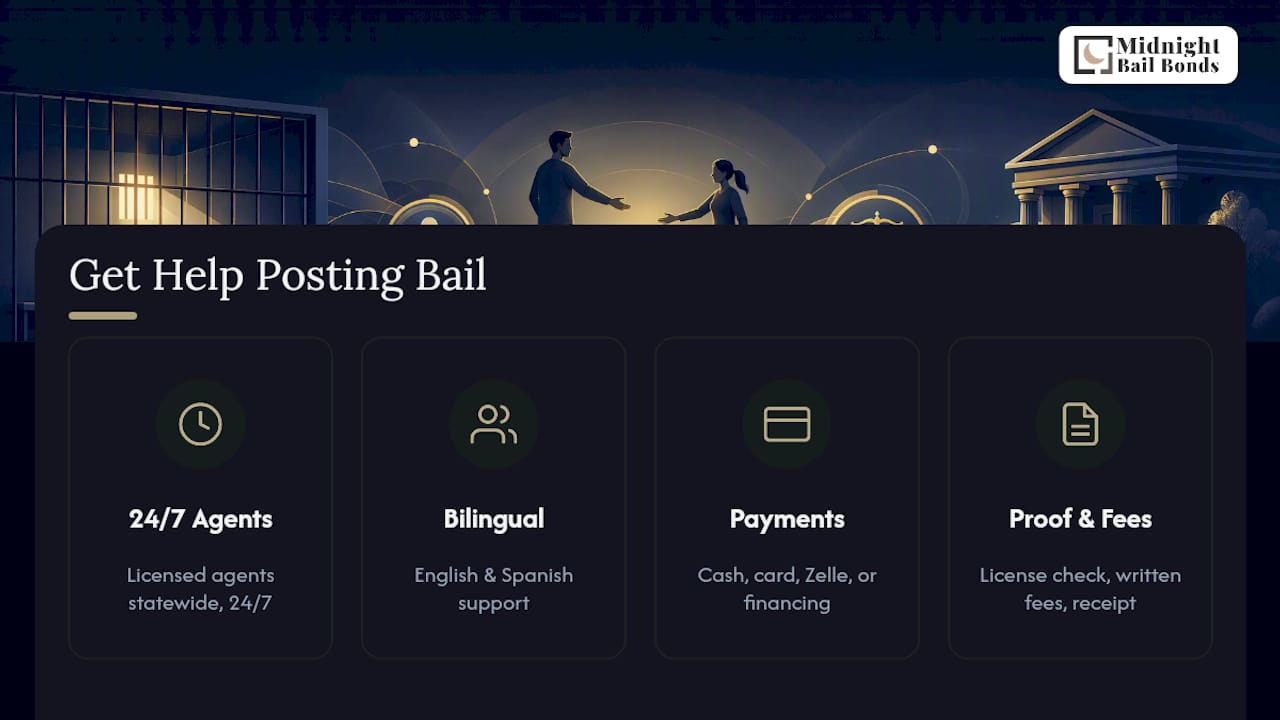
Once you know who can post bail and what it costs, the next question is how fast you can actually get someone out. Midnightbail runs licensed bail agents around the clock across California, with bilingual English and Spanish support and a free instant inmate search so you're not stuck guessing a booking number over the phone at 2 a.m.
Families dealing with DUI, drug charges, domestic violence, or other serious cases often don't have hours to compare bondsmen. Midnightbail offers flexible payment plans, and bail without collateral in many cases, so a shortage of cash on hand doesn't have to mean extra time in custody. Every agent will confirm their license, walk you through the fee schedule in writing, and hand you a receipt the moment payment is processed. Payment options include cash, credit or debit, Zelle, and financing, whatever fits the situation you're in right now.
If you're in Orange County, Midnightbail's Orange bail bonds page covers Orange PD and Theo Lacy directly. Otherwise, start at Midnightbail or call to get a licensed agent working on the release immediately.
Where to Check Official Bail Rules
For jurisdiction-specific procedures, check your state court's FAQ page, the California Department of Insurance for bondsman licensing, or your arresting county's clerk or sheriff website directly.
This article is general information, not a substitute for advice from a qualified lawyer. Consult a qualified legal professional about your own circumstances before acting on anything here.
Sources
- Who can post bail, and what are the responsibilities of someone who posts bail? | NJ Courts
- Bail FAQs - Connecticut Judicial Branch
- Bail bonds - California Department of Insurance
- What is bail, and how does it work in the U.S. court system? - University of Washington School of Law (News)
FAQ
Can You Post Bail Without Seeing a Judge?
In many cases, yes. Bail schedules let jail staff or a clerk process a release for common charges without a hearing, though judges retain discretion to set or adjust bail at arraignment, especially for serious charges.
What Does It Mean When Someone Posts Your Bail?
It means that person, called a surety, has paid or guaranteed your release amount and has taken on legal responsibility for making sure you appear at every scheduled court date.
Who Gets the Money When You Post Bail?
The court holds cash deposits until the case concludes, then refunds them if all conditions are met. If you use a bail bondsman, the nonrefundable premium goes to the licensed agent as payment for underwriting the bond.
Do Bail Bondsmen Have Police Powers?
No. Licensed bail agents are not law enforcement and don't have arrest powers beyond what state law grants for recovering a defendant who violates bond conditions, which is typically limited and heavily regulated.