
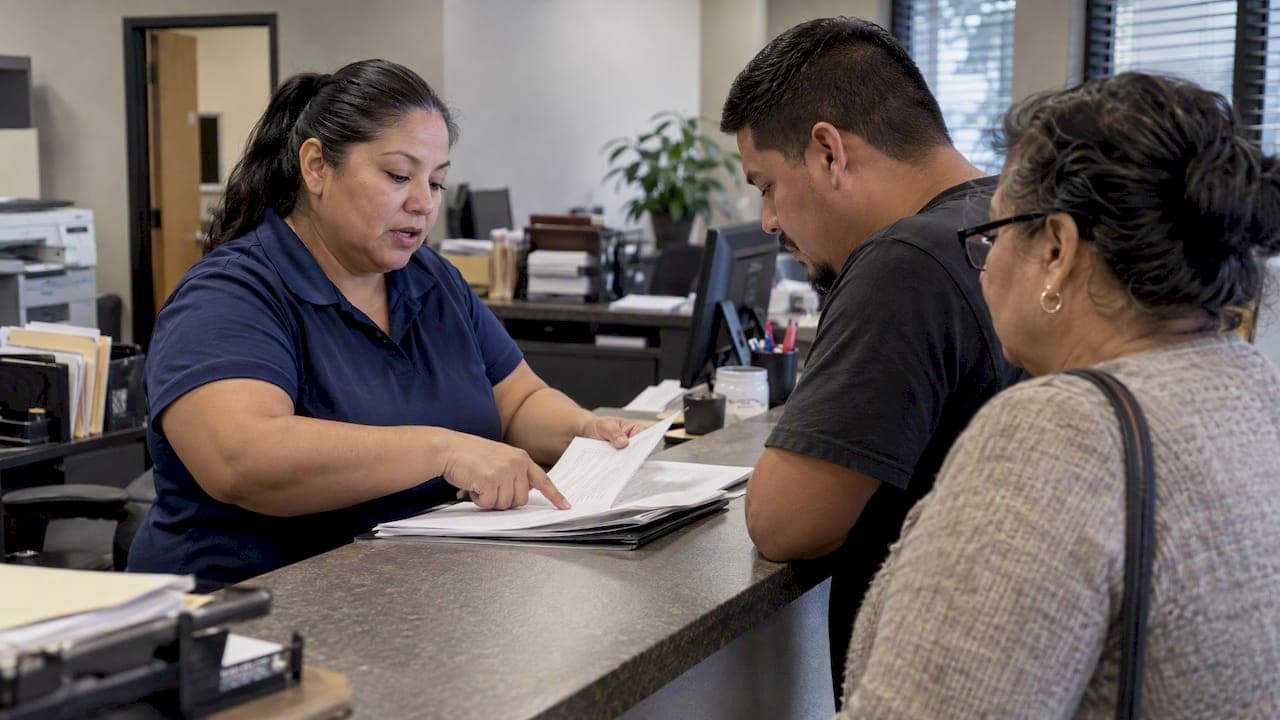
When you need a licensed, bilingual bail agent right now, the fastest path is a 24/7 Spanish speaking team you can verify in minutes. We work as licensed agents who speak Spanish and English, post bonds quickly, and offer flexible payment plans, so you can call or start the process online the moment you're ready.
TL;DR:
- Verify the agent’s license number through your state insurance department, test Spanish fluency with a contract explanation, and confirm all fees and collateral terms upfront.
- California commonly charges a nonrefundable premium of 10% of bail, so a $20,000 bond costs about $2,000; other states set different rates.
- Posting often takes a few hours after payment and paperwork, but jail workload, late bookings, and missing information can delay release.
- Have the detainee’s legal name, booking number, facility, and your identification ready; ask about payment plans or reduced down payments before signing.
Table of Contents
- What a Spanish speaking bail agent does and why bilingual help matters
- How to find and verify a licensed Spanish speaking bail agent fast
- Typical costs and timeline: what to expect when arranging bail in Spanish
- What happens during posting and agent coordination for Spanish speakers
- How Midnight Bail Bonds helps Spanish speaking families
- Steps to verify agent legitimacy and avoid scams in Spanish
- Agent perspective: quick dos and don'ts when calling in Spanish
- Start a bail bond with Midnight Bail Bonds
- FAQ
- Sources
- Authoritative court rulings and Midnight Bail Bonds resources
What a Spanish speaking bail agent does and why bilingual help matters
A bail agent posts a bond with the jail or court so your family member can be released while the case moves forward. The agent reviews the charge, confirms the bail amount set by the court, signs a contract with you as the indemnitor, and pays the jail to release the detainee. That sounds simple until language gets in the way.
Court records show how much is riding on accurate Spanish. In one case, the Ninth Circuit found that an incorrect Spanish translation of Miranda warnings failed to properly convey the right to counsel, a reminder that exact wording changes outcomes. Appellate courts have also examined whether a Spanish-language waiver was read and understood correctly before accepting it as valid. None of this involves your bail contract directly, but it shows why working with someone fluent in both languages, not just someone who speaks a little Spanish, matters when liberty and legal rights are on the line.
A bilingual legal services bail agent gives you:
- Faster intake because you explain the situation once, in your own words, without a language barrier slowing things down.
- Clearer contract terms because you understand exactly what you're signing and what you owe.
- Fewer misunderstandings about fees, collateral, and court dates that could otherwise cause a missed payment or a bond revocation.
How to find and verify a licensed Spanish speaking bail agent fast
Every state requires bail agents to hold a license, and checking it takes less time than the call itself. Start with your state's department of insurance website, which keeps a searchable list of licensed bail agents, then ask the agent directly for their license number and office address before you say another word about your situation.
- Ask for the agent's full name and license number, then confirm it matches what the state database shows.
- Confirm they speak Spanish fluently, not just a few phrases, and ask them to explain the bail process in Spanish to test clarity.
- Ask about hours of operation and whether someone answers calls at night or on weekends.
- Ask for the total premium cost, any required collateral, and accepted payment methods in plain terms.
- Request a copy of the contract in Spanish or ask that a translator walk through it with you before signing.
Watch for warning signs: an agent who won't give a license number, one who dodges questions about fees, or one who claims to speak Spanish but struggles to explain basic terms. Any of these should send you to a different agent immediately.
Pro Tip: Keep the booking number and facility name on hand before you call. It speeds up every question that follows.
Typical costs and timeline: what to expect when arranging bail in Spanish
Bail agents are paid a premium, a non-refundable fee set as a percentage of the total bail amount. In California, the common structure is a 10% bail premium, meaning a $20,000 bail typically costs $2,000 to post, though this applies specifically to California and other states set their own percentages and rules.
Payment options usually include:
- Cash, credit or debit cards, and digital transfers like Zelle.
- Payment plans that split the premium into smaller installments.
- Reduced down-payment programs for families who qualify.
Most bail postings move within a few hours of payment and paperwork being completed, though the exact timing depends on how quickly the jail processes release paperwork and how busy the facility is that day. This detail is confirmed through the posting process itself rather than any fixed rule. Late-night bookings, overcrowded facilities, and incomplete paperwork all add time, while having ID, booking information, and payment ready in advance keeps things moving.
What happens during posting and agent coordination for Spanish speakers
Once you've chosen an agent, the posting process follows a predictable sequence. Having your information organized before the call saves real time.
- Give the agent the detainee's full legal name, booking number, and the facility where they're held.
- Provide your own identification and, if required, information about a cosigner.
- Review and sign the bail contract, in Spanish or with a translator present, so every term is clear before you commit.
- Submit payment through whatever method the agent accepts.
- Wait for the agent to coordinate directly with jail intake staff, who confirm the bond and process release paperwork.
During the wait, keep your phone available since agents often call with updates on where things stand. Facilities move at different speeds depending on staffing and how many releases are being processed at once, so a short delay after payment doesn't necessarily mean a problem.
How Midnight Bail Bonds helps Spanish speaking families
We built our service around the moments when families can't afford delays or confusion. Our licensed agents are available 24/7 and answer calls directly, in Spanish or English, so you're never stuck waiting for a callback or guessing whether the person on the line actually understands your situation.
- We offer 24-hour bail bond service with agents who pick up day or night.
- We provide bilingual support on every shift.
- We offer an instant inmate search so you can confirm booking details before you even call.
- We write many bonds without requiring collateral, helping families under pressure.
- We publish practical resources like our guide to Spanish bail terms and our breakdown of fast release notifications so you know what to expect at every step.
Steps to verify agent legitimacy and avoid scams in Spanish
Scammers specifically target Spanish-speaking families because they assume a language barrier will stop someone from checking credentials. A few habits protect you.
Always ask for the agent's license number before discussing any payment, and verify it independently through your state's insurance department website rather than trusting a number read off a business card or text message. A legitimate agent will never hesitate to provide this information in either language.
Be cautious of anyone who demands payment through unusual methods like gift cards or wire transfers to a personal account, asks for payment before explaining the full contract, or pressures you to sign documents you haven't had translated or explained. A real agent walks you through the premium, any collateral requirements, and the payment plan options clearly, in Spanish if that's your preferred language, before asking for money.
If an agent claims to be bilingual but can't answer basic questions in Spanish about the bond process, treat that as a red flag. Confirm the agent's physical office address exists and matches public records, since fraudulent operators often use fake addresses or refuse to meet in person. Families who feel rushed or confused should slow down and verify before signing anything, even when the situation feels urgent.

Agent perspective: quick dos and don'ts when calling in Spanish
When a family calls in Spanish, the fastest cases start the same way: give the detainee's full name, booking number, and facility right away. Have identification ready and ask upfront whether payment plans are available if the full premium is a stretch.
The quickest way to confirm real bilingual capability is to ask the agent to explain the contract terms in Spanish on the spot. A hesitant answer or a switch back to English mid-explanation is worth noticing. Confirming the license number before any payment discussion protects you every time.
— Jake
Start a bail bond with Midnight Bail Bonds
We make the first call count. Our licensed agents speak Spanish and English around the clock, explain costs clearly before you commit, and work with payment plans to support your needs.
- Call us anytime or start the process online from your phone.
- Ask about 1% down bail bonds or 2% bail bonds if a lower upfront payment helps.
- Explore no-collateral bail bonds if you don't have property or assets to put up.
This article is general information, not a substitute for advice from a qualified lawyer. Consult a qualified legal professional about your own circumstances before acting on anything here.
FAQ
Why would a bail bondsman come to my house?
A bail agent may visit your home to collect signatures, verify your address for the contract, or discuss collateral if your bond requires it. This is a standard part of finalizing a bail agreement and doesn't indicate any problem with your case.
What is a jail bond in Spanish?
A jail bond, often called "fianza" in Spanish, is the payment arrangement that secures someone's release from custody while their case is pending. An agent posts the bond with the court or jail in exchange for a non-refundable premium paid by the family.
How much does a $75,000 bail bond cost?
In California, where the standard premium is 10% of the total bail, a bail bond costs 10% of the total bail amount, though other states set different percentages. You can estimate costs for your specific case using a bail bond calculator.
What happens if you can't pay back a bond?
The premium paid to a bail agent is non-refundable regardless of the case outcome, since it covers the agent's service in securing release. If collateral was used and the defendant fails to appear in court, the agent can pursue that collateral to cover the forfeited bail amount, so discussing payment plan options upfront with your agent matters before you sign.
Sources
- United States v. Murguia‑Rodriguez (9th Cir. opinion)
- United States v. Olivas Bailon (7th Cir. opinion)
- United States v. Botello‑Rosales (9th Cir. opinion)
Authoritative court rulings and Midnight Bail Bonds resources
- United States v. Murguia-Rodriguez (9th Cir.): court opinion on certified interpreter standards in criminal proceedings.
- United States v. Olivas Bailon (7th Cir.): opinion addressing Spanish-language Miranda waiver validity.
- United States v. Botello-Rosales (9th Cir.): ruling on inadequate Spanish Miranda translation.
- 11 Spanish bail phrases for families: practical vocabulary for jail and bail calls.
- Fast inmate release notifications: how families stay updated during posting.