
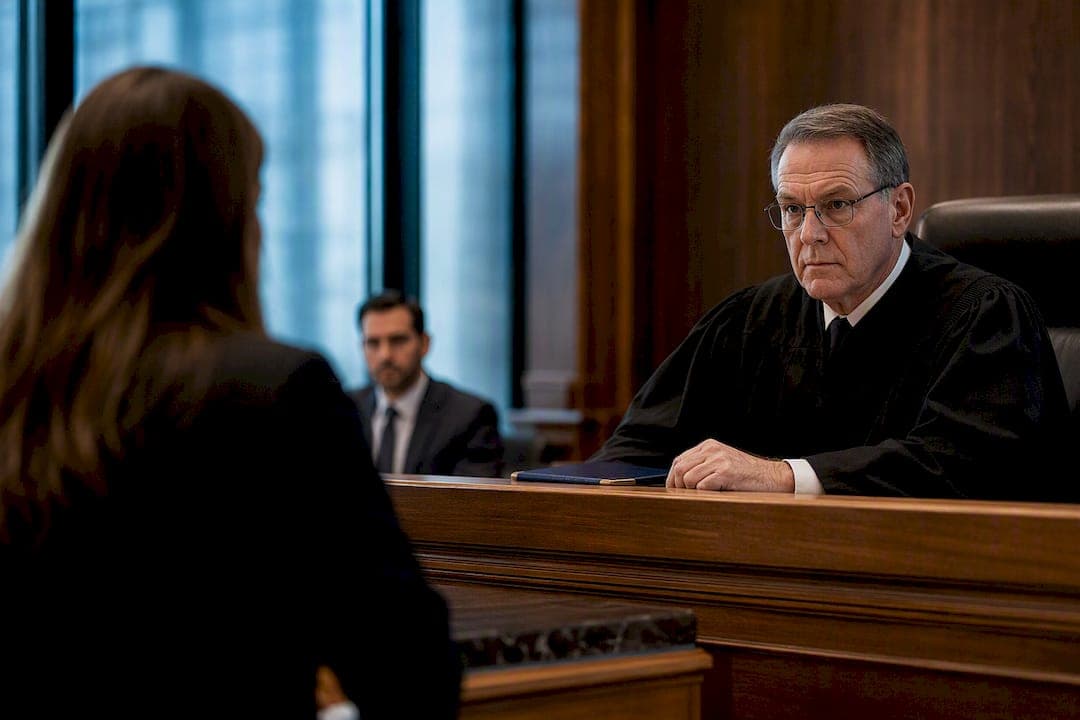
Someone held after a domestic-violence arrest usually stays in custody until a judge sees them at first appearance, which happens within 24 to 48 hours. You cannot speed that judicial review, but the moment bail is set, the fastest path out is a licensed 24/7 bail bond agent who already has the booking details ready to move. Get the full name, date of birth, jail location, and charges now, and call an agent before the hearing, not after.
TL;DR:
- Families should gather essential details such as full name, charges, and jail location during the initial hold to expedite the bail process once the judge sets bail.
- Contact a licensed 24/7 bail agent before the bond is set, providing booking information to prepare paperwork and reduce delays after the first appearance.
- Bail decisions depend on factors like injury severity, weapon involvement, prior record, and flight risk, with judges able to deny bail or impose strict conditions for safety reasons.
- Conditions attached to release include no-contact orders, firearm surrender, electronic monitoring, and mandatory counseling, with violations leading to immediate re-arrest and bond revocation.
- Reputable agencies can prepare and post bonds swiftly by providing payment options, bilingual support, and coordination with jail staff, especially during nights, weekends, or holidays.
Table of Contents
- Why the Domestic Violence 48 Hour Hold Takes as Long as It Does
- What Should You Do First During the Hold?
- How Does a Judge Decide Bail After the Hold?
- What Conditions Come With Release, and What Happens If They're Broken?
- What Does a Bail Agent Actually Do for You?
- What Actually Gets Someone Out Faster
- How Midnight Bail Bonds Helps When the Clock Is Running
- Sources
- FAQ
Why the Domestic Violence 48 Hour Hold Takes as Long as It Does
The hold exists so a judge, not a jailer, decides whether release is safe. Courts treat the first appearance as the checkpoint where they can weigh the alleged injury, review the accused's record, and attach conditions before anyone walks out of custody, and that review typically happens within 24 to 48 hours of arrest.
That window feels endless to a family sitting by the phone, but it is not wasted time if you use it correctly. This is the stretch when you gather documents, line up a co-signer, and get a bail agent briefed so they can act the second the judge sets an amount. Families who spend those hours calling around for information, instead of preparing to act, are the ones who lose extra hours after bond is finally set.
What Should You Do First During the Hold?
Work through this list while the hold is still active, so nothing delays you once bond is set.
- Confirm the booking details. Call the jail or use an inmate search tool to confirm the booking number and expected first appearance time.
- Write down the essentials. Full legal name, date of birth, the specific charges, and any posted bail schedule amount.
- Call a licensed 24/7 bail agent now, before bond is set. Explain that it is a domestic-violence hold so the agent can prepare paperwork in advance.
- Ask the agent directly about payment, collateral, and realistic release timing for your county and the time of day you are calling.
- Loop in the attorney, if one is already retained, so the legal strategy and the bail process move on parallel tracks instead of competing for time.
- Gather co-signer ID and payment method ahead of time. Rummaging for a driver's license or a card at 2 a.m. costs real minutes.
Pro Tip: Never discuss the details of the alleged incident on a recorded jail phone line. Those calls are recorded and can resurface in court. Save case talk for an attorney or a court-approved third party.
An agent who knows the charge is domestic violence going into the call can pre-fill paperwork and flag likely conditions before the judge even speaks, which shaves real time off the back end. If you already have a bail strategy in mind rather than a motion to reduce bail, say so. It changes how the agent advises you.
How Does a Judge Decide Bail After the Hold?
First appearance is where the 48-hour clock ends and a decision gets made. The judge has four realistic options: release the person without bond, set a cash or surety bond, impose bond with added restrictions, or deny bail outright.
That decision is discretionary, not automatic. Judges weigh:
- The nature and severity of the alleged injury
- Whether a weapon was involved
- The accused's prior criminal history
- Assessed risk to the alleged victim
- Flight risk, including ties to the community
Bail is a privilege the court can restrict or deny when it sees safety concerns, and many jurisdictions also give the alleged victim notice of the hearing and a chance to weigh in, which can shift both the amount and the conditions attached to it.
What this means in practice: if bond is set, a prepared agent can often post it within a couple of hours. If bond is denied or set unusually high, your next move is a legal one, coordinated through the attorney of record, not a faster call to a bondsman.
What Conditions Come With Release, and What Happens If They're Broken?
Release almost never comes free of strings in a domestic-violence case. Expect some combination of:
- A no-contact or stay-away order covering the alleged victim
- Surrender of any firearms the accused owns or possesses
- Electronic or GPS monitoring
- Mandatory check-ins or counseling
- Travel restrictions, sometimes including passport surrender
Courts lean on these conditions because protecting the alleged victim is the priority at first appearance, and firearm surrender in particular is standard in most jurisdictions once a domestic-violence charge is on the record. A no-contact order can also complicate something as basic as picking up personal belongings from a shared home or arranging time with children.
Breaking any of these conditions is not a slap on the wrist. It typically means immediate re-arrest, bond revocation, and financial exposure for whoever co-signed. Posting bail only pauses custody. It does not settle the case, and the underlying charges and court dates still stand.

Pro Tip: Route every logistical question through the attorney or a court-approved contact, not a text to the alleged victim or a call from jail. One violated no-contact order can undo everything the family just paid to arrange.
What Does a Bail Agent Actually Do for You?
A licensed agent does the paperwork and legwork that would otherwise eat hours out of the hold. Concretely, that means:
- Preparing and posting the surety bond once the judge sets an amount
- Filing the required paperwork directly with the jail and court
- Coordinating processing and pickup timing with jail staff
To move fast, have this ready when you call:
- Full legal name, date of birth, and booking number
- The jail's name and location
- The bail amount, once it is set
- Co-signer identification and a payment method
- Proof of residency, if the agent requests it
Expect a non-refundable premium, typically a percentage of the total bail amount, which is standard across the bail bond industry and not something a judge waives even if bail is later reduced. Reputable agencies also offer payment plans, and some extend no-collateral options depending on the case and the amount. Look for agents who operate around the clock, since weekend and holiday arrests routinely add processing delays that a 24/7 team is better positioned to absorb than a business that only answers calls during office hours. Bilingual support matters too, particularly for family members trying to navigate all of this in a second language during an already stressful night.
What Actually Gets Someone Out Faster
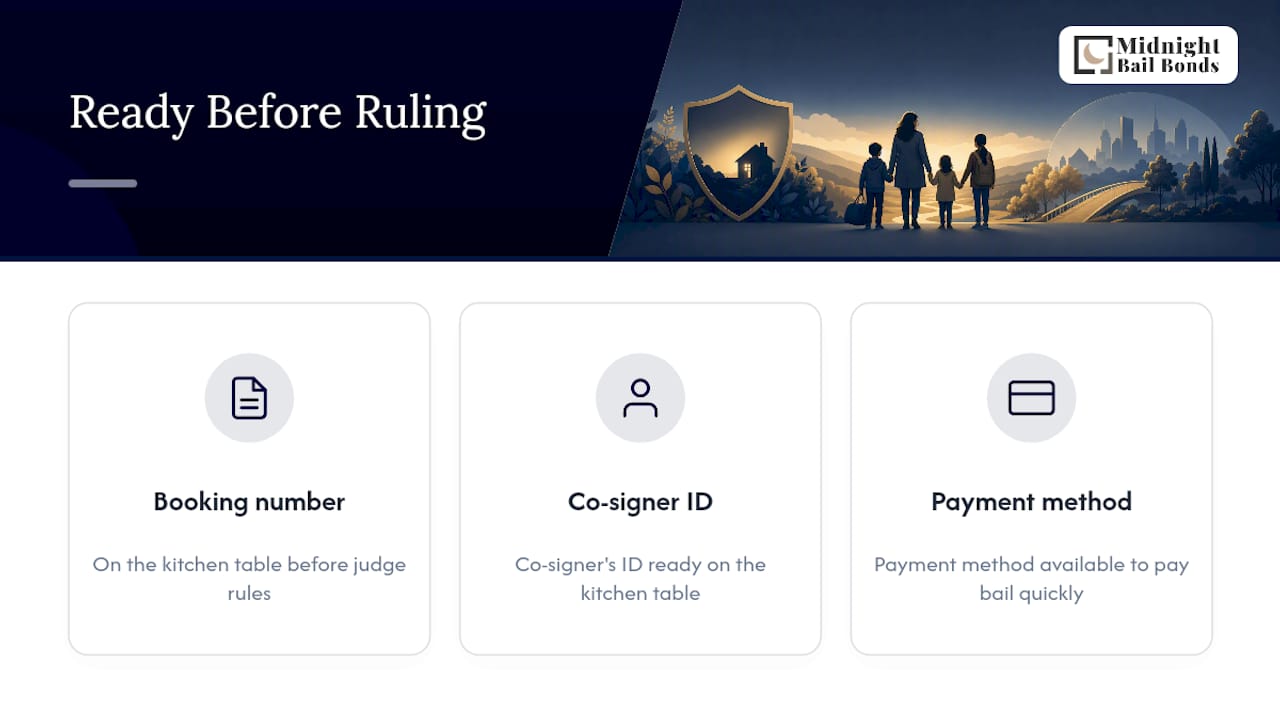
Preparation beats panic here, every time. The families who get their person out fastest are not the ones who call five agencies asking who is cheapest. They are the ones who had the booking number, the co-signer's ID, and a payment method sitting on the kitchen table before the judge even ruled.
Expect delays on nights, weekends, and holidays. That is normal, not a sign anything went wrong. A hold that lands at 11 p.m. on a Friday moves differently than one at 9 a.m. on a Tuesday, and no agent, however good, can override a jail's processing schedule.
Compliance matters as much as speed. A fast release followed by one broken no-contact order erases everything you just paid for. Move quickly, but move inside the lines the court draws.
— Jake
How Midnight Bail Bonds Helps When the Clock Is Running
Midnight Bail Bonds works domestic-violence holds specifically, not as an afterthought to DUI and theft cases. Licensed agents are available 24/7, including the overnight and holiday windows when processing delays hit hardest, and the free inmate search lets you confirm booking details before you even pick up the phone.
Have the full name, date of birth, jail location, and charges ready when you call. Some agents provide bilingual support and may offer payment plans and no-collateral options in certain domestic-violence cases. Coordination with the jail after bond is set can reduce processing time. Full details on how the process works specifically for domestic-violence bail bonds in California are on the service page, but the fastest step is simpler: call now, even before bail is set, so someone is already prepared to act. Start at Midnight Bail Bonds or dial the 24/7 line directly.
This article is general information, not a substitute for advice from a qualified lawyer. Consult a qualified legal professional about your own circumstances before acting on anything here.
Sources
- Domestic Violence cases and the 48 hour rule — UNC School of Government
- Can You Bond Out on a Domestic Violence Charge? — LegalClarity
- Domestic violence and bail policy (policy brief) — Innovating Justice
FAQ
How Long Can Someone Be Held Under a Domestic Violence 48 Hour Hold?
Most jurisdictions require judicial review within 24 to 48 hours of arrest, and the person generally stays in custody until that first appearance.
Can You Always Post Bail on a Domestic Violence Charge?
No. Bail is discretionary, and a judge can deny it entirely in cases involving weapons, prior offenses, or serious safety concerns.
What Information Do I Need to Give a Bail Agent?
Have the arrested person's full name, date of birth, jail location, the charges, and the bail amount once it is set. An agent like Midnight Bail Bonds can start paperwork before the amount is even final.
What Happens if the No-Contact Order Is Violated After Release?
Violating a no-contact order typically triggers immediate re-arrest, bond revocation, and potential financial liability for the co-signer.
Does Posting Bail End the Criminal Case?
No. Posting bail only secures temporary release; the criminal case and all court dates continue regardless of bond status.