
You can usually secure release after a domestic violence arrest through cash bail, a licensed bail bond agent, or an own recognizance release. Expect restrictive conditions attached to that freedom, though: no-contact orders, stay-away requirements, and often a firearm-surrender deadline within days. Move fast. Most jurisdictions require a first court appearance within a few days, and the clock on your options starts the moment booking ends.
TL;DR:
- Most domestic violence arrestees face mandatory detention of one or two days before judges or advocates assess safety for possible release.
- Bail usually starts with a county's standard schedule, but factors like injury severity, prior convictions, or weapons can significantly increase or deny bail altogether.
- Alternative release options include cash bail, which is refunded if the case ends in dismissal, and bail bonds, which typically cost around 10% of the bail amount and involve collateral.
- Release conditions almost always include strict no-contact orders, firearm surrender deadlines within 24 to 48 hours, and possibly alcohol testing or electronic monitoring.
- Acting quickly by contacting a licensed bail bond agent early can substantially reduce custody time, but compliance with court-imposed conditions is essential to avoid re-arrest.
Table of Contents
- Understanding the Domestic Violence Bail Process After Arrest
- How Courts Set Bail in Domestic Violence Cases
- What Are Your Bail Posting Options?
- What Release Conditions Should You Expect?
- What Should You Do in the First Few Hours?
- When Can Bail Be Denied or Increased?
- What Happens After Release?
- Can Bail Terms Be Changed Later?
- How Midnightbail Helps You Move Fast
- Perspective: Speed and Compliance Have to Work Together
- Start Your Bail Bond Request With Midnightbail Now
- Sources
- FAQ
Understanding the Domestic Violence Bail Process After Arrest
Booking starts the paperwork that determines everything after it. Officers record identification, formal charges, fingerprints, and a mugshot, and most facilities run a medical screening before anyone gets assigned a cell. Ask the booking desk or check the county's online inmate locator for the booking or inmate number early. You'll need it for every phone call that follows, including the one to a bail agent.
Domestic violence arrests frequently trigger a hold that ordinary arrests don't. Many states impose a mandatory detention period of a day or two specifically for domestic violence bookings, allowing time for a judge or victim advocate to assess safety, so a judge or victim advocate has time to assess safety before anyone is released. That hold period is not a punishment. It exists so the alleged victim can be contacted, and so a judge can weigh conditions before setting someone free.
Two paths lead to release once the hold clears:
- Stationhouse bail schedules let you pay a preset amount directly at the jail for many misdemeanor and lower-level charges, without waiting for a judge, according to Nolo's guide on how bail is set.
- Judicial bail setting happens at the first court appearance, where a judge reviews the charges and can raise, lower, or deny bail based on the specifics of the case.
Domestic violence charges often skip the stationhouse option entirely and go straight to a judge, particularly when injuries, weapons, or prior incidents are involved.
How Courts Set Bail in Domestic Violence Cases
Judges don't pull a number out of the air. Most start with the county's bail schedule, a published list tying dollar amounts to specific charges, then adjust up or down based on what the case file shows. In California, Penal Code Section 1275.1 allows a magistrate to set bail above or below the schedule for violent or domestic violence related offenses, provided the court gives written notice and a chance for counsel to respond.
Several factors push bail higher in these cases specifically:
- The severity of alleged injuries and whether a weapon was involved.
- Prior domestic violence convictions or a documented history with the same victim.
- Statements or evidence suggesting ongoing threats to the victim's safety.
- Flight risk, including lack of local ties, employment, or a stable address.
- Whether a protective order already exists or is being sought.
Police officers and prosecutors can also file a sworn declaration asking a judge to set bail higher than the schedule when they believe the standard amount won't protect a victim, a mechanism California's bail statutes specifically authorize. That declaration can happen fast, sometimes before the defendant's family even knows a hearing is scheduled, which is one reason waiting to act costs real time in custody.
What Are Your Bail Posting Options?
Three routes get someone out of custody, and each carries different costs and timing.
- Cash bail means paying the full amount set by the court, usually at the jail or courthouse cashier. If the case ends in dismissal or acquittal, New York Courts' bail guidance confirms the money is typically returned, though some counties apply administrative surcharges or deduct fines if the defendant is convicted.
- Bail bond agents post a surety bond for a nonrefundable premium, commonly around 10% of the total bail amount, according to FindLaw's explanation of how bail bonds work. Agents may ask for collateral or a co-signer depending on the bond size, and because they specialize in moving fast with jail staff, they often cut custody time significantly compared to families navigating the process alone.
- Own recognizance (OR) release requires no money at all. It's typically reserved for defendants with strong community ties, no significant criminal history, and low flight risk, though domestic violence charges make judges more cautious about granting it even to otherwise qualified defendants.
Most families end up choosing between cash and a bond agent simply because OR is discretionary and domestic violence courts lean conservative on granting it. Learn how to post your own bail if you're weighing the cash route directly.
What Release Conditions Should You Expect?
Release doesn't mean the case is over, and in domestic violence matters, courts almost always attach conditions designed to protect the alleged victim rather than just guarantee a court appearance.
- No-contact and stay-away orders typically bar direct or indirect contact, including through third parties or social media, and often specify a minimum distance from the victim's home or workplace. Some orders carve out narrow exceptions for shared custody logistics, but only when the court explicitly allows it. Understanding what a no-contact order means for bail can help you avoid an accidental violation.
- Firearm surrender comes with a tight deadline in most states. California's court forms for surrender orders require handing over firearms within 24 hours and filing proof with the court within 48 hours, based on the official surrender order documentation. Missing that window is itself a separate criminal exposure.
- Other conditions commonly include alcohol or drug testing, electronic monitoring, curfews, or mandatory enrollment in a batterer's intervention or counseling program.
Statistic Callout: Domestic violence conditions frequently include no-contact orders, stay-away zones, and firearm or alcohol prohibitions specifically because courts prioritize victim and community safety over the narrower goal of just ensuring a court date, according to Justice Canada's review of family violence bail practices.
Pro Tip: Photograph or scan every document tied to compliance the same day you receive it, especially firearm surrender receipts. If you're ever accused of a technical violation, that timestamped proof is often the difference between a quick correction and a re-arrest.
What Should You Do in the First Few Hours?
Speed matters, and so does do things in the right order.
- Call a licensed bail bond agent or attorney first. Even before bail is officially set, an agent can start gathering information and preparing paperwork so there's no delay once the amount is known.
- Locate the booking number. Use the county's inmate search tool or call the jail directly. Every subsequent step depends on having this.
- Gather identification, proof of address, and employment details. Bail agents and court clerks both need this to process release, and having it ready before the hearing avoids a second trip.
- Identify a potential co-signer if a bond requires one. A family member with stable income and a good relationship with the defendant usually works.
- Confirm payment method. Cash, credit or debit, Zelle, and financing options are increasingly common ways families cover the bond premium without draining savings in one shot.
Pre-arranging a bail agent before the amount is even set is one of the most effective ways to shorten custody time, since the agent can move the moment the court issues a number instead of starting from scratch. Families who wait to make that first call often lose hours they didn't need to lose.
When Can Bail Be Denied or Increased?
Not every domestic violence arrest results in an affordable bail number, and sometimes bail is denied outright. Judges lean toward denial or a sharp increase when several factors stack up.
- Allegations involve serious injury, strangulation, or use of a weapon.
- The defendant has prior domestic violence convictions or open cases.
- A protective order is already active or being requested by the alleged victim.
- Police or prosecutors file a declaration specifically asking for bail above the schedule.
If bail comes back higher than expected, don't assume it's fixed. Request counsel immediately, gather evidence of community ties (a lease, pay stubs, letters from employers), and ask for a contested bail hearing or formal review. Courts do revisit these numbers, but only when someone actually asks and brings something new to the table.
What Happens After Release?
Getting out is the beginning of a new set of obligations, not the end of the process. Missing a court date, even for something unrelated like a work conflict, can trigger bail forfeiture and a warrant.
- Attend every scheduled court date and notify your bail agent or the court clerk immediately if a conflict arises.
- Understand refund timing. Cash bail is generally returned once the case resolves, though New York Courts notes that a conviction can trigger surcharges or fee deductions from the refunded amount.
- Keep every compliance record. Firearm surrender receipts, proof of counseling attendance, and no-contact documentation all matter if a violation is ever alleged.
- Know that violating conditions, even unintentionally, can lead to re-arrest, bond revocation, and forfeiture of any collateral posted.
Posting bond quickly solves the custody problem. It doesn't solve the case, and it doesn't automatically protect against a re-arrest if a condition slips.
Can Bail Terms Be Changed Later?
Bail conditions aren't necessarily permanent. Two paths exist for loosening them.
- Consent variations happen when the defense approaches the prosecutor directly with documentation, such as a supervised visitation plan or enrollment in a monitoring program, and proposes a specific, reasonable adjustment. This route tends to be faster and cheaper than a formal hearing when the prosecutor is willing to cooperate.
- Formal bail review requires filing a motion, often with transcripts or affidavits showing a material change in circumstances or a legal error in how bail was originally set. This path takes longer and typically involves attorney fees, but it's necessary when the prosecutor won't agree to a consent variation.
Supportive affidavits from employers, family members, or treatment providers strengthen either approach, since they give the court concrete reasons to believe the defendant poses less risk than the original conditions assumed.
How Midnightbail Helps You Move Fast
Once bail is set, the priority shifts to posting it before another night passes in custody. Midnightbail's licensed agents work 24/7, meaning a call at 2 a.m. gets the same response as one at 2 p.m., including locating an inmate and coordinating directly with jail clerks to post the bond as soon as the amount is confirmed.
- Flexible payment plans and financing options, so the 10% premium doesn't have to come out of savings in one lump sum.
- No-collateral bail bonds available in many cases, which speeds things up when a family doesn't have property to put up.
- Bilingual support for English and Spanish speaking families navigating an already stressful process.
One limitation worth stating plainly: a bail agent can post the bond and get someone out, but agents have no authority over the release conditions a judge imposes. Compliance with no-contact orders, firearm surrender, and court dates remains entirely on the defendant.
Perspective: Speed and Compliance Have to Work Together
Posting bond fast matters, but it's an administrative fix, not a legal strategy. Getting someone out of custody within hours changes nothing about how strong or weak the underlying case is, and families sometimes treat the two as the same problem when they're not.

The bigger risk I see overlooked is technical re-arrest. Someone posts bond, walks out relieved, and then violates a no-contact order by accident, maybe through a shared utility bill or a mutual friend passing along a message. That single mistake can land them back in custody faster than the original arrest did. Documentation isn't optional here. Save every receipt, every filing, every proof of compliance, because in a system built to prioritize victim safety over convenience, courts don't extend much benefit of the doubt to someone who can't prove they followed the rules.
Treat a bail agent and a defense attorney as two different tools solving two different problems. One gets you out. The other decides what happens to the case.
— Jake
Start Your Bail Bond Request With Midnightbail Now
If the goal is getting a loved one out of custody before another hearing gets pushed back, Midnightbail's advantage is simple: licensed agents answer calls directly, day or night, and quote clear costs upfront instead of leaving families guessing about what they'll owe.
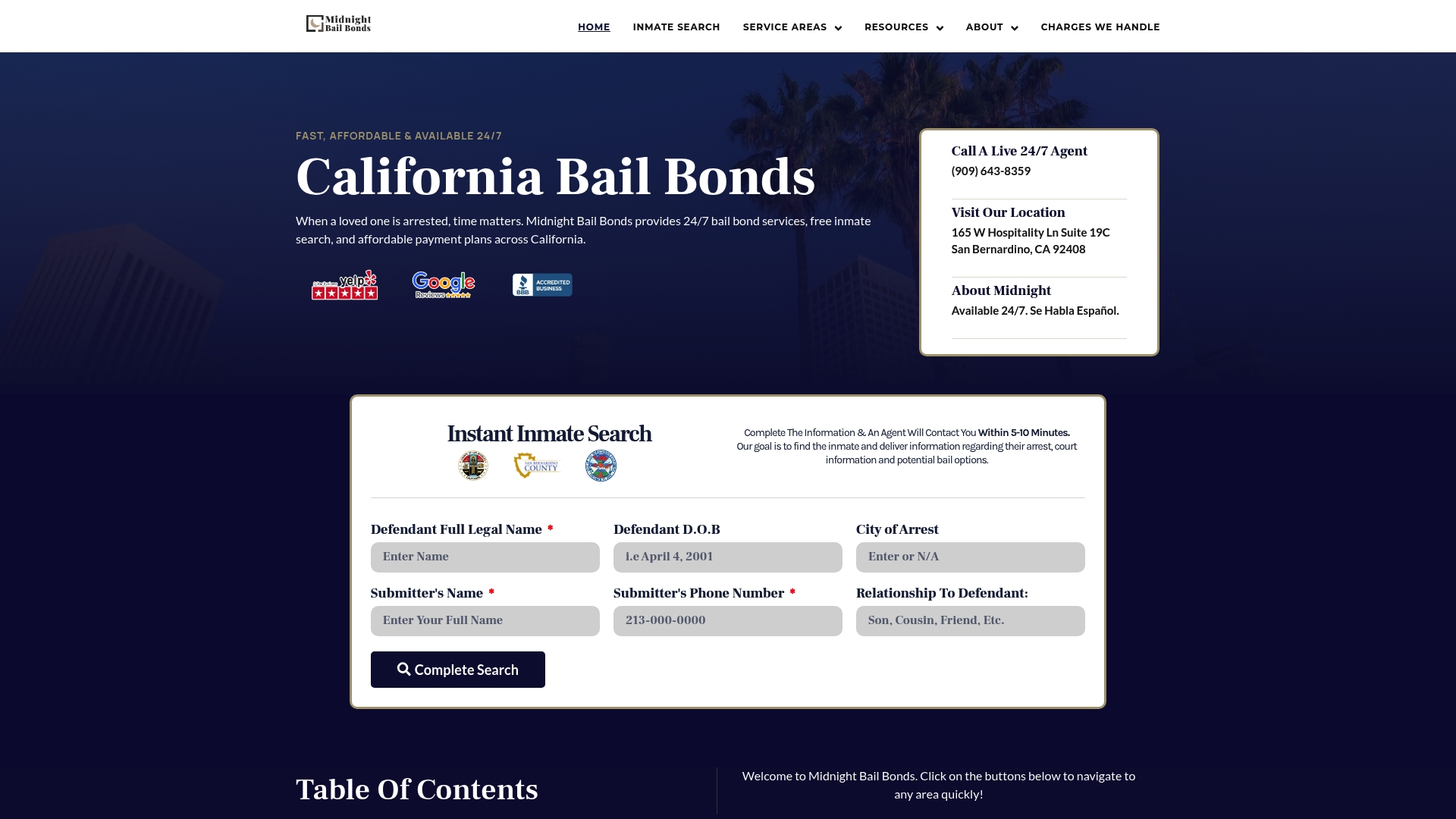
Domestic violence holds move on a strict clock, and every hour spent hesitating is an hour someone stays in a cell. Midnightbail's agents specialize in domestic violence bail bonds and therefore already understand the firearm-surrender deadlines and no-contact conditions that come attached to these cases. Many bonds can move forward without collateral, and payment options include cash, card, Zelle, and financing. Bilingual agents are available to support Spanish-speaking families.
Have the booking number, the charge, and the jail location ready, then start a bond request at Midnightbail to get the process moving right now.
Sources
Bail rules vary by state and county, so confirm specifics against primary sources: California Penal Code §1275.1, New York Courts' bail guidance, and your local court clerk's published bail schedule.
This article is general information, not a substitute for advice from a qualified lawyer. Consult a qualified legal professional about your own circumstances before acting on anything here.
- How bail is set | Nolo
- Arrest and bail - Best practices where there is family violence (Justice Canada)
- California Penal Code §1275.1
- Bail | New York Courts
FAQ
Can You Beat a Domestic Violence Charge in Court?
Winning a domestic violence case typically depends on evidence quality, witness credibility, and whether the defense can challenge the prosecution's narrative through counsel, not on anything related to bail. Bail and the criminal case are separate tracks; posting bond gets you out of custody, but building a defense requires an attorney reviewing police reports, 911 calls, and any inconsistencies in the allegations.
How Long Do You Stay in Jail After a Domestic Violence Arrest?
Many jurisdictions hold defendants for one to several days specifically in domestic violence cases, before a first court appearance or bail review happens. The hold gives courts time to assess victim safety before setting release conditions.
Does Midnightbail Handle Domestic Violence Bail Bonds?
Yes, Midnightbail offers domestic violence bail bonds with 24/7 licensed agents who coordinate directly with jails to post bonds quickly. Payment plans and no-collateral options are available in many cases, and current pricing is listed on the site.
What Happens if You Violate a No-Contact Order After Posting Bail?
Violating a no-contact order, even accidentally, can result in immediate re-arrest and revocation of the original bail. Courts in domestic violence cases treat these conditions strictly because they exist to protect the alleged victim, so any contact, direct or indirect, carries real legal risk.
Is Bail Ever Denied Entirely in Domestic Violence Cases?
Yes, bail can be denied when allegations involve serious injury, weapon use, or when the defendant has prior convictions and a judge determines no condition would reasonably protect the victim. In those situations, the defense can request a contested bail hearing and present evidence like community ties or employment history to argue for release.