
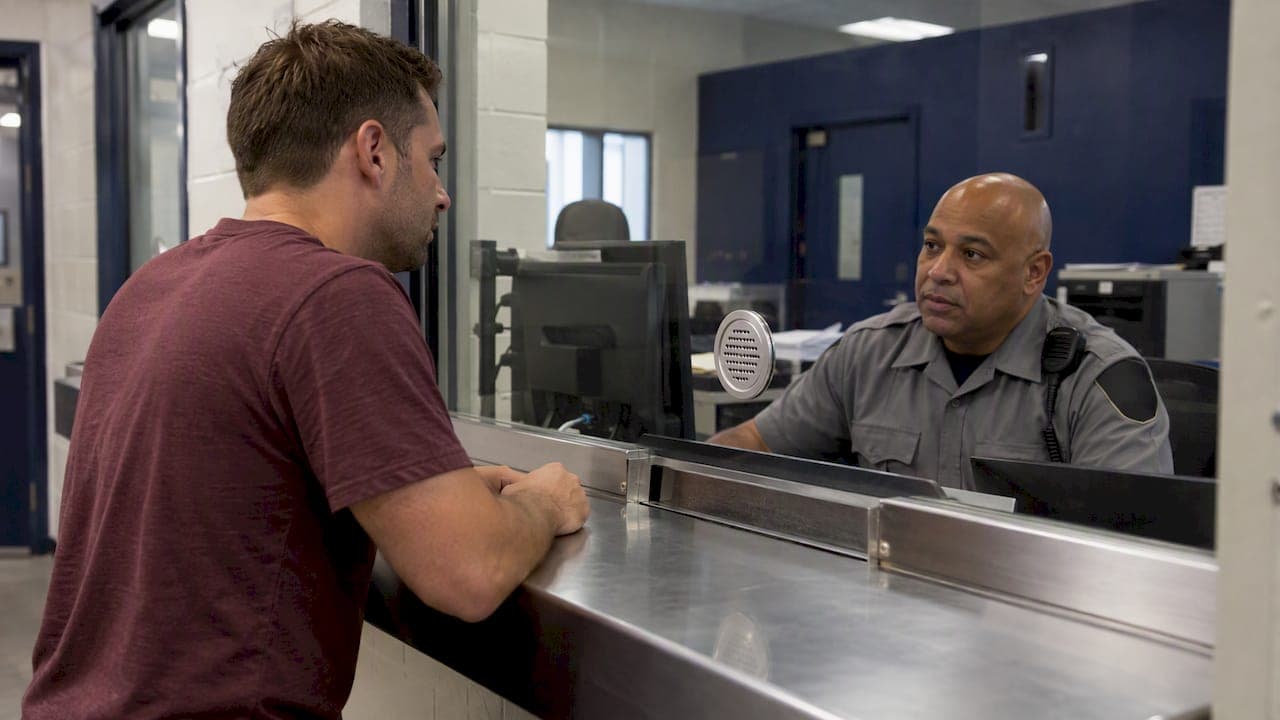
There is no single bail amount for drug possession in California. Each county sets its own schedule, and the figure depends on the exact charge, the drug, your prior record and what a judge decides. A simple possession misdemeanor can carry a bail in the low thousands, while a felony or a possession-for-sale charge can run to $10,000 or far more. If you use a bail bondsman, you usually pay a non-refundable premium, commonly 10% of that bail, not the full amount.
Below, we explain how the number gets set, what real county schedules show, what a bond costs in dollars, and what to check before anyone signs.
TL;DR
- Bail for drug possession varies by county, charge and criminal history. County Superior Court schedules set the starting figure, and a judge can change it.
- Two California examples: Kings County's 2026 misdemeanor schedule lists $5,000 for possession under Health & Safety Code 11350, and Fresno's schedule lists $10,000 for possession for sale of narcotics under 1 oz.
- A bondsman's premium is typically about 10% of the bail, so $5,000 bail usually means about $500 up front. The premium is not refunded, even if charges are dropped.
- Ask for the exact charge code, the premium rate and any added fees in writing before you pay.
- If bail is out of reach, ask the court about release without money bail. California courts must consider ability to pay.
Table of Contents
- Why the amount is different for every case
- What California county schedules show
- Bail amount versus what you actually pay
- What if the bail is too high
- Perspective: what we see when families call
- Charge-specific notes for California families
- Before you pay or sign: a checklist
- How we can help
- FAQ
- Sources
Why the amount is different for every case
People search for "the bail for drug possession" as if it were one number. It is a range, and the first thing that moves it is the specific charge. "Drug possession" can mean a personal-use misdemeanor, a felony for a larger quantity, or possession for sale, which is treated far more seriously. Police generally book a suspect on the most serious charge the facts can support, and jailhouse bail schedules are generally inflexible, so the booking charge drives the first bail figure.
After that, a judge can set or change bail. According to the San Francisco Superior Court bail fact sheet, California judges must weigh the seriousness of the offense, the defendant's criminal record, the risk to community or victim safety and the risk the person will not return to court.
In practice, these things push the number up or down:
- The statute charged. Simple possession, possession with intent to sell and transportation each sit in different tiers.
- The drug and the amount. Larger quantities and certain substances lead to higher schedule entries.
- Prior record. Previous convictions or past failures to appear make a judge less willing to go below the schedule.
- Other charges in the same arrest. A DUI, a weapons count or a probation violation can change both the amount and whether release is possible.
- Your county. The same conduct can carry different bail in Fresno, Kings or Orange County.
What California county schedules show
Every California county's Superior Court publishes a bail schedule. These are the starting point at booking, before any judge reviews the case. Two counties show how much the numbers differ.
| County | Charge on the schedule | Listed bail |
|---|---|---|
| Kings | Possession of a controlled substance, Health & Safety Code 11350 (2026 misdemeanor schedule) | $5,000 |
| Fresno | Possession for sale of narcotics under 1 oz. | $10,000 |
The Fresno page also lists other drug entries, including one possession entry under section 11377 at $0, which shows why you should read the actual line for your charge and not rely on a general number. Two nearby counties can list quite different amounts for the same code section, so look up the schedule for the county where the arrest happened.
We also keep a county-by-county walkthrough in our guide to HS 11350 bail ranges and how to verify them. For the heavier end of the scale, see our piece on drug trafficking bail and Fresno's $125,000 tier.
How other states compare
If you landed here from a search about another state, expect different rules. In West Virginia, for example, cash bail for misdemeanors is capped by statute at three times the maximum fine for the offense. Comanche County, Oklahoma, publishes a weekend bond schedule with $1,000 for possession of marijuana and $500 for possession of paraphernalia. Nationally, an ACLU analysis of the 75 largest counties in 2009 found an average bail of $24,000 for drug possession defendants, and $39,900 for those who stayed in jail. These are other places and older data, so use them for context only. For a California arrest, the county schedule and the judge are what count.
Bail amount versus what you actually pay
The bail amount is the sum the court requires to guarantee the person returns for every hearing. You can pay it in full to the court. If you do, it is generally returned when the case ends, provided the person made every appearance, though courts can apply it to fines or fees.

Most families do not have thousands of dollars on hand, so they use a bail bond. A bondsman guarantees the full bail to the court, and you pay a premium for that guarantee. According to the California Department of Insurance, bail agents may also charge additional expenses beyond the premium if they are actual, necessary and reasonable for the transaction. The premium is not returned.
Here is what the common 10% rate looks like in dollars:
| Bail set | Premium at 10% |
|---|---|
| $1,000 | $100 |
| $5,000 | $500 |
| $10,000 | $1,000 |
| $20,000 | $2,000 |
| $50,000 | $5,000 |
So a Kings County-style $5,000 possession bail means about $500 for a bond, and a $10,000 possession-for-sale bail means about $1,000. The same math answers the question of what a $1,000 bond costs: $100 at 10%.
Is 10% fixed by law?
Not exactly. Ten percent is the most common rate, and it is what we publish as our standard premium. But in California, surety insurers file their rates with the state, so you should ask which rate applies to your bond and not assume it. Our guides on how California bondsmen come to charge a 10% premium and the three questions to ask about a bail bond contract go through this in detail.
What if the bail is too high
A schedule number is not the end of the road. There are a few routes to look at.
- Ask the court for a bail review. The defense attorney or public defender can ask a judge to review the amount at arraignment. The San Francisco court's fact sheet notes that if bail is unaffordable, courts may consider less restrictive options such as regular check-ins, electronic monitoring or substance abuse treatment.
- Ability to pay matters. The same fact sheet explains that after the California Supreme Court's 2021 decision in In re Humphrey, courts cannot hold someone before trial solely because they cannot afford bail, and that if bail is necessary the court must consider ability to pay.
- Release with conditions. Some people go home on conditions such as testing, check-ins or treatment. Our overview of bail conditions in California explains what those can look like, and our explainer on zero bail in California in 2026 covers how that changes release.
- Use a bond. If bail stays in place and cash is the barrier, a bond lets the family pay a fraction up front.
There is a reason the pressure to pay quickly deserves care. The ACLU argues that high bail on low-income defendants can push people to plead guilty just to go home. If you are unsure whether to post bail or wait for a hearing, talk to a criminal defense attorney or the public defender assigned to the case before deciding.
Perspective: what we see when families call
Most calls we get about drug possession start with a number the family was told at the jail and a lot of worry. In our experience the number is rarely the real problem. The real problem is that nobody has explained the charge code, the premium and the contract before money changes hands.

Here is how we think families should approach it. Get the exact charge from the booking record first, since "drug possession" can mean very different things on paper. Ask for the premium in dollars, not just a percentage. Ask what extra fees exist, and get it in writing. And ask whether a bond can be written without collateral, because for many cases it can, and that spares a family from putting up a car or a house in the middle of a crisis.
We answer calls around the clock with licensed agents, in English and Spanish, and we have local offices and working relationships with jails and courts. That matters on a possession arrest, because the hours after booking are the hours someone sits in custody. We would rather you understand the cost fully and decide calmly than sign something you do not follow.
— Jake
Charge-specific notes for California families
Simple possession (misdemeanor). Schedules for misdemeanor possession tend to sit in the low thousands. In some cases a person may be released on a citation or on their own promise to appear, which costs nothing. Ask the jail or the court what is available before assuming a bond is needed.
Felony possession and possession for sale. The jump is significant. Fresno's $10,000 for possession for sale of narcotics under 1 oz. is a good example, and quantities above that climb further. A $10,000 bail at 10% is a $1,000 premium, which is why financing and payment plans matter on these cases.
Drug DUI. A DUI involving drugs adds a second charge to the booking. Our guide to 1% to 2% bail options for drug DUI covers how that changes the cost, and our DUI bail bonds page explains how we handle those arrests.
Drug charge plus another offense. When an arrest includes a domestic violence count, bail can change a great deal. For that situation, see our article on the PC 273.5 bail amount.
A hold from another agency. Sometimes a person cannot be released even after bail is posted because of a probation or other hold. Our page on 1275 hold bail bonds explains how those work.
Before you pay or sign: a checklist
When a loved one is in custody, it is easy to rush. These steps take a few minutes and prevent most of the regrets we hear about.
- Get the booking details. Name, booking number, the charge and the Health & Safety Code section, and the bail amount. You can check these through a free inmate search.
- Find the county schedule. Compare the number you were quoted to the county Superior Court's published bail schedule.
- Ask for the premium in dollars. Confirm the rate and the total, and ask what other charges could be added.
- Ask about collateral. Find out whether any is required, and what you would be putting at risk.
- Read the contract. Know who is the co-signer, what happens if the person misses court, and what the payment plan terms are. Premium financing agreements between a co-signer and a bail agent are subject to consumer credit protections, as a California appellate decision addressing such a contract shows.
- Plan for court dates. The bond is only as good as the person's appearances. Missing one can put the bond and the co-signer at risk.
How we can help
Midnight Bail Bonds writes bonds for drug charges across California, with licensed agents available day and night and support in English and Spanish. Our standard premium is 10% of the bail, we tell you the cost upfront, and in many cases we can write the bond without collateral. We accept cash, credit and debit cards, Zelle and financing, and we offer payment plans to make the premium manageable.
If you are not sure where to start, begin with our drug charge bail bonds page, or look at no collateral bail bonds if putting up property is the worry.
You can also use our bail bond calculator to see what a premium would be for a given bail amount, or call us any hour to talk through your specific case.
FAQ
How much does it cost to bail someone out for drug possession in California?
It depends on the bail amount, which comes from the county schedule or a judge. With a bondsman, the premium is typically about 10% of that amount, so $5,000 bail is about $500. Confirm the exact rate and any added fees in writing.
Is the bail bond fee refundable?
No. The premium is the price of the bondsman's guarantee and is not returned, even if the charges are dropped or the case ends quickly. If you pay the full bail in cash to the court instead, it is generally returned at the end of the case when all court dates were met, though the court may apply it to fines or fees.
Where can I find the bail amount for a specific drug charge?
Look up the Superior Court bail schedule for the county where the person was arrested, then find the Health & Safety Code section on the booking record. Kings and Fresno counties both publish theirs online. A judge can set a different amount than the schedule.
What if my family cannot afford the bail or the premium?
Ask the defense attorney or public defender to request a bail review. California courts must consider ability to pay and can look at conditions such as check-ins, monitoring or treatment instead of money. If bail stays in place, a bond with a payment plan can reduce what you pay up front.
Sources
- Superior Court of California, County of Kings: 2026 misdemeanor bail schedule
- Superior Court of California, County of Fresno: bail schedules
- Superior Court of California, County of San Francisco: bail fact sheet
- Nolo: how bail is set
- California Department of Insurance: bail bonds
- West Virginia Code §62-1C-1a
- Comanche County, Oklahoma: weekend bond release
- ACLU: drug possession and bail report
- BBBB Bonding Corp. v. Caldwell (California Court of Appeal, 2021)