

Skipping bail or fleeing police custody triggers a bench warrant, forfeits any cash or collateral posted, and usually adds a new bail-jumping charge on top of whatever you were originally facing. Bail on evading or resisting charges commonly runs from several thousand dollars into the tens of thousands, with vehicle evasion typically pushing toward the higher end. If you've already missed a court date, the smartest move is surrendering voluntarily and calling an attorney or licensed bail agent before police find you first.
TL;DR:
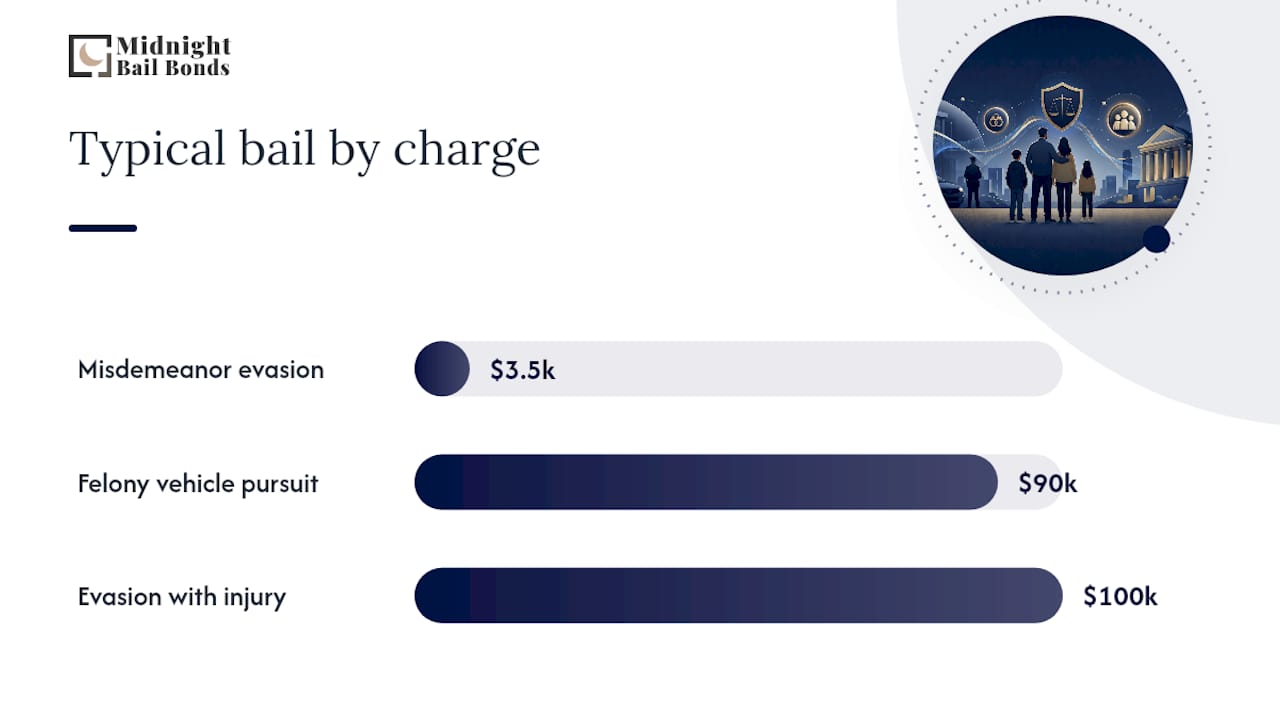
- Bail amounts for evading police can range from a few thousand dollars for misdemeanors to over one hundred thousand dollars for injuries or high-risk vehicle pursuits.
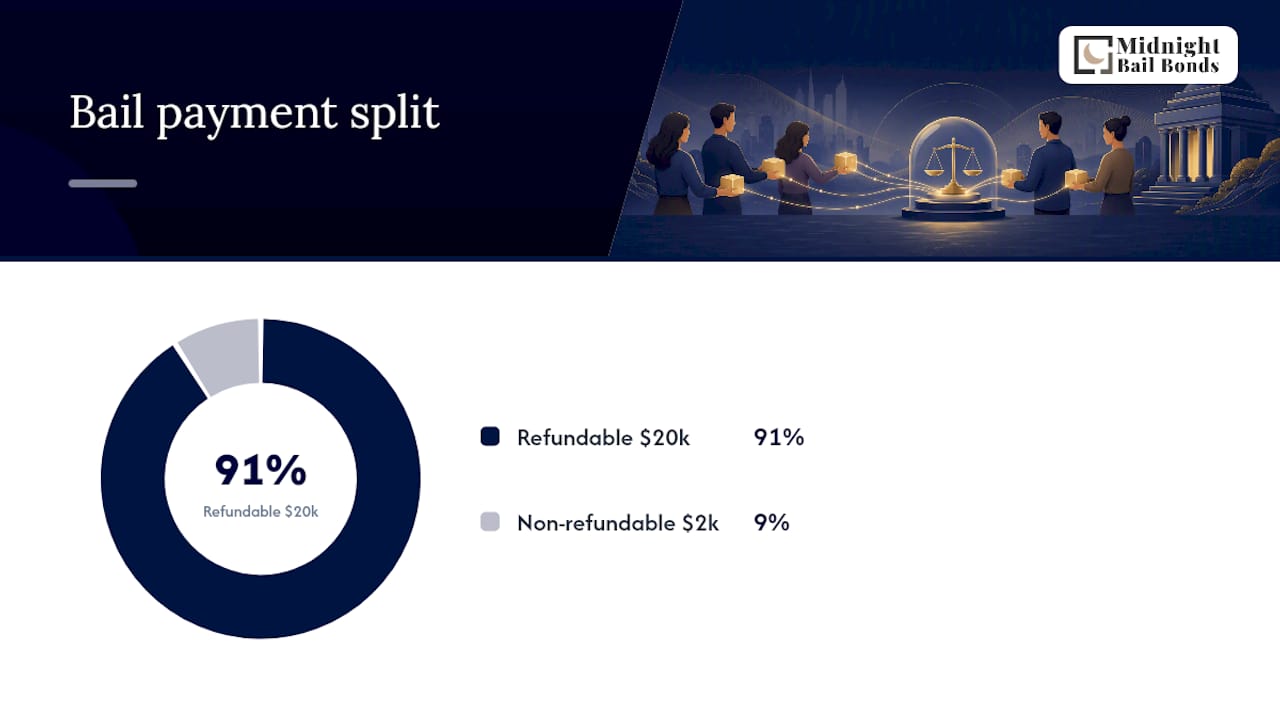
- A bail bond premium is typically around 10% of the bail amount, non-refundable, while the full cash bail is held by the county and refundable upon case resolution.
- Missing court triggers an immediate bench warrant, bail forfeiture, and a new bail-jumping charge that can add years to the sentence, often treated as a separate, consecutive offense.
- State laws vary significantly on forfeiture deadlines and conditions; quick legal advice and documentation of legitimate reasons for absence can influence bail and charges.
- Acting promptly to surrender voluntarily and consulting a lawyer improves outcomes, avoiding escalation and additional penalties from prolonged absence.
Table of Contents
- What Are Typical Bail Amounts for Evading Police Charges?
- What Legal Consequences Follow Failure to Appear?
- How Does a Bail Bond Work if You Skip?
- Do Bail Forfeiture Rules Vary by State?
- What Should You Do Right Now if You Missed Court?
- How Do Judges Decide Bail After a Missed Court Date?
- Why Acting Fast Beats Waiting It Out
- How Midnight Bail Bonds Gets You Out Faster
- Sources
- FAQ
What Are Typical Bail Amounts for Evading Police Charges?
Bail for evading police depends heavily on how the evasion happened. Fleeing on foot after a minor stop lands very differently than leading officers on a car chase. Courts weigh the danger created, any injuries, and whether a weapon or vehicle was involved.
Rough ranges seen across county courts:
- Misdemeanor evasion or resisting without violence: often in the low to mid thousands
- Felony evasion involving a vehicle pursuit: frequently in the high tens of thousands
- Evasion combined with injury to another person: can reach six figures depending on the jurisdiction
Vehicle evasion tends to carry a higher median bail than evasion on foot, largely because judges treat a car chase as a public safety risk rather than a simple flight risk. A driver who leads police through residential streets at high speed is viewed very differently than someone who bolts from a traffic stop and is caught two blocks away.
It helps to separate two very different numbers: the bail amount a judge sets, and the premium a bail bond company charges. If bail is set at $20,000, you don't need $20,000 in cash. A bondsman typically charges a premium of about 10% of the total, so $2,000 secures release. That premium is non-refundable. It pays for the bond company taking on the risk, not for the defendant's eventual court appearance. Posting the full cash amount yourself means the county holds it and, in theory, refunds it once the case resolves. Using a bondsman means the bond company is the one financially exposed if you skip, which is exactly why they screen clients and often require a cosigner.
What Legal Consequences Follow Failure to Appear?
Missing court doesn't just cost you the case. It opens an entirely separate legal front. A judge who notices your absence typically issues a bench warrant within hours, sometimes before the hearing even finishes. That warrant enters state and often national databases immediately, meaning any traffic stop, ID check, or routine police contact anywhere in the country can end in arrest.
Forfeiture happens next. The court declares the bail money or collateral forfeited to the state, and if a bondsman posted your bond, they now owe that amount unless they can produce you or get the forfeiture set aside.
"Under federal law, failing to appear after release can lead to immediate forfeiture of any pledged property or funds and a warrant for arrest." That's the baseline rule under 18 U.S.C. § 3146, and most state statutes mirror the same structure even when the dollar thresholds differ.
Then comes the part people underestimate most: a brand new criminal charge. Bail jumping is treated as a separate offense in nearly every state and in federal court, and being innocent of the original charge does nothing to defend against it. Under federal law, penalties for failure to appear can run consecutively to whatever sentence you get on the underlying case, not concurrently, with terms ranging from one to ten years depending on the severity of that original charge.
What that means practically:
- The bench warrant doesn't expire and doesn't go away on its own
- Forfeiture proceedings move forward even if you're later found
- The new bail-jumping charge stacks time on top of the original sentence, it doesn't replace it
- A prior failure to appear makes every future bail request harder to win
How Does a Bail Bond Work if You Skip?
A bail bond is essentially a loan of trust. You or your family pay the bondsman a premium, usually around 10% of the total bail, and the bondsman guarantees the full amount to the court. If you show up to every hearing, the bond is exonerated and the bondsman keeps the premium as their fee. Skip, and the entire structure flips against you.
Here's the sequence that plays out:
- The court notifies the bondsman that you failed to appear and gives a window, often 90 to 180 days depending on the state, to locate and surrender you or pay the full forfeited amount.
- If collateral was pledged, such as a house or car title, the bondsman can place a lien or move to seize it to cover their loss.
- Anyone who cosigned the bond is now personally liable for the full amount, not just the reader's premium.
- Some bond companies hire recovery agents to find and return defendants before the forfeiture deadline to avoid financial losses.
Pro Tip: If a family member cosigned your bond, tell them immediately if you're considering not showing up. Their house or savings could be on the line, and giving them zero warning is how relationships get destroyed along with finances.
Do Bail Forfeiture Rules Vary by State?
Yes, significantly. Most states allow forfeiture specifically for nonappearance, but the fine print differs everywhere. Some states cap how long a surety has to produce the defendant before forfeiture becomes final. Others allow forfeiture only for missing court, not for violating other release conditions like travel restrictions or check-ins.
According to the National Conference of State Legislatures, a handful of states limit forfeiture strictly to nonappearance scenarios, which matters if your violation involved something other than missing a date. Florida, for example, criminalizes failure to appear under Florida Statutes § 843.15, with penalty severity graded to match the underlying charge.
Common variations to check:
- Grace periods before forfeiture becomes final (these periods vary by state and are not universal)
- Whether the surety can petition to set aside forfeiture upon locating the defendant
- Whether partial forfeiture is possible instead of the full bond amount
Don't assume your state works like the one in a blog post you read last week. Bail forfeiture law is one of those areas where a quick call to a California-licensed bail agent or defense attorney saves you from acting on outdated or wrong information.
What Should You Do Right Now if You Missed Court?
Every hour you wait after missing a hearing makes the situation slightly worse. The warrant doesn't age out, and the longer you're gone, the more it looks like willful flight rather than a scheduling mishap.
- Call an attorney first, before you do anything else, including talking to police or a bondsman. What you say in a panic can hurt you.
- Contact a licensed bail agent to understand your specific bond status and whether forfeiture proceedings have already started.
- Gather documentation that explains the absence: hospital records, incarceration records from an unrelated arrest, proof a court notice went to the wrong address, or anything showing the miss wasn't willful.
- Surrender voluntarily rather than waiting to be picked up. Courts and prosecutors respond more favorably to defendants who address the problem head on instead of forcing law enforcement to hunt them down.
- Check for an active warrant before showing up anywhere official, so you and your attorney know exactly what you're walking into.
Pro Tip: If you have a genuine reason for missing court, like a documented medical emergency, get that paperwork together before you surrender. Judges have discretion, and walking in with proof beats walking in with excuses.
Families arranging bail on someone's behalf should ask a bail agent directly: What's the current bond status? Has forfeiture started? What's the deadline to resolve this before it becomes permanent? A same day answer to those three questions changes what you do next.
How Do Judges Decide Bail After a Missed Court Date?
Judges don't treat a second bail request the same as the first one. Once you've missed a date, the calculus shifts hard toward flight risk. A judge is now weighing the seriousness of the original offense, whether you have a prior history of missed appearances, how strong your ties to the community are, and whether anything suggests you'd run again.
The likely outcomes:
- Bail increases substantially, sometimes doubling or more, to offset the demonstrated flight risk
- Pretrial release gets revoked entirely, especially for a second missed date or a serious underlying charge
- Stricter conditions get attached, like electronic monitoring, surrendering a passport, or more frequent check-ins
Voluntary surrender and a well-prepared attorney genuinely move the needle here. A defendant who turns themselves in with documentation explaining the miss looks fundamentally different to a judge than one who gets dragged in during a traffic stop three months later.
Why Acting Fast Beats Waiting It Out
The biggest misconception about evading police or skipping bail is that time works in your favor. It doesn't. Every day you're gone, the warrant sits active, the forfeiture clock keeps running, and prosecutors start building the bail-jumping case almost as a formality. Voluntary surrender, paired with a lawyer who can explain the absence, consistently produces better outcomes than getting picked up cold.
Bail agents see both sides of this. We protect cosigners by working to resolve forfeiture before it becomes final, and we've watched families lose homes over bonds nobody explained clearly enough upfront. None of this replaces legal advice specific to your state and your case. Rules on grace periods and forfeiture differ enough that guessing is expensive.
— Jake
How Midnight Bail Bonds Gets You Out Faster
Some bail bond companies offer 24/7 licensed agents in California and may provide bail options without collateral for qualifying cases, which can be important if there is concern about exposure due to a missed court date or new charge.

Start with the instant inmate search to confirm booking details and bail status before you call. From there, a bilingual agent walks you through flexible payment options, including plans that don't require the full premium upfront. If the situation involves a missed court date specifically, Midnightbail's failure-to-appear bail bond service is built exactly for that scenario. Pair that call with a conversation with a defense attorney, since bail gets you out, but a lawyer handles the legal strategy that follows. Visit Midnightbail or call the 24/7 line to get the release process moving now.
This article is general information, not a substitute for advice from a qualified lawyer. Consult a qualified legal professional about your own circumstances before acting on anything here.
Sources
- 18 U.S.C. § 3146 - Penalty for failure to appear
- Pretrial Release Violations & Bail Forfeiture - NCSL
- Bail Jumping Laws: Failing to Make a Required Court Appearance | Justia
- What Is Skipping Bail? Warrants, Charges, and Fallout - LegalClarity
FAQ
What Is the Minimum Sentence for Evading Police?
There's no single national minimum since evading police is primarily a state charge with penalties varying widely by jurisdiction and by whether a vehicle or injury was involved. Under federal law, a related failure-to-appear conviction tied to a felony can add a consecutive sentence under 18 U.S.C. § 3146.
What Happens if You Evade Police and Get Away?
Getting away temporarily doesn't end the case. A warrant stays active indefinitely, any bail already posted gets forfeited, and prosecutors often add charges once you're eventually caught, making the outcome worse than if you'd stopped initially.
Is Evading Police a Felony in Texas?
Evading arrest or detention in Texas can be charged as a felony, particularly when a vehicle is used or when the evasion causes injury to another person; simple evasion on foot without aggravating factors is more often a misdemeanor. Exact classification depends on the specific facts and prior record, so confirming with a Texas-licensed attorney is the reliable path.
Is Evading the Police a Felony in New York?
New York generally charges fleeing an officer in a vehicle more seriously than fleeing on foot, and the classification shifts toward felony territory when the fleeing creates a substantial risk of injury. As with Texas, the specific facts of the pursuit determine the final charge level.
What Happens if You Evade Bail Entirely and Never Surrender?
The bench warrant remains active, bail or bond collateral gets forfeited, and a separate bail-jumping charge typically gets filed that can run consecutively to any sentence on the original offense. The longer someone stays gone, the more it undermines any later argument that the absence wasn't willful.