

Bail for fraud charges in the U.S. typically runs from a low amount for minor offenses up to a significantly higher amount for large-scale federal cases, and a licensed bail bondsman will charge a state-mandated non-refundable premium of roughly 10% of that amount to post the bond. That means a mid-range bail amount costs you about 10% of that amount out of pocket to a bondsman. Two things to do right now:
- Locate the arrested person using your county jail's inmate search (Los Angeles, Orange County, San Bernardino, and Riverside County all have free online lookup tools).
- Call a licensed bondsman or criminal defense attorney immediately. Every hour in custody is an hour that could have been avoided.
Bail for fraud charges is rarely a fixed number. Judges weigh the alleged loss amount, flight risk, and criminal history — and they frequently push amounts above the bail schedule when prosecutors flag hidden assets or offshore accounts. A state-mandated premium applies when you use a bondsman, and federal cases almost always start higher than state-court equivalents.
Table of Contents
- How judges decide bail amounts for fraud charges
- Typical bail ranges for common fraud offenses
- How bail bond costs work and common payment options
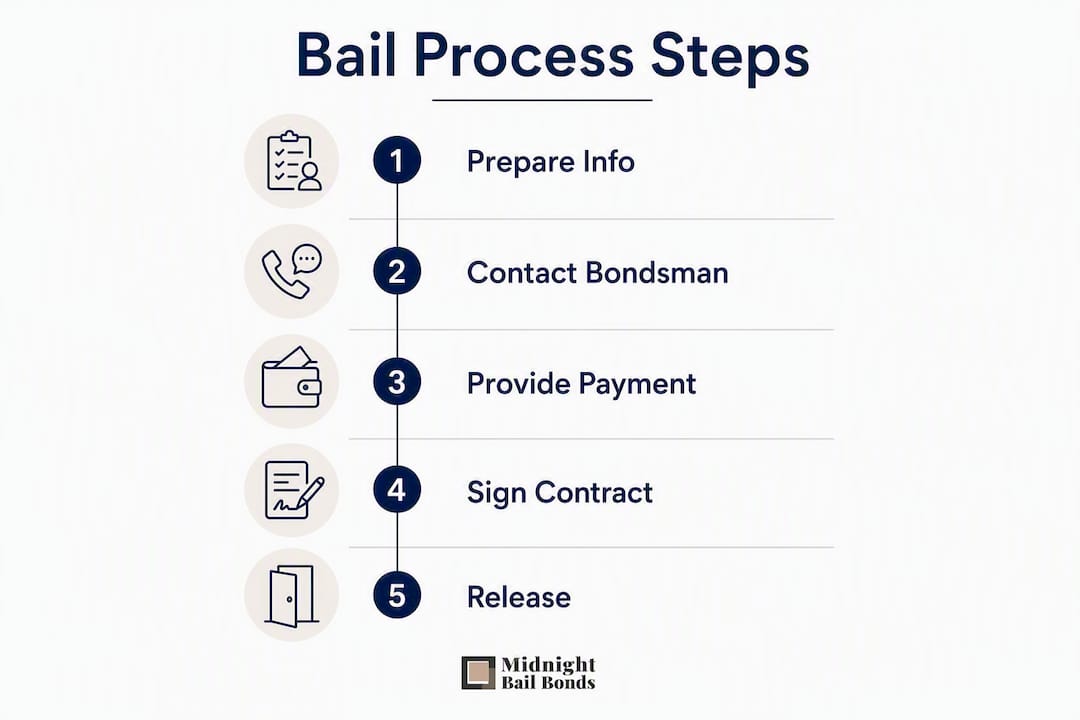
- Step-by-step: how to secure bail quickly after a fraud arrest
- Common bail conditions and restrictions in fraud cases
- What to ask a bail bond agent — and red flags to avoid
- Options if you can't afford a bond or bail is denied
- What a reputable bail agency provides and trust signals to look for
- How prior fraud convictions affect bail decisions
- Consequences of missing bail payments or violating bail conditions
- Key Takeaways
- Why the first call you make is the one that actually matters
- Midnightbail is available right now, around the clock
- Where to verify local bail amounts, find licensed bondsmen, and get legal help
- FAQ
How judges decide bail amounts for fraud charges
Federal and state courts weigh five primary factors: the severity of the alleged financial loss, the defendant's criminal history, flight risk indicators, community ties, and potential harm to the public. Fraud cases add a layer of complexity that most other charges don't carry: defendants often have access to liquid assets, offshore accounts, or business structures that make disappearing easier than it would be for someone charged with a street crime.
Bail schedules exist as starting points, but judges deviate from them regularly in fraud cases. When prosecutors present evidence of concealed assets or international connections, the starting figure almost always goes up. A defendant with a clean record and deep local roots might land near the schedule; someone with a passport and foreign bank accounts will not.
Federal vs. state bail procedures differ significantly. In state court, a magistrate or judge sets bail at arraignment, often within 24–48 hours of arrest. Federal cases go before a U.S. Magistrate Judge at an initial appearance, and the Bail Reform Act of 1978 governs the decision. Federal prosecutors can request detention hearings and argue for remand outright, which is why federal fraud bond amounts tend to start higher and carry stricter conditions.
For serious multi-defendant fraud schemes, prosecutors often oppose bail entirely, citing evidence-tampering risk. That's not a bluff — courts take it seriously.
Typical bail ranges for common fraud offenses
Bail amounts vary by jurisdiction, the facts of the case, and the judge's read on flight risk. The following are general ranges commonly seen in the U.S., not guarantees.
| Offense Scale | Typical Bail Range | Common Conditions |
|---|---|---|
| Low-value fraud | $5,000–$25,000 typical | Travel restrictions, reporting |
| Mid-value fraud | $25,000–$50,000 typical | Passport surrender, monitoring |
| Large-scale fraud | Above $50,000 typical | Electronic monitoring, asset freeze |
| Federal fraud charges | $10,000 to over $100,000 typical | Strict pretrial supervision |
Federal fraud bonds commonly range from $10,000 to over $100,000, with large-scale schemes pushing well beyond that ceiling. State-level credit card fraud or identity theft charges with losses under $10,000 often land in the $5,000–$25,000 range at arraignment, though a prior record or evidence of a broader scheme can double that figure quickly.
Embezzlement cases sit in the middle tier most often, but the employer's alleged loss drives the number more than the charge label itself. A $30,000 embezzlement from a small business and a $30,000 embezzlement from a hospital system may carry very different bail amounts depending on how the prosecutor frames the case.
How bail bond costs work and common payment options
The math is straightforward. California, like most states, sets the bail bond premium at 10% of the total bail amount. That fee is non-refundable regardless of the case outcome. If bail is set at $80,000, you owe the bondsman $8,000 to get out.
Pro Tip: Ask the bondsman upfront whether they require collateral. Many reputable agencies, including Midnightbail, post bonds without collateral in many cases — particularly when the defendant has stable employment and local ties. Collateral requirements are negotiable more often than people realize.
Collateral, when required, typically means real property, a vehicle, or other assets pledged against the full bail amount. A co-signer (indemnitor) takes on legal responsibility for the defendant's court appearances. If the defendant skips, the co-signer is on the hook for the full bail amount.
Payment options at most licensed agencies include cash, credit or debit card, Zelle, and financing plans. Payment plans spread the 10% premium over weeks or months, which matters when $8,000 isn't sitting in a checking account. Processing time after payment is typically a few hours, though county jail booking procedures can extend release to 4–8 hours in busier facilities.
Step-by-step: how to secure bail quickly after a fraud arrest
Speed matters. Every step you delay adds hours in custody.
- Find the inmate. Use the county jail's online inmate lookup. The Los Angeles Sheriff's Department, Orange County Sheriff, and San Bernardino and Riverside County all have free search tools. Confirm the booking number, charges, and bail amount.
- Call a licensed bondsman. Have the inmate's full legal name, booking number, date of birth, and the jail facility name ready. A bondsman can start the paperwork immediately.
- Provide indemnitor information. The co-signer needs a valid government-issued ID, proof of income or employment, and a phone number. If collateral is required, have property documents or vehicle titles accessible.
- Sign the indemnity agreement. Read it carefully. This is a legal contract. Confirm the fee amount, the bail amount, and the conditions of the bond in writing before signing.
- Make payment. Cash, card, Zelle, or financing. Get a receipt and a copy of the signed agreement.
- Wait for release processing. The bondsman contacts the jail, posts the bond, and coordinates release. Expect 2–8 hours depending on the facility's current volume.
Pro Tip: Have a step-by-step bail checklist ready before you call. Bondsmen move faster when you can answer every question on the first call without putting them on hold.
Common bail conditions and restrictions in fraud cases
Courts in fraud cases reach for conditions that address two specific risks: the defendant fleeing and the defendant interfering with witnesses or evidence. Electronic monitoring, passport surrender, and non-contact orders are standard tools courts use to allow release without full remand.
Common conditions you should expect:
- Travel restrictions: Typically limited to the state or county; international travel is almost always prohibited.
- Passport and travel document surrender: Handed to the court or pretrial services at release.
- Electronic monitoring: GPS ankle bracelet, particularly in mid-to-large-value cases.
- No-contact orders: Prohibit contact with alleged victims, co-defendants, or key witnesses.
- Regular reporting: Check-ins with pretrial services, sometimes weekly.
- Financial restrictions: Courts may freeze specific accounts or require disclosure of assets.
Bail conditions in fraud cases are negotiating points, not fixed demands. A defense attorney who proposes specific, enforceable conditions — device transparency, account monitoring, a court-approved custodian — gives the judge a reason to allow release instead of remand. Conditions that address the court's actual concerns are far more persuasive than a simple request to lower the bail amount.
Conditions can be modified after release if circumstances change. File a motion through your attorney with documented reasons. Violating any condition, however, triggers immediate consequences.
What to ask a bail bond agent — and red flags to avoid
Before you hand over money, ask these questions:
- What is your license number? Every bondsman in California must hold a Department of Insurance license. Verify it at the California Department of Insurance website before signing anything.
- What is the exact fee? It should be 10% of the bail amount, no more. Get it in writing.
- Is collateral required? If yes, what type and what value?
- Do you offer payment plans? What are the terms?
- What is the estimated release timeline?
- Are you available 24/7? Arrests don't happen on business hours.
Red flags that should stop you immediately:
- No written contract offered.
- Refusal to provide a license number.
- Demands for a fee above the state-mandated 10%.
- Requests for payment via wire transfer to an offshore account or through untraceable methods.
- Pressure to sign before you've read the agreement.
Verify any bondsman's license through the California Department of Insurance before paying. A legitimate agency will hand you their license number without hesitation.
Options if you can't afford a bond or bail is denied
If the bail amount is out of reach, you have real options.
Request a bail reduction hearing. Your attorney can file a motion arguing that the current amount is excessive given your community ties, employment, and lack of flight risk. Courts may lower bail when presented with credible mitigation: collateral offers, strong local ties, or enhanced monitoring conditions.
Build a bail package. A structured bail package includes verified employment letters, property records, family statements, a proposed surrender of travel documents, and a specific monitoring proposal. This gives the judge something concrete to approve rather than a vague request.
Pretrial release programs. Many California counties offer supervised pretrial release for defendants who meet eligibility criteria. This is release without cash bail, supervised by pretrial services. Eligibility depends on the charge, criminal history, and risk assessment.
Property bond. A family member with sufficient equity in real property can pledge it directly to the court as security for the full bail amount, bypassing the bondsman's premium entirely.
Bail is sometimes denied outright in serious fraud cases, particularly when prosecutors demonstrate a genuine flight risk or evidence-tampering threat. In that situation, the immediate focus shifts to a detention hearing with the strongest possible bail package and legal representation.
What a reputable bail agency provides and trust signals to look for
A reliable bondsman is not just someone who posts the bond. The service quality around that transaction determines how fast you get out and how clearly you understand your obligations.
Look for these signals:
- 24/7 availability. Fraud arrests happen at any hour. An agency that closes at 5 PM is not a real option.
- Licensed agents. Publicly displayed license number, verifiable through the state.
- Written indemnity agreement. Every term in writing before any money changes hands.
- Clear fee disclosure. The 10% premium stated explicitly, with no hidden fees.
- Payment plan options. Financing that makes the premium accessible without draining savings.
- Bilingual support. Spanish-speaking agents for families who need it.
- Instant inmate lookup. The ability to locate a defendant and confirm bail before you even call.
Midnightbail meets each of these standards. Licensed agents are available around the clock across California, payment plans are offered without collateral in many cases, and the fee structure follows California's state-mandated premium. Bilingual support and a free inmate search tool are available from the first contact.
How prior fraud convictions affect bail decisions
A prior fraud conviction is one of the most damaging factors at a bail hearing. It signals to the court that the defendant has already demonstrated willingness to commit financial deception, which directly undermines arguments about trustworthiness and flight risk.
Practically, a prior conviction in the same category typically results in a higher bail amount, stricter conditions, and a harder fight against pretrial detention. Prosecutors will cite the prior record to argue that no conditions will adequately protect the public or guarantee appearance. Judges tend to agree, especially in federal court where the Bail Reform Act gives magistrates broad discretion to detain defendants with relevant criminal history.
The defense response is to distinguish the prior offense in scale, context, or time elapsed, and to present the strongest possible community-ties evidence to offset the record's weight.
Consequences of missing bail payments or violating bail conditions
Missing a payment to your bondsman does not automatically send you back to jail, but it triggers a process that can. The bondsman may revoke the bond, which means notifying the court that the surety is withdrawn. Once the bond is revoked, a bench warrant issues and you are subject to immediate arrest.
Violating a bail condition — cutting off an ankle monitor, contacting a protected witness, or leaving the jurisdiction — is a separate and more serious problem. The court can revoke bail entirely, order immediate detention, and add new criminal charges for the violation itself. In fraud cases, a no-contact violation is particularly damaging because it confirms the court's concern about witness interference.
Missing a court date while on bail triggers a bail forfeiture. The full bail amount becomes due, the co-signer's collateral is at risk, and a fugitive warrant issues. Bondsmen have legal authority to locate and return defendants who skip, and they exercise it.
The practical lesson: treat every condition as non-negotiable until your attorney formally modifies it through the court.
Key Takeaways
Fraud charges bail typically runs $5,000 to over $100,000 depending on case scale, and a licensed bondsman charges a non-refundable 10% premium to post it — making immediate, informed action the single most important factor in how quickly you get out.
| Point | Details |
|---|---|
| Bail ranges vary widely | State fraud cases vary widely and federal fraud generally starts higher, depending on loss and risk factors. |
| Bondsman fee is 10% | California's state-mandated non-refundable premium means the bondsman's fee is typically 10% of the bail amount. |
| First two steps matter most | Run an inmate lookup to confirm bail, then call a licensed bondsman immediately with booking details ready. |
| Bail can be reduced | A bail package with employment proof, community ties, and a monitoring proposal can persuade a judge to lower the amount. |
| Midnightbail | Licensed 24/7 California bondsman offering flexible payment plans, bilingual support, and bail without collateral in many cases. |
Why the first call you make is the one that actually matters
Most people facing a fraud arrest spend the first few hours trying to understand what happened rather than doing the one thing that shortens custody time: calling a licensed bondsman or attorney immediately. The bail amount is set. The conditions are coming regardless. What you control is how fast you respond.
A focused bail package, assembled quickly and presented at the first hearing, genuinely changes outcomes. Courts respond to specifics: a letter from an employer, a property record, a proposed monitoring arrangement. Vague assurances about being a good person do not move judges. Documentation does.
The other thing worth insisting on: a written contract and a license number before any money moves. A bondsman who hesitates on either is not someone you want managing your release.
Midnightbail is available right now, around the clock
When a fraud arrest happens, the clock starts immediately. Midnightbail's licensed agents are available 24 hours a day, 7 days a week across California, including Los Angeles, Orange County, San Bernardino, and Riverside County. There's no waiting until morning.
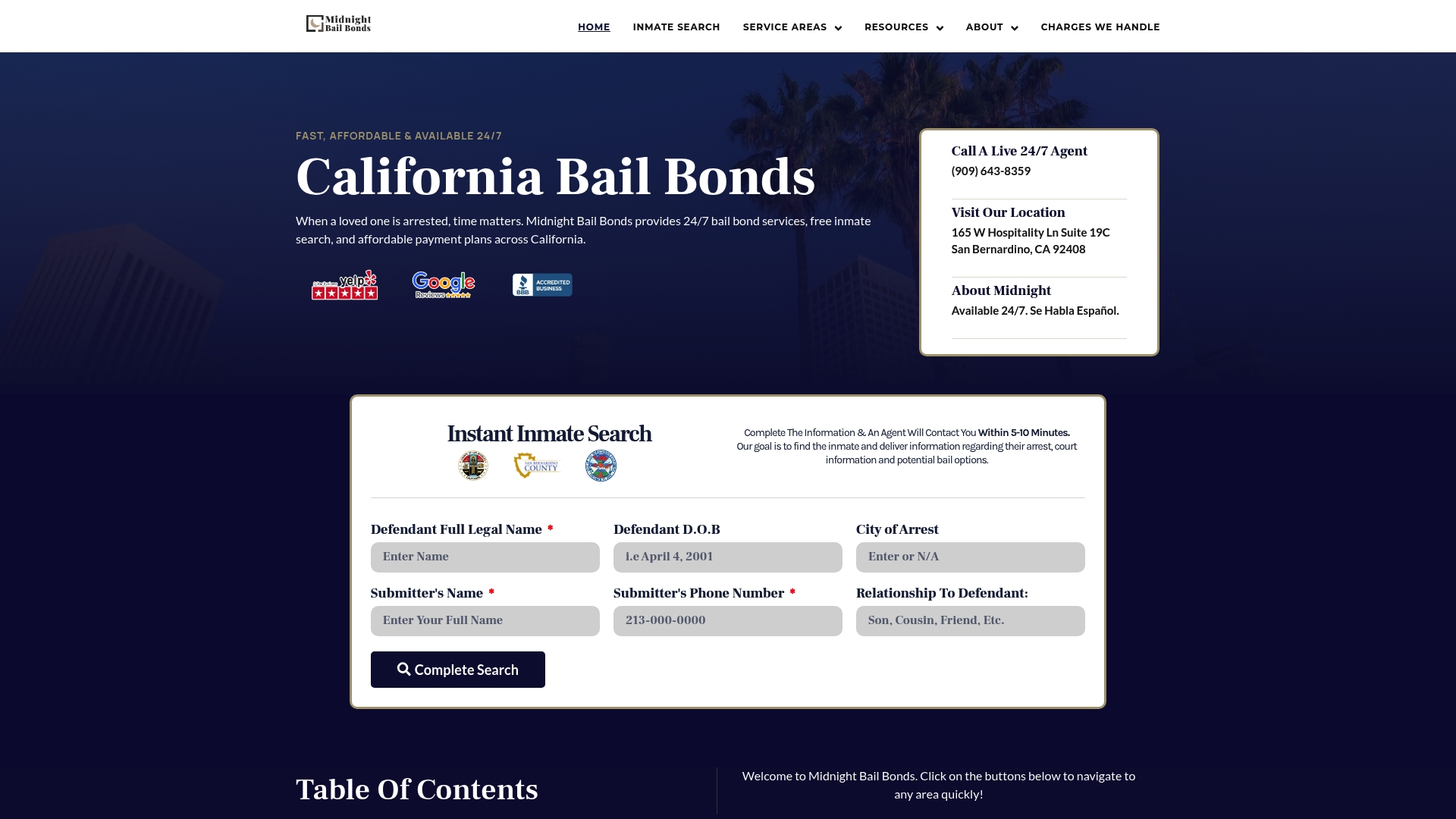
The process starts with a free inmate search. Midnightbail can locate the detained person, confirm the bail amount, and begin paperwork in a single call. Payment plans are available, collateral is not required in many cases, and agents provide bilingual English/Spanish support throughout. Accepted payments include cash, credit or debit card, Zelle, and financing.
To get started, visit Midnight Bail Bonds or call directly. Have the inmate's full name, booking number, and the jail facility ready. A licensed agent will walk you through every step, provide a written fee agreement, and coordinate release as fast as the facility allows.
Where to verify local bail amounts, find licensed bondsmen, and get legal help
- Los Angeles Sheriff's Department Inmate Information: Search by name or booking number to confirm charges, bail amount, and facility location.
- Orange County Sheriff Inmate Information: Real-time custody and bail data for OC facilities.
- Congress.gov — Federal Bail Law Overview: The Congressional Research Service's overview of federal bail law under the Bail Reform Act; useful for understanding federal detention standards.
- Registry Recognizer public bond records: Public arrest and bond records showing bond types and amounts set by magistrates; useful for comparing local bond amounts.
- California Department of Insurance (insurance.ca.gov): Verify any bail bondsman's license before signing a contract. Search by name or license number.
- County Public Defender offices: If you cannot afford private counsel, contact the public defender's office in the county of arrest immediately after booking. They can appear at the bail hearing and argue for reduction.
FAQ
How much is bail for a fraud charge?
Bail for fraud charges typically ranges from $5,000 for low-value state charges up to over $100,000 or more for large-scale federal cases, depending on the alleged loss amount, criminal history, and flight risk factors.
Can bail be reduced after it's set for fraud?
Yes. A defense attorney can file a motion for a bail reduction hearing and present a bail package with employment verification, community ties, and a proposed monitoring arrangement to persuade the judge to lower the amount.
How do prior fraud convictions affect bail?
A prior fraud conviction almost always results in a higher bail amount and stricter conditions, because it signals to the court that the defendant has already demonstrated willingness to commit financial deception, which undermines flight-risk arguments.
What happens if I miss a bail payment or violate a condition?
Missing a bondsman payment can lead to bond revocation and a bench warrant; violating a court-imposed condition such as a no-contact order or travel restriction can result in immediate detention and additional criminal charges.
What proof is needed to get bail reduced for fraud?
Courts respond to documented evidence: employer letters confirming steady work, property records showing local roots, family statements, a proposed surrender of travel documents, and a specific electronic monitoring plan.