
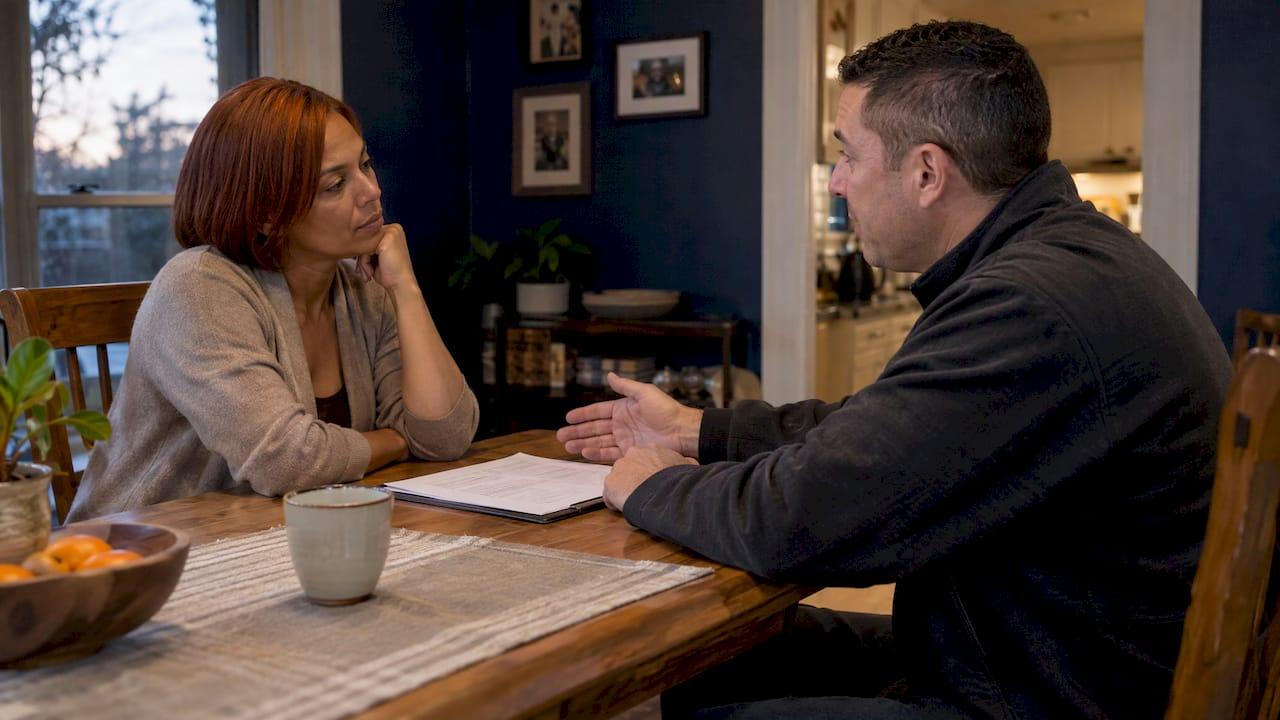
An indemnitor is the person who signs a bail bond contract and promises the bail bond company that the defendant will show up in court. If the defendant doesn't, the indemnitor can be held responsible for the full bond amount. Most people know the role as the cosigner, and it is usually a parent, spouse, relative or close friend. If you are being asked to sign for someone tonight, our licensed agents at Midnight Bail Bonds answer calls directly, any hour, and explain the contract before you sign it.
TL;DR
- An indemnitor (also called a cosigner) signs the bail bond contract and agrees to reimburse the bond company if the defendant forfeits the bond.
- The indemnitor is different from the defendant. The defendant must go to court. The indemnitor guarantees it financially.
- In California the premium is typically 10% of the total bail amount and is non-refundable. It is a fee for the service, not a deposit.
- Your exposure can include the full bond, related costs and any pledged collateral, depending on the contract's terms.
- Many Midnight bonds are written without collateral, and you can read the full terms before you sign.
Table of Contents
- What does indemnitor mean in bail?
- The three people in a bail bond
- What you agree to when you sign
- Indemnitor vs. paying cash bail
- Collateral: the part families worry about most
- Who can be an indemnitor?
- How to sign with confidence: a short checklist
- How obligations vary by contract and place
- What Midnight does when you call
- Our perspective
- FAQ
- Sources
What does indemnitor mean in bail?
The word comes from "indemnify," which means to protect someone against a loss. In a bail bond, the bond company (the surety) puts up the full bail amount with the court so the defendant can leave jail. The indemnitor agrees to cover the company if that money is lost.
A UCLA Criminal Justice Reform Clinic report defines an indemnitor as a person, usually a family member or friend, who agrees to pay the full bond amount if the accused forfeits the bond. The same report notes that bail bond contracts may call this person a cosigner.
So when an agent asks, "Who will be the indemnitor?", they are asking who will sign the agreement and stand behind the bond. We go deeper on the day-to-day side of the role in our guide to bail cosigner responsibilities.

The three people in a bail bond
It helps to separate the roles, because families often mix them up.
| Role | Who it is | What they do |
|---|---|---|
| Defendant | The person arrested | Attends every court date and follows release conditions |
| Indemnitor (cosigner) | Usually family or a friend | Signs the contract, pays the premium, promises to reimburse the company if the bond is forfeited |
| Surety (bail bond company) | The licensed company | Posts the bond with the court and answers to the court for the full amount |
The defendant is the accused person whose appearance and compliance the bond secures. The indemnitor is not the one who has to appear in court. The indemnitor is the one who takes on the financial promise.
What you agree to when you sign
By signing as an indemnitor, you generally agree to the following.
- Pay the premium. In California this is typically 10% of the total bail amount, and it is non-refundable. On a $50,000 bail, that is $5,000. You can run your own numbers with our bail bond calculator.
- Make sure the defendant attends court. You are vouching for them. If you learn they plan to leave or have missed a date, tell the agent right away. Quick action can often help resolve a missed date before it becomes a forfeiture.
- Reimburse the company if the bond is forfeited. The UCLA report says an indemnitor may face the full bond amount, plus additional expenses caused by the accused's breach, and risks involving any pledged collateral.
The exact wording is in the contract, so read it. A standard industry indemnitor form published by a surety, Lexington National, says its indemnitors are jointly and severally liable for specified losses. That means each signer can be asked to cover the whole amount, not just a share. The categories listed on that form include the forfeiture or judgment, related costs, recovery expenses, extradition costs and reasonable collection attorneys' fees, subject to applicable law. Those are the terms of that form, and other contracts differ, which is why the contract in front of you is the one that matters.
Indemnitor vs. paying cash bail
Some families ask whether they could just pay the court directly. That is cash bail, and it works differently. According to the UCLA report, money bail paid to the court is generally refundable when release conditions are met, while a surety's premium is nonrefundable.
The trade-off is simple. Cash bail needs the full amount up front, which can be tens of thousands of dollars. A bail bond lets you pay a fraction, the premium, and the company posts the rest. For most families, the premium is the only amount that is realistic on a night like this. Our explainer on how bail bonds work from arrest to release and refund walks through the full timeline, and bail money back covers what is and isn't returned.

Collateral: the part families worry about most
Sometimes a bond company asks the indemnitor to pledge property, such as a car, savings or a home, to back the bond. The UCLA report warns that some contracts can give sureties substantial control over pledged property. That is a critique of the contracts the report examined, not a rule for every bond, but it is the reason to read the collateral section line by line before signing anywhere.
At Midnight, we write many bonds with no collateral. If you want to know whether your situation qualifies, see our page on no collateral bail bonds in California. If you are comparing contract language, our guide to contract protections cosigners should demand lists what to look for.
Who can be an indemnitor?
An indemnitor is typically an adult who can show they are in a position to stand behind the bond. Requirements vary by company, so ask what yours needs. Our guide to cosigner eligibility and what to bring covers the usual documents. Having ID and basic information about the defendant ready, including name, booking number and jail location, speeds things up. Our free inmate search can help you find the booking details.
How to sign with confidence: a short checklist
Whether you sign with us or read any contract, go through these points.
- The total you owe now. Premium, down payment and any payment plan schedule, in writing. California's 10% premium is typical, and our bail bond cost guide explains why.
- The fees allowed. Our post on how California law lets bondsmen charge a 10% premium explains what to ask.
- What collateral, if any, is required and when it is released.
- What happens if a court date is missed and who you should call first.
- When your obligation ends, usually when the case concludes and the bond is exonerated, meaning the court releases the bond.
- Language. You should sign a contract you fully understand. We offer bilingual English and Spanish support, so you can go through the terms in the language you are most comfortable with.
For a full walkthrough of what the paperwork should contain, see our guide to California bail bond contracts and three questions to ask.
How obligations vary by contract and place
The indemnitor role is the same idea everywhere, but the details are set by the contract and by the law of the state where the bond is posted. Collection costs, fees and what counts as a covered expense differ between forms, and the Lexington form, for example, can require funds on demand for covered claims. That is a term of that specific form, not a universal rule. In California, the premium is typically 10% of the bail amount and non-refundable. For anything beyond the contract's plain text, such as a dispute over liability, an attorney licensed in your state is the right person to consult.
What Midnight does when you call
When a loved one is in jail, time matters. Our licensed agents answer all calls directly at any hour, give clear costs upfront, and walk you through the indemnitor role before you commit. We have real local offices and direct relationships with jails and courts to help speed releases. Payments can be made by cash, credit or debit card, Zelle or financing, and we offer flexible payment plans.
You can start from your phone with online bail bonds, or see our 24-hour bail bonds in California page. If the charge is a DUI, our DUI bail bonds page has the details.
To begin, call us or visit Midnight Bail Bonds and tell the agent who is in custody and who will be signing.
Our perspective
Most of the fear around the word "indemnitor" comes from not knowing what it means until the paperwork is already on the table. We think the signer should understand the role before the pen comes out.
That is why we explain the premium, the payment plan and the obligations in plain terms, in English or Spanish, at any hour. A family member at 2 a.m. should not have to decode legal language to get a loved one home.
We also write many bonds without collateral, because a family's house or car should not be the price of a release. The indemnitor's promise is serious, and we treat it that way: clear costs upfront, a clear contract, and a licensed agent who picks up the phone.
Jake
FAQ
Is an indemnitor the same as a cosigner?
Yes, in practice. Both words describe the person who signs the bail bond agreement and promises to reimburse the bond company if the bond is forfeited. Contracts often use "indemnitor," while families usually say "cosigner."
Does the indemnitor have to go to court?
No. The defendant must attend every court date. The indemnitor's role is to sign the contract, pay the premium and help make sure the defendant appears, since the indemnitor is financially responsible if they don't.
Do I get the premium back?
No. In California the premium, typically 10% of the total bail amount, is a non-refundable fee for the bond service. Cash bail paid directly to the court is a different arrangement and is generally refundable when release conditions are met.
Can there be more than one indemnitor?
Yes, a bond can have more than one. Under a joint and several clause, such as the one in the Lexington form, each signer can be asked to cover the whole amount, so ask your agent how the contract you are signing treats multiple signers.
Can I be an indemnitor if I have no collateral?
Often, yes. Many of our bonds are written without collateral. Call us with the details of the case and we will tell you what applies.
Sources
- UCLA Criminal Justice Reform Clinic, The Devil in the Details (May 2017)
- Indemnitor Application and Agreement, Lexington National standard form