
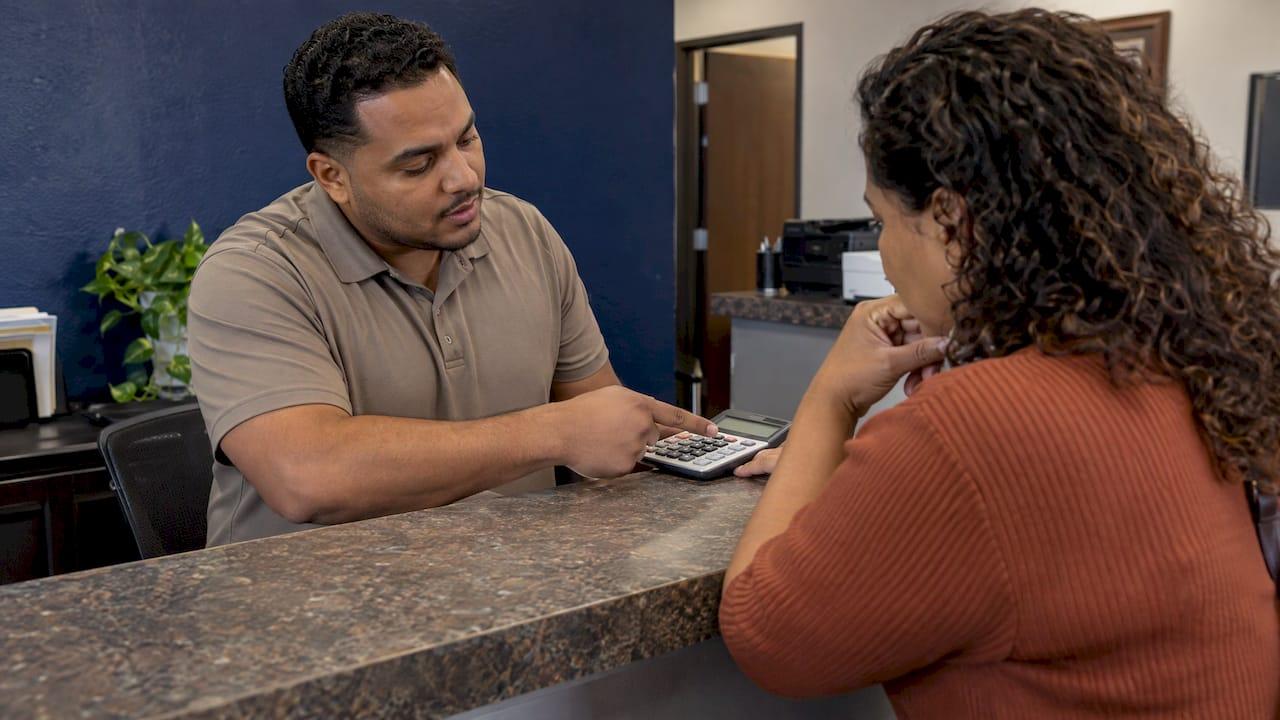
A bail bond in California usually costs 10% of the bail amount the court sets. On $5,000 bail, that is a $500 fee, and on $25,000 bail it is $2,500. That fee is not refundable, and it is separate from the bail itself. Below you will find the math, what a down payment looks like, what can push the cost up or down, and the questions to ask before you sign.
TL;DR
- The standard California bail bond fee (the premium) is 10% of the bail amount. It is the most common rate, and the California Department of Insurance says agents must charge the rates their surety company has filed with the state.
- The premium is nonrefundable, even when charges are dropped or never filed.
- Many bail companies accept a down payment and let you pay the rest in installments. Terms depend on the company and the bond.
- Bail amounts come from county bail schedules, so the same charge can cost different amounts in different counties.
- Ask for a written breakdown of every charge before you sign.
Table of Contents
- How much a bail bond costs in California
- Bail versus bail bond: the difference in plain words
- What the bail amount depends on
- The down payment: what you pay up front
- Collateral: when the bond costs more than the premium
- Is the premium refundable?
- Why two quotes can differ
- What to ask before you sign
- Perspective: why price clarity matters most at 2 a.m.
- Get a clear number and start the release process
- FAQ
- Sources
How much a bail bond costs in California
Two numbers matter, and families often mix them up. Bail is the amount the court sets to secure a person's release and their return to court. The bail bond premium is what you pay a bail agent to post that bail for you. The bail bond cost people search for is the premium.
The California Department of Insurance explains that the court determines the bond amount, while each surety company files its rates with the Department and its agents must charge those filed rates. The most common rate is 10%. An earlier Insurance Commissioner overview of the state's bail system also notes that agents usually charge 10%, though rebating can bring the fee down to 2% to 8%.

So 10% is the rule of thumb, not a guarantee for every bond. If someone quotes you a figure far above 10% of the bail, ask them to show you the filed rate and to itemize the rest.
What 10% looks like in dollars
This table shows the premium at the standard 10% rate. Your own quote may differ if a lower filed or rebated rate applies.
| Bail amount | Premium at 10% |
|---|---|
| $1,000 | $100 |
| $2,500 | $250 |
| $5,000 | $500 |
| $10,000 | $1,000 |
| $25,000 | $2,500 |
| $50,000 | $5,000 |
| $100,000 | $10,000 |
| $500,000 | $50,000 |
The quick way to calculate it yourself: move the decimal one place to the left. Ten percent of $5,000 is $500. Ten percent of $1,000 is $100. If the bail is $1,000,000, as it can be for the most serious charges, the premium is $100,000.
We also built a bail bond calculator so you can plug in a bail amount and see the number before you call.
Bail versus bail bond: the difference in plain words
Bail is the full amount set by the court. If you pay it in full to the court in cash, you get it back when the case ends and the person has made every court date (subject to court fees and fines). A bail bond is a different route: you pay a licensed agent a fee, and the agent's surety company guarantees the full bail to the court.
The tradeoff is simple. Cash bail ties up a large sum but returns it. A bond costs a fraction of the bail, but that fee is gone for good. Most families choose a bond because few people can put $25,000 or $50,000 on the table on a few hours' notice.
What the bail amount depends on
Your premium is only as large as the bail, and bail is not the same everywhere. Each county's superior court adopts a bail schedule under Penal Code 1269b, and those schedules set the presumptive amounts for arrests made without a warrant. The San Luis Obispo County schedule states that a judicial officer at arraignment may raise or lower bail based on the charges, enhancements, prior convictions and other factors.
That means the schedule is a starting point. Counties also structure schedules differently. San Bernardino County's 2026 schedule includes a discretionary chart for other felonies that runs from $30,000 for offenses carrying three years or less up to $1,000,000 for life terms. At 10%, that range means a premium from $3,000 to $100,000 before any other factors.
Factors that commonly move bail up or down:
- The charge. Felonies carry higher bail than misdemeanors, and violent charges higher than property charges.
- Enhancements. Add-ons such as weapon use can raise the amount.
- Criminal history. Prior convictions and prior failures to appear can increase it.
- The county. Schedules differ, so a bail amount in one county may not match another.
- The judge at arraignment. Bail can be reduced, raised or changed to release without bail.
If you want charge-specific numbers, these guides walk through typical ranges and how to verify them: drug possession bail amounts, HS 11350 bail ranges, PC 273.5 bail, PC 243(e)(1) bail and ADW bail by county.
The down payment: what you pay up front
Most families cannot pay the whole premium at once, and bail agents know it. The Insurance Commissioner's overview describes how some companies offer credit bail, where you pay a down payment and make partial payments until the fee is fully paid.
There is no single statewide down payment figure. The amount depends on the bail, the company's terms, who is signing and what they can document. Here is how to think about it with a worked example:
- Bail is set at $20,000.
- The premium at 10% is $2,000.
- If a company asks for part of that now, the rest becomes an installment schedule written into the contract.
A payment plan does not change the total fee. It changes when you pay it. Before agreeing, confirm in writing the down payment, the amount and date of each installment, and what happens if a payment is late.
At Midnight Bail Bonds we offer flexible payment plans and accept cash, credit and debit cards, Zelle and financing. If you want to start without leaving the house, our online bail bonds page shows how to begin from your phone, and our guide to paying bail online walks through each step.
Collateral: when the bond costs more than the premium
For smaller bonds, the premium and a cosigner's signature are often enough. For large bail amounts, an agent may want more security. The Insurance Commissioner's overview says the agent may require the bond be secured by collateral, such as a lien on real property owned by the arrestee or their family.
Collateral is not a fee. It is security the agent holds against the risk that the defendant misses court. It is released when the bond is exonerated, which happens when the case ends or the court otherwise discharges the bond.
Many families worry they have nothing to pledge. In many cases that does not block a release. We write bonds without collateral in many situations, and you can read how that works on our no collateral bail bonds page. Approval depends on the bail amount and the circumstances, so the fastest way to know is to call and ask.

Is the premium refundable?
No. California's Department of Insurance states plainly that bail bond premiums are nonrefundable, even if charges are never filed or are dropped. You are paying for the service of posting the bond, not for its outcome.
Two law points are worth knowing:
- One premium covers the whole bond. Since January 1, 2022, AB 1347 has prohibited charging a renewal premium. A single premium covers the agreement until bail is exonerated. If someone asks you for an annual renewal fee on a California bond, that is a red flag to question.
- Refund legislation has been proposed. SB 562 would have a court order a refund of up to 80% of the premium after a hearing if bond terms change or charges are dismissed within 21 days, and no refund once more than 30 days have passed since posting. A bill is not a law, so check its current status before counting on a refund.
The practical lesson: decide on the bond with the understanding that the fee is spent the moment the bond is posted.
Why two quotes can differ
If 10% is standard, why do quotes vary? A few reasons:
- Filed rates differ by surety company. Agents must charge their company's filed rates, and the Department of Insurance notes the rate is not necessarily identical in every transaction.
- Rebates and discounts. The Commissioner's overview notes rebating can lower the fee to between 2% and 8%.
- Add-ons. Some quotes mix in travel, notary or other costs. Ask whether the percentage quoted is only the premium or includes other charges.
- Financing costs. If you finance the premium, ask what, if anything, is added.
We publish the 10% California premium upfront, and our agents explain every figure before you sign. If you are comparing lower-percentage options, see our pages on 1% bail bonds, 2% bail bonds and affordable bail bonds to learn what applies to your situation.
What to ask before you sign
The bond contract is a legal agreement, usually signed by a cosigner who becomes responsible if the defendant does not appear. Our breakdown of bail bond contract terms and of how California law lets bondsmen charge a 10% premium go deeper. Start with these questions:
- What is the total premium in dollars, and what rate is it based on?
- How much is due now, and what is the payment schedule for the rest?
- Is any collateral required, and when is it returned?
- Are there any fees besides the premium? If so, get each one itemized.
- What are the defendant's conditions and court dates? (See bail conditions in California.)
- Do I get a copy of everything I sign?
Ask for the breakdown in writing. Keep it with your receipts, along with the paperwork for the case. Having ID, the defendant's booking information and employment details ready also speeds things up, as covered in our list of bail bond documents needed.
Perspective: why price clarity matters most at 2 a.m.
Most families call us in the worst hour of their year. They are not shopping like it is a car. They are scared, tired and trying to get someone home.
That is exactly why we put the numbers first. The California premium is 10% of bail, and we tell you the dollar figure before you commit. Our licensed agents answer the phone directly at any hour, so you are not leaving a message and hoping.
We also believe the cost should not be a barrier on top of the arrest. That is why we offer flexible payment plans, write many bonds without collateral, and have bilingual English and Spanish support on every shift. Local offices and direct working relationships with jails and courts help us move releases along, because every hour in custody costs a family something too.
If you take one thing from this page: get the total, the down payment and the schedule in writing, and do not let anyone rush you past a number you do not understand.
Jake
Get a clear number and start the release process
If someone you love is in custody, we can tell you the premium, the down payment options and whether collateral is likely to be needed, usually in one call. Our licensed agents are available 24/7 across California, and our free inmate search helps you find the booking information and the bail amount.
You can start your bail bond with Midnight Bail Bonds by phone or online. If the arrest is for a specific charge, we also have pages for DUI bail bonds and domestic violence bail bonds. If the person is on a 1275 hold, see our 1275 hold bail bonds page, and for urgent cases our 24-hour bail bonds page explains how fast we move.
FAQ
How much is 10% on a $5,000 bond?
It is $500. Multiply the bail by 0.10, or move the decimal one place left. On a $1,000 bail, the same math gives $100. Your final quote can differ if a lower filed or rebated rate applies.
How much is the down payment on a bail bond?
There is no single statewide figure. Some companies accept a down payment and partial payments until the premium is paid in full, and the terms are set in your contract. Ask for the down payment, the installment dates and the total in writing.
Can I bail myself out of jail in California?
Yes, in the sense that a person in custody can arrange release if bail is set and they can pay it or have someone post it. In practice, the person is in jail and cannot sign paperwork, so a family member or friend usually works with a bail agent. Call us and we will explain the options for the situation.
Is bail cheaper than a bail bond?
Paying the full bail in cash to the court costs more up front, but the money is returned when the case ends and all court dates are met, less any court fees and fines. A bond costs a nonrefundable fee, typically 10% of bail, and requires far less cash on hand. Which is cheaper in the end depends on whether you can afford to tie up the full amount.
Will I get my money back if the charges are dropped?
No. The California Department of Insurance says bail bond premiums are nonrefundable even if charges are never filed or are dropped. Any collateral you pledged is returned once the bond is exonerated.
Sources
- California Department of Insurance: Bail Bonds consumer guidance
- California Department of Insurance: An Exploration of California's Bail System (2017)
- California Department of Insurance: Tips to Avoid Bail Agent Scams
- AB 1347, Bail: premiums
- SB 562, Bail
- San Luis Obispo County Superior Court: 2026 bail schedule
- San Bernardino County Superior Court: felony and misdemeanor bail schedule