
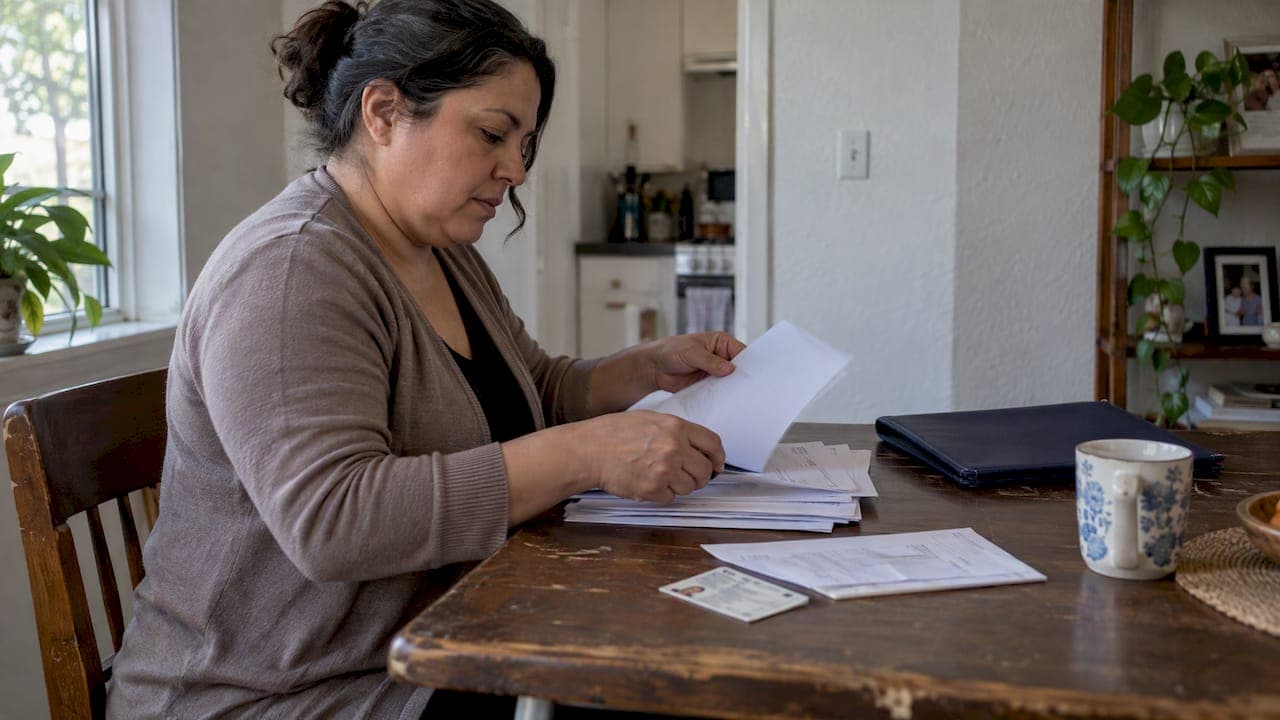
You need five things to start a bail bond: the defendant's full legal name and date of birth, the facility and booking number, the cosigner's government photo ID and contact details, a payment method or collateral documentation, and a signed indemnity agreement. With those in hand, an agent at a licensed bail bond service can begin the release process immediately, often before you even reach the premium receipt stage.
TL;DR:
- A booking number speeds the search, while the facility and county narrow it because jail systems do not share databases; agents can still work from partial details.
- Cosigners may need proof of residency, employment details, and a personal reference; agents may request a Social Security number for larger bonds or collateral agreements.
- When collateral secures a bond, the receipt must describe the item and its condition, include a prenumbered identifier, and carry both signatures.
- Remote applications can use legally recognized electronic signatures, but agents need clear images of both ID sides, and release waits for jail or court acceptance.
- Charge type usually leaves core forms unchanged, but DUI enhancements and drug allegations can alter bail, while domestic violence orders remain separate court conditions.
Table of Contents
- Defendant information to have on hand
- Cosigner (indemnitor) documents and personal details
- Common bail bond forms and what you will sign
- Collateral and payment documents: what qualifies and how it's recorded
- Remote and electronic processing: signatures, authorizations, and confirmations
- What you do not need to bring
- Documents needed for DUI, domestic violence, and drug charge bonds
- How to organize your documents before visiting the agency
- Documentation differences across California county jails
- Defendant documentation versus cosigner documentation
- Special circumstances that affect document procedures
- Practical tips from agents who handle documents and remote postings
- How Midnight Bail Bonds can help now
- FAQ
- Sources
Defendant information to have on hand
The fastest way to post bail is to walk in with exact, verifiable details about the person in custody. Agents use these to pull the right booking record out of a jail system that may hold hundreds of names at once.
- Full legal name as booked. Spelling matters: a middle name left off or a hyphenated last name typed wrong can send an agent searching the wrong record for several minutes.
- Date of birth and physical descriptors. Height, weight, and any distinguishing features help confirm identity when two people share a similar name, a detail some state bond statutes require explicitly for personal bonds.
- Facility name and county. Jails rarely share one database, so knowing which facility holds the defendant narrows the search instantly.
- Booking number. This single number does more to speed release than almost anything else you can bring, since it points directly to the record instead of a name search.
- Charges and bail amount. Families usually find this on the jail's inmate lookup page or by calling the facility directly; it tells the agent what premium applies before any paperwork starts.
When you only have fragments, an agent can still work the case. Give whatever you know, approximate spelling, a rough age, the city where the arrest happened, and the office will cross-reference jail systems to find someone in 2 to 24 hours using a booking number once it surfaces.
Cosigner (indemnitor) documents and personal details
The cosigner, called the indemnitor, carries the financial responsibility for the bond, so agents verify this person as carefully as the defendant.
- A valid, unexpired government-issued photo ID: a driver's license, state ID card, or passport.
- Proof of residency, such as a utility bill or lease, when the ID address does not match where the cosigner currently lives.
- Employer name and basic employment details, since agents often ask about income stability before approving larger bonds.
- A Social Security number in some cases, mainly for larger bonds or collateral agreements; agents who ask for this should explain why, and you can request that the number be used only for that document.
- At least one personal reference and a clear statement of the relationship to the defendant, which agents collect to confirm the cosigner has a real connection and a reason to ensure court appearance.
If a cosigner cannot read the agreement or needs translation, most offices can provide an interpreter or a bilingual agent, and some documents may need a literacy affidavit or notarization before they are valid. Protections for cosigners, including what to demand before signing, are covered in four contract protections cosigners for bail in California must demand.
Common bail bond forms and what you will sign
Bail bond paperwork follows a fairly standard structure across agencies, built around a small set of forms that Lexington National's bail bond forms listing outlines as the industry baseline.
- Indemnitor application and agreement. This names the cosigner, the defendant, and the financial obligation if the defendant misses court.
- Premium receipt. This records the fee paid for the bond, typically the state's required percentage of the total bail.
- Collateral receipt. When collateral secures the bond, this receipt must describe the item fully, note its condition, and carry a prenumbered tracking identifier along with both signatures.
- Promissory note. Used when all or part of the premium is financed, this sets the repayment schedule.
Forms vary by state because each jurisdiction attaches its own addendum, a California-specific form differs from a Texas one, for example, so the agent you work with adjusts paperwork to match local rules. Keep your signed copies: agents are generally expected to retain these records for years, and you should too. Details on bail bond contract terms and the state premium explain what each clause commits you to.
Collateral and payment documents: what qualifies and how it's recorded
Collateral secures the bond when the premium alone does not cover the agency's risk. Acceptable forms typically include:
- A vehicle title with no major liens, or clear proof of the payoff amount if one exists.
- A property deed, along with a rough valuation or equity statement.
- Jewelry, electronics, or other valuables with a receipt noting value and condition.
Whatever you bring, the collateral receipt must describe the item precisely, carry a prenumbered reference, and be signed by both the agent and the indemnitor, a requirement Lexington National's forms guidance flags specifically for collateral receipts. If the premium is not paid in full up front, a promissory note sets the installment schedule instead. Families with nothing to pledge are not out of options: no-collateral bail bonds in California exist precisely for this situation, alongside standard payment plans.
Remote and electronic processing: signatures, authorizations, and confirmations
Many bonds now start over the phone or online rather than in an office. Electronic signatures on indemnity agreements are legally recognized for this purpose under federal provisions on electronic records and signatures, which also set disclosure expectations for remote transactions.
To move fast remotely, have ready:
- A valid phone number and email address for sending and receiving documents.
- A government photo ID photographed clearly on both sides for digital verification.
- A credit card authorization form if paying by card, plus a screenshot of the payment confirmation.
- A saved copy of the e-signed PDF agreement once it comes back from the agent.
Agents confirm posting once the jail or court accepts the bond, and release times vary by facility and current booking volume rather than by a fixed clock. Related consumer protections for electronic consent appear in a companion federal statute covering remote transaction rules.
What you do not need to bring
Families often overpack for a bail appointment, which wastes time without speeding anything up.
- A lawyer rarely needs to be present; posting bail is a financial and administrative transaction, not a legal proceeding.
- IDs or documents belonging to people unrelated to the bond, such as other relatives' licenses, add nothing to the file.
- Printed copies of charges or court dates are useful context but not required if the booking number is available, since agents can pull that information directly from the facility.
When something is genuinely missing, a licensed agent can usually work around it: a family guide on posting bail without full ID walks through how agents verify identity using alternate information when a document is not on hand.
Documents needed for DUI, domestic violence, and drug charge bonds
The core paperwork, indemnitor agreement, premium receipt, and defendant identifiers, stays the same across charge types, but a few categories carry extra conditions worth knowing before you arrive.
For DUI bail, agents still rely on the standard set, though the bail amount may reflect enhancements for prior offenses or injury, so having the exact charge code from the booking sheet speeds confirmation. Our DUI bail bonds in California page outlines the typical process for this charge category.
Domestic violence cases often carry release conditions set by the court, such as no-contact orders, that exist separately from the bond paperwork itself. The cosigner's documentation does not change, but agents may flag that a protective order is in place so the family understands it applies regardless of bond status.
Drug charge bonds follow the standard indemnitor and collateral process as well. Amounts can vary widely based on the alleged quantity or intent to distribute, which is why confirming the exact bail figure from the jail or court before arriving at the agency prevents a mismatch between what you brought and what is actually owed.
Across all three, the paperwork burden rarely grows, what changes is the bail amount and any court-imposed conditions layered on top of the release itself.

How to organize your documents before visiting the agency
Walking in prepared turns a stressful hour into a short one. A simple sequence works for most families.
First, call the jail or check its online inmate lookup to confirm the defendant's full name, date of birth, facility, and booking number, then write these down together on one sheet.
Second, gather the cosigner's government photo ID, a proof of residency document, and basic employment information, keeping originals and one photocopy of each.
Third, decide how the premium will be paid, cash, card, Zelle, or financing, and have that payment method physically ready or the account information accessible.
Fourth, if collateral is involved, bring the title, deed, or valuation proof along with any lien payoff figures.
Fifth, keep a phone or email address handy in case documents need to be sent electronically, and save any confirmation screenshots as they arrive.
A broader walkthrough of this sequence, including what to expect at each stage, appears in how to bail someone out of jail: what to do now.
Documentation differences across California county jails
California's county jails and courts do not run identical booking systems, which means small procedural differences show up depending on where the arrest happened. Some counties post booking information online within an hour or two, while others take longer to update inmate lookup tools, affecting how quickly an agent can confirm details using only a name.
A few counties also require a brief hold period before release processing can begin, independent of how fast the bond itself is posted. This is separate from paperwork and reflects jail procedure rather than anything the bonding agency controls. Families in Southern California working with facilities in San Diego County or Orange County may notice slightly different intake timelines even though the documents required stay consistent statewide.
Because county-level processing can shift, confirming the facility name alongside the booking number matters more in California than in states with a single centralized jail database. When in doubt, a licensed agent familiar with a specific county's routine can tell you what to expect before you arrive.
Defendant documentation versus cosigner documentation
It helps to separate what comes from the person in custody from what the cosigner personally provides, since the two lists do not overlap much.
From the defendant's side, the file mainly needs identifying information rather than paperwork they hand over themselves: full legal name, date of birth, physical descriptors, and the booking number and facility, all of which come from the jail record rather than from the defendant directly.
From the cosigner, the requirements are heavier because this is the person taking on financial responsibility: a government photo ID, proof of residency, employment details, a reference, and a signature on the indemnity agreement and any promissory note.
In practice, the defendant contributes almost nothing in the way of physical documents while in custody, and the cosigner carries the full paperwork load. Clarifying this upfront prevents families from assuming they need to collect anything from the defendant beyond basic identifiers.
Special circumstances that affect document procedures
Court and jail operations have shifted at times in response to public health conditions or facility-specific disruptions, and those shifts can change how documents get processed rather than which documents are required.
During periods when in-person visits were limited, many agencies leaned more heavily on electronic signatures and phone-based verification instead of requiring cosigners to appear physically. The underlying forms, indemnitor agreement, premium receipt, collateral receipt, stayed the same; only the delivery method changed, with documents emailed or texted for e-signature rather than signed on paper in an office.
Facility lockdowns, staffing shortages, or technical outages at a jail's booking system can also slow down confirmation of a booking number or release status temporarily. In those cases, agents typically keep working the case using whatever identifying details are available, and release still depends on the jail or court accepting the bond rather than on anything within the agent's direct control.
If a court imposes a temporary hold or special condition tied to a broader circumstance, that condition sits outside the standard bond paperwork and gets communicated separately by the court, not folded into the indemnity agreement itself.
Practical tips from agents who handle documents and remote postings
Agents who process bonds every day tend to ask for the same three items first: the booking number, the cosigner's photo ID, and a payment method. Everything else, employment details, references, collateral paperwork, gets collected while those three are being verified, which keeps the process moving instead of stalling on one missing form.
A booking number alone can cut lookup time dramatically compared to searching by name only, especially in counties with slower online inmate records. Our instant inmate search and bilingual agents exist specifically to close that gap for families who are searching under pressure and may not have every detail memorized.
Pro Tip: Take a photo of the jail's booking screen or inmate lookup page the moment you find it, so you always have the exact spelling, booking number, and facility name saved on your phone.
— Jake
How Midnight Bail Bonds can help now
We answer calls around the clock, every day of the year, and our licensed agents walk you through exactly which documents to gather for your situation, whether that means a standard bond, a no-collateral bail bond, or an online bail bond started entirely from your phone. We accept cash, credit and debit cards, Zelle, and financing, and our bilingual agents support English and Spanish speakers on every shift.
When you call, have the defendant's name, date of birth, and booking number ready if you have them, along with a government photo ID for the cosigner. From there, we help you complete the indemnity agreement and premium receipt and move toward release as quickly as the jail or court allows. Start now at Midnightbail to speak with a licensed agent.
FAQ
How do you qualify for a bail bond?
Qualifying mainly depends on having a cosigner with valid identification, a steady address or employment, and a way to pay the required premium or provide collateral. Agents also confirm the defendant's booking details before the bond can move forward.
What is the procedure for bail?
After an arrest and booking, a court or bail schedule sets an amount, and a cosigner works with a licensed agent to sign an indemnity agreement and pay the premium. The agent then posts the bond with the jail or court, and release follows once that posting is accepted.
How much does a $75,000 bail bond cost?
Under California's 10% bail premium standard, the premium is 10% of the total bail. This premium is non-refundable once the bond is posted.
Do bail bondsmen have police powers?
No, bail agents are not law enforcement and do not have arrest powers in the way police officers do. Their role is financial and administrative: verifying identity, documenting collateral, and posting the bond with the court or jail.