
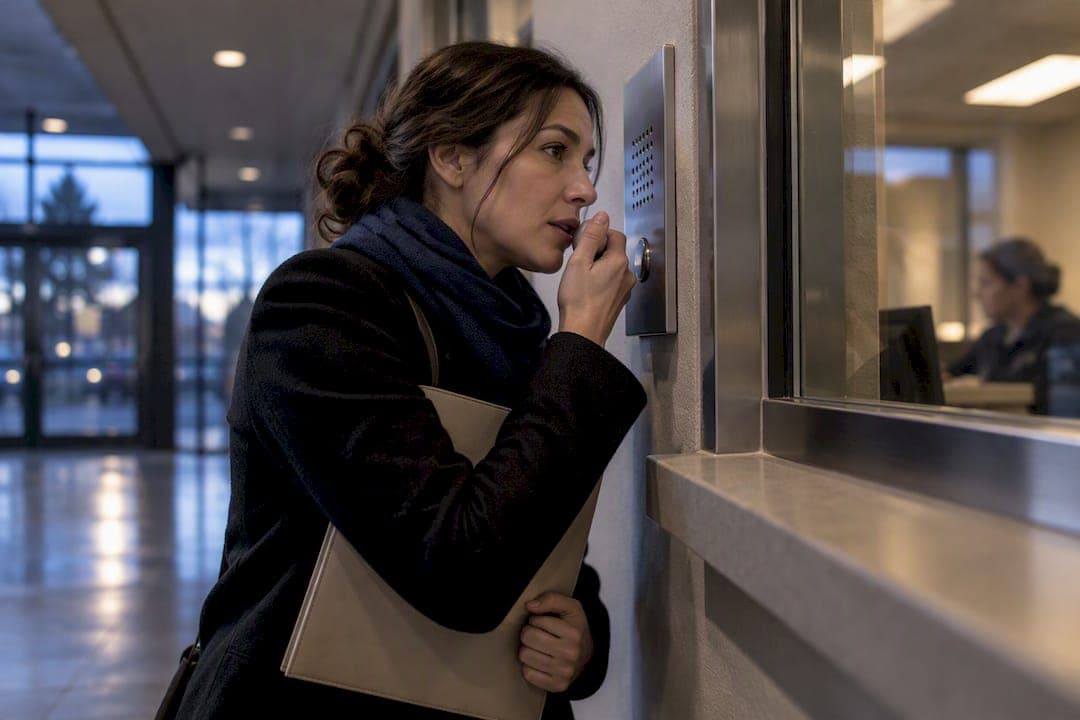
The fastest route out of jail is cash bail paid directly to the facility, if you have the full amount on hand right now. If you don't, calling a licensed 24/7 bail bondsman is the quickest realistic option. Either way, your first move in the next 10 minutes is to confirm the exact jail and get the booking number, because release still typically takes hours, not minutes, once payment is arranged.
TL;DR:
- Posting cash bail requires having the full amount readily available, while bail bonds typically process paperwork within 1 to 4 hours, depending on the agent.
- Confirming the exact jail, booking number, and charges before payment avoids delays caused by rejected paperwork or incorrect details.
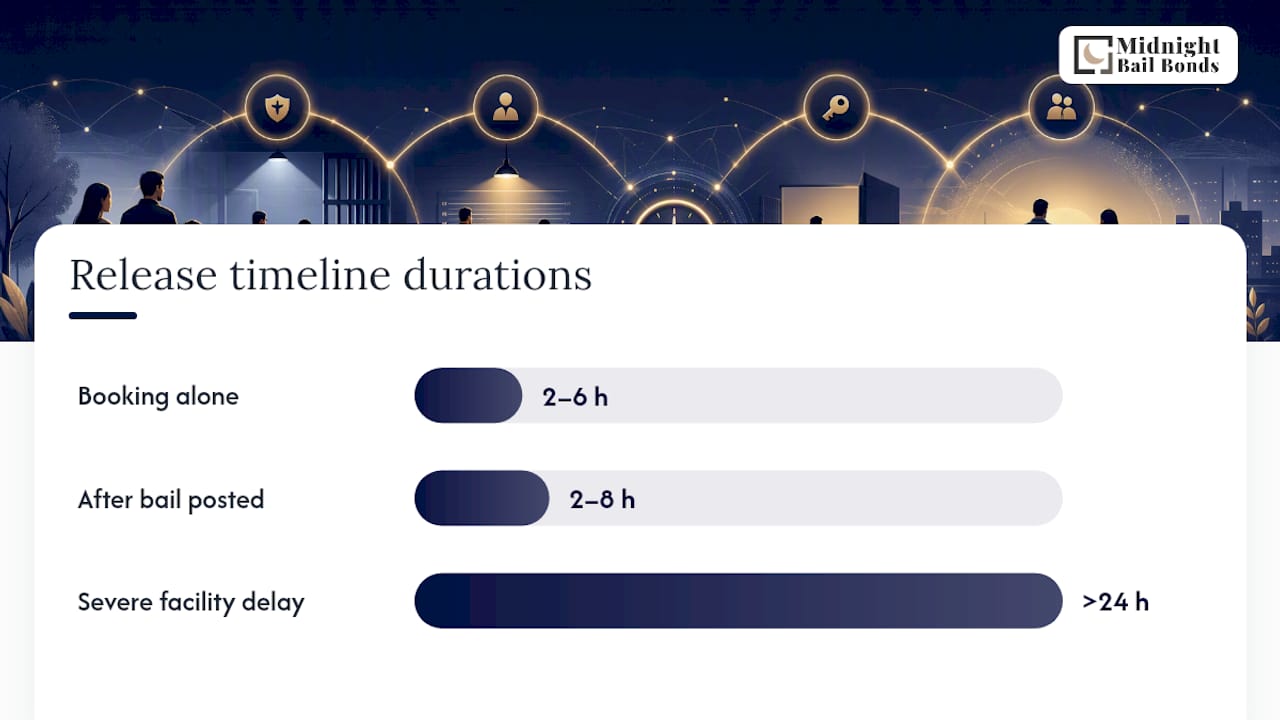
- Bail release generally takes 2 to 8 hours after posting, but weekends, holidays, or additional holds can extend this to over 24 hours.
- In urgent situations, using a licensed 24/7 bail bondsman with prior booking information speeds up the process, especially outside regular business hours.
- Different states and counties have varying procedures, so verifying local rules and accepted payment methods can prevent costly trips or delays.
Table of Contents
- How to Post Bail Fast: Your Emergency Checklist
- Information and Documents You Must Have Ready
- Cash, Bail Bonds, or Property: Which Pays Out Fastest?
- How Long Does It Actually Take to Get Released?
- Posting Bail at Night or on Weekends
- When You Need a Lawyer, Not Just a Faster Process
- Cash Bail vs. Bail Bonds: What You're Actually Agreeing To
- How Bail Amounts Get Set (and When You Can Push Back)
- Why Bail Looks Different Depending on the State
- How Midnight Bail Bonds Approaches Speed Without Cutting Corners
- Get Someone Out Now: What to Expect When You Call
- Quick Links: Verify Before You Pay
- Sources
- FAQ
How to Post Bail Fast: Your Emergency Checklist
Every minute you spend guessing which facility your loved one landed in is a minute added to their time behind bars. Work through these steps in order, and don't skip the verification step even when you're in a hurry.
- Find the exact jail and confirm booking status. Most counties post an instant inmate search tool, and calling the facility's front desk directly confirms whether booking is complete and whether bail has been set. Guides on posting bail consistently list this as the first step before sending any money, since paying before booking finishes just gets rejected.
- Get the essentials from whoever has them. Full legal name, date of birth, and the booking number if it's available. If the arrested person can call you, ask them directly. If not, the jail's booking desk can usually confirm most of it once you give the person's name and approximate arrest time.
- Decide cash or bondsman, and start immediately. If you have the full bail amount in cash or a cashier's check, head to the facility's payment window. If not, call a licensed bail agent, because paperwork can often start over the phone before you even leave the house.
- Assemble your ID and payment method while the bondsman works. A government photo ID and whatever payment the facility or agent accepts should be ready to go the moment you're asked.
- Decide whether you need to drive anywhere at all. Many bonds can be started and signed remotely, especially through an online bail bonds process, which saves you a trip if the facility is far away or it's the middle of the night.
Pro Tip: Call the jail before you call anyone else. Confirming the booking number and exact charges upfront means the bondsman or cashier's window won't send you back to square one because a detail was wrong.
Information and Documents You Must Have Ready
Jails and bondsmen reject incomplete paperwork constantly, and every rejection means another round trip. Have these ready before you walk in or pick up the phone.
For the person in custody:
- Full legal name and any known aliases
- Date of birth
- Booking or case number, plus the exact facility name
- The charges and, if known, the bail amount already set
For you, the payer:
- A government-issued photo ID
- Proof of address, if the facility or bondsman asks for it
- Your relationship to the defendant (spouse, parent, friend)
For a bail bond specifically:
- Basic employment and address history
- A cosigner or reference in some cases
- A signature on the bond agreement
Photograph every ID and screenshot the booking confirmation the moment you have it. That five-second habit has saved more than a few families a second drive to the jail. Reputable how-to resources reinforce this same checklist of essentials for a reason: skipping one item is the single biggest cause of avoidable delay.
Cash, Bail Bonds, or Property: Which Pays Out Fastest?
Speed and cost pull in opposite directions here, and the choice usually comes down to how much cash you have available right now.
- Cash bail is the most direct option when the full amount is sitting in your account. You get it back at the end of the case, minus any court fees, but tying up that much money for months is a real burden for most families.
- Surety bonds through a bail agent cost a nonrefundable premium, commonly around 10% of the total bail in many states, but they free up the rest of the cash and licensed agents typically process paperwork within 1 to 4 hours of first contact.
- Property bonds use real estate as collateral instead of cash, but they require appraisal and court approval, which routinely stretches into days, not hours.
- Release on personal recognizance (PR) skips payment entirely, but only a judge can grant it, usually at a hearing, so it's not something you can arrange from a phone call at 2 a.m.
Before you commit to any method, confirm what the specific facility accepts. Some take cash only at certain windows, others require a certified check, and a handful now run online payment portals. Guessing wrong wastes a trip.
How Long Does It Actually Take to Get Released?
Booking alone often runs 2 to 6 hours, and once bail is posted, release commonly follows in another 2 to 8 hours, though busy facilities push that past 24 hours on bad days.
Weekends and shift changes are the usual culprits. A jail running a full weekend booking queue with reduced weekend staff moves noticeably slower than the same facility on a Tuesday morning. High-volume nights, like after a local event or a DUI checkpoint sweep, compound the wait further.
Some holds simply can't be fixed with money. Immigration detainers, probation violations, and warrants from another jurisdiction can keep someone in custody even after bail is paid in full. The jail's booking desk or your bondsman can usually tell you within a phone call whether one of these holds applies, so ask directly rather than assuming payment alone will do the job.
Once you've posted, follow up. A short call to the facility or a text to your bondsman for a status update beats sitting and waiting, and it catches paperwork errors before they cost you more hours.
Posting Bail at Night or on Weekends
Arrests don't wait for business hours, and neither should your response. Most county jails run booking 24/7, but a licensed bail agent is often the only way to actually move the process forward outside daytime hours.
- Confirm the facility accepts posting around the clock; nearly all do, but weekend court processing still slows things down regardless.
- Call a 24/7 bail agent rather than waiting for morning. Agents with existing jail relationships can start intake paperwork immediately, even at 3 a.m.
- Have the exact bail amount, a photo of your ID, and the defendant's booking details ready before you dial.
- Avoid calling right at shift change, typically early morning and late evening, when staff are transitioning and phones go unanswered longer.
Pro Tip: Calling a jail's booking desk in the dead of early morning, rather than during a Friday night rush, often means a faster answer simply because fewer people are calling at that hour.
When You Need a Lawyer, Not Just a Faster Process
Some situations can't be solved by moving faster; they need a legal fix. Watch for bail set unusually high for the charge, a hold from another jurisdiction, serious felony charges, or a probation or immigration detainer attached to the case.
A lawyer can request a bail reduction hearing, argue for release on recognizance, or directly address a hold that a bondsman has no power to touch. If you're already working with a bondsman, tell your attorney immediately. Coordinating the two prevents wasted paperwork and duplicated calls to the same jail.
Cash Bail vs. Bail Bonds: What You're Actually Agreeing To
Paying cash bail means you're holding a straightforward, refundable deposit with the court. Show up to every required hearing, and the money comes back, minus administrative fees, once the case resolves. Skip a court date and you don't just lose the deposit. You risk a warrant and additional charges for failure to appear.
A bail bond works differently. You're paying a bondsman a nonrefundable premium, commonly cited around 10% of the total bail, in exchange for the bonding company posting the full amount with the court on your behalf. That premium is gone regardless of the case outcome, but you're only out a fraction of the total bail rather than the full sum.
Signing a bond agreement also creates obligations beyond the money. Most agreements require the defendant to stay within the jurisdiction, check in periodically, and notify the bondsman of any address change. Some bonds, particularly no-collateral options, add extra conditions like a cosigner's signature or proof of steady income. Breaking these terms can trigger the bondsman to revoke the bond, which sends the defendant back into custody even before the court date.
The legal exposure differs too. With cash bail, your only real risk is losing the deposit. With a bond, you or a cosigner may be financially liable for the full bail amount if the defendant skips court and the bondsman has to track them down or forfeit the bond. Read the agreement fully before signing, and ask direct questions about what happens if a court date is missed.
How Bail Amounts Get Set (and When You Can Push Back)
Most counties use a bail schedule, a preset list of dollar amounts tied to specific charges, which lets jail staff set bail immediately after booking without waiting for a judge. Serious or unusual charges, though, often require a bail hearing before a judge sets an amount, because the schedule either doesn't cover the charge or the case has aggravating factors.
Judges weigh a handful of factors when setting or adjusting bail: the severity of the charge, the defendant's criminal history, ties to the community, flight risk, and whether the charge involves violence. A first-time misdemeanor and a violent felony with prior warrants will never land on the same bail amount, even in the same county.
Bail can be negotiated. A defense attorney can request a bail reduction hearing, arguing the amount is excessive for the charge or that the defendant poses little flight risk. Judges grant these more often than people expect when the defendant has strong community ties, steady employment, or no prior failures to appear. This is exactly the scenario where legal help, not a faster call to the jail, actually moves the needle.
Why Bail Looks Different Depending on the State
Bail procedures aren't standardized nationally, and that catches a lot of families off guard when they're dealing with an out-of-state arrest. Some states use rigid, countywide bail schedules for nearly every charge. Others lean heavily on judicial discretion, meaning almost every case gets an individual hearing before an amount is set.
A handful of states have moved toward reforms that eliminate or restrict cash bail for lower-level, nonviolent charges, replacing it with automatic release or risk-based assessments instead. California, where Midnightbail operates, still relies on county bail schedules for most charges, with bail agents playing a central role in helping families post bond quickly across the state's counties.
Even within a single state, procedures vary county to county. Some counties accept online bail payments, while others require an in-person cashier's window. Some run 24/7 booking desks with minimal weekend slowdown; others staff skeleton crews on weekends that stretch every timeline. Before you assume you know how the process works, confirm the specific rules for the county where the arrest happened. A state-by-state release timeline breakdown can help you understand what to expect before you make that first call.
How Midnight Bail Bonds Approaches Speed Without Cutting Corners
Fast release comes down to preparation more than panic. Our licensed agents lean on an instant inmate search to confirm booking status the moment a family calls, then walk through payment options, including no-collateral bonds where the case qualifies, before anyone drives anywhere.
Bilingual support matters here too. A family working through this in Spanish shouldn't lose time to a language barrier while a loved one sits in custody. What consistently separates a fast release from a slow one isn't frantic phone calls. It's having the booking number, the charges, and a payment plan sorted before you dial, which is exactly what an experienced 24/7 team is built to help you do quickly.
— Jake
Get Someone Out Now: What to Expect When You Call
Licensed agents are available around the clock across California to answer calls promptly, regardless of the time. Some cases may qualify for bail without collateral, and families receive a clear premium quote before signing any agreements to avoid surprise fees mid-process.
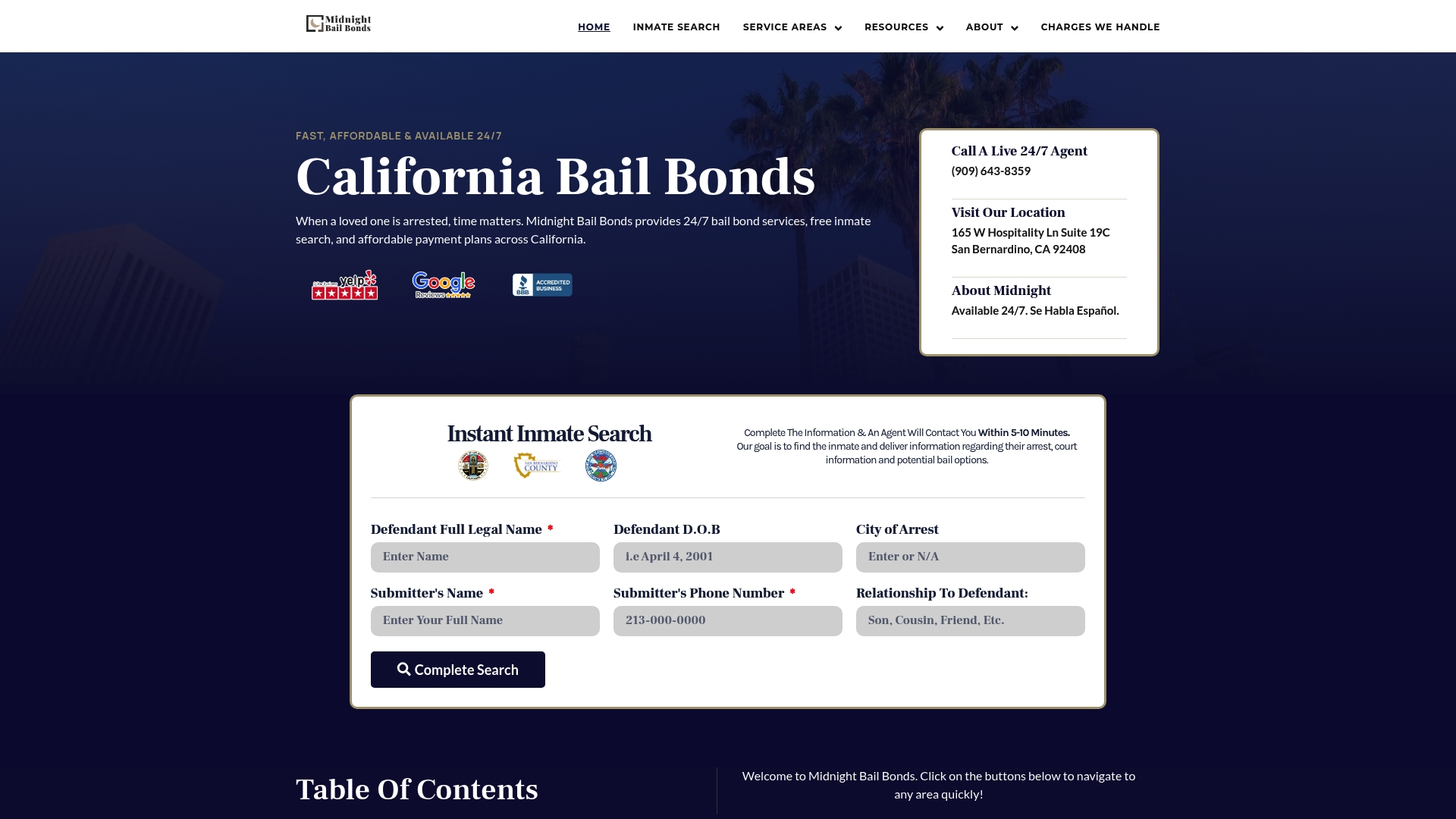
Have the booking number, the defendant's full name, and the facility name ready before you call, or start the process directly through online bail bonds from your phone if you'd rather not wait on hold. Bilingual agents handle intake in English or Spanish, and flexible payment plans, including no-collateral options, mean you're not stuck finding the entire bond amount in a lump sum. The premium charged follows the state's standard rate structure, and agents explain the exact cost applicable to each case before any commitment. Call now or start your bond online at Midnightbail and get the paperwork moving while there's still time to save hours.
Quick Links: Verify Before You Pay
Check the county's own inmate search before assuming any detail. For document checklists and next-step guidance after bail is posted, this breakdown of required paperwork and this after-bail guide cover what most families ask next.
This article is general information, not a substitute for advice from a qualified lawyer. Consult a qualified legal professional about your own circumstances before acting on anything here.
Sources
- How to Post Bail in USA (2026 Guide) – Fast Release Process Step by Step
- How Bail Bonds Work: Complete Guide to the Bail Process
- Bail Bond Agency - Quick & Easy - Get Them Out Now! | QuickBail
FAQ
How Long Does It Take to Get Out of Jail After Posting Bail?
Release commonly takes 2 to 8 hours after bail is posted, though busy facilities and weekends can push that past 24 hours. Booking itself often adds another 2 to 6 hours before bail can even be posted.
Can You Post Bail Without Seeing a Judge?
Yes, for most charges covered by a county's bail schedule, jail staff can accept payment without a hearing. Unusual or serious charges may require a bail hearing before a judge sets or confirms the amount.
What Should You Do After Posting Bail?
Confirm the release time with the jail or your bondsman, then make sure the defendant knows every upcoming court date and any bond conditions, like check-ins or travel restrictions. Missing a court date after a bond is signed can result in the full bail amount being owed.
Who Gets the Money When You Post Bail?
With cash bail, the court holds the deposit and returns it, minus fees, once the case concludes. With a bail bond, the bondsman keeps the nonrefundable premium, commonly around 10% of the total bail, as payment for posting the full bond with the court.