
Most people arrested for low-value shoplifting get released the same day, either through bail bonds, cash bail, or release on their own recognizance if it's a first offense. The fastest route almost always runs through a licensed bail agent who can post a surety bond within an hour of getting the paperwork. Whether that path is even available depends on one thing first: whether the charge is a misdemeanor or a felony, since that split drives everything about the amount and the process.
TL;DR:
- Most misdemeanor shoplifting arrests result in same-day release through bail, cash, or recognizance, with bail amounts typically ranging from $500 to $5,000.
- Bail amount depends on factors like merchandise value, prior convictions, violence involved, and flight risk, with judges able to adjust it at arraignment.
- The fastest bail process begins with having the booking number ready, followed by calling a licensed bail agent to post a surety bond within an hour.
- Families should consider bail bonds for quicker release and lower upfront costs, as cash bail ties up significant funds and property bonds are slowest.
- Immediate action, such as starting inmate searches online and understanding bail costs and conditions, increases chances of timely release and financial planning.
Table of Contents
- The Shoplifting Bail Process, Step by Step
- What Determines Bail Amount for Shoplifting
- Ways to Post Bail After a Shoplifting Arrest
- Calling a Bail Agent: What Actually Happens
- Arraignment and Bail Conditions
- How to Get Bail Reduced When You Can't Afford It
- What Bail and Bonds Actually Cost
- How Long the Whole Process Takes
- What Families Get Wrong About Bail
- Get Help Posting Bail Right Now
- Where to Check Local Bail Figures
- Sources
- FAQ
The Shoplifting Bail Process, Step by Step
The clock starts the moment someone gets booked, and every minute you spend confused about what to do next is a minute they stay in a cell. Here's the order that actually gets someone out.
- Get the essentials first. You need the full name, the jail or jurisdiction, and the booking number. Without the booking number, a bail agent can't even start.
- Run an inmate search. Most county sheriff sites and bail agency tools let you search by name to confirm booking status and locate the facility. This step alone saves families hours of calling around.
- Call family or a bail agent immediately. A licensed agent will ask for the same three details, then explain the premium, the paperwork, and how fast they can move.
- Gather ID and signer information. The jail and the bondsman will want a government-issued ID from whoever signs, plus contact and employment information for the co-signer.
- Sign the agreement and pay. Once the paperwork clears, the agent posts the bond directly with the jail.
- Wait for processing. Release usually happens within a few hours, though booking and release practices vary by county and case severity, and some low-value shoplifting cases end in a citation with no booking at all.
Delays usually come from one of three places: the jail is short staffed, the arrest happened over a weekend or holiday, or the person has an unrelated warrant that surfaces during processing. None of those are things you can control. What you can control is having the booking number ready before you make the first call.
What Determines Bail Amount for Shoplifting
Bail for shoplifting isn't a single number. It comes from a county bail schedule first, then gets adjusted by a judge later if needed.
Every California county publishes its own schedule, and the Santa Clara County criminal bail schedule lists specific dollar figures tied to theft codes, including Penal Code 459.5, the state's shoplifting statute. That schedule is what a jail uses to set bail at booking, before any judge gets involved.
Statistic callout: Misdemeanor shoplifting bail commonly falls between $500 and $5,000, while felony theft cases can push bail to $10,000 or higher depending on the value stolen and the defendant's record.
Where the case lands on that range depends on a short list of factors:
- Dollar value of the merchandise, since most states draw the felony line at a set theft amount, often $950 in California.
- Prior theft or shoplifting convictions, which push bail up fast.
- Whether the arrest involved any violence or resistance.
- Perceived flight risk, including out-of-state residency or no local ties.
Judges aren't locked into the schedule. At arraignment, they can raise or lower bail based on the facts of the case, which is exactly why two people arrested for the same offense sometimes walk out at very different price points.
Ways to Post Bail After a Shoplifting Arrest
You have four real options, and each one trades speed, cost, and paperwork differently.
- Cash bail. You pay the full amount directly to the jail or court. It's refundable at the end of the case, minus administrative fees, but tying up thousands of dollars for months is out of reach for most families.
- Surety bond (bail bonds). A licensed agent posts the full bail amount for a nonrefundable premium, typically around 10% in California. A co-signer takes on liability for the full bail if the defendant skips court. This is the option most families actually use, because it turns a $5,000 bail into a manageable fee.
- Property bond. The court accepts real estate as collateral instead of cash. This requires an appraisal and a title report, and courts typically want equity well above the bail amount, which makes this the slowest option by far.
- Release on own recognizance (OR). For low-value, first-time shoplifting cases, some courts release defendants without any payment, based on a promise to appear. It's the cheapest outcome, but it's the judge's call, not something you can request in advance with any certainty.
For most families dealing with a straightforward misdemeanor shoplifting arrest, a surety bond beats waiting on OR or scrambling for cash. It's faster, and it doesn't require locking up a house title.
Calling a Bail Agent: What Actually Happens
A bail agent needs four pieces of information before anything else moves: the arrested person's name, the booking number, the jail's name, and the charge itself. Have that ready and the call takes minutes.
From there, the process runs in a predictable order:
- The agent explains the premium, usually a percentage of the total bail, and confirms it's due before the bond gets posted.
- You sign a bond agreement, which spells out the co-signer's obligation if the defendant misses a court date.
- Payment methods vary by agency, but many accept cash, cards, and increasingly digital transfers.
- Some agencies offer bail without collateral for qualifying clients, along with payment plans that spread the premium over time instead of demanding it all upfront.
- Once posted, the agent's job shifts to monitoring court dates. If the defendant no-shows, the co-signer becomes responsible for the full bail amount.
Pro Tip: Ask the agent upfront whether the premium is refundable if the charges get dropped. In almost every case it isn't, and knowing that before you sign avoids a painful conversation later.
Arraignment and Bail Conditions
Most jurisdictions require an initial court appearance within 24 to 72 hours of arrest, though weekends and holidays routinely push that timeline out further. At arraignment, the judge reads the charges, the defendant enters a plea, and bail either gets confirmed, raised, lowered, or converted to OR release.
Release almost always comes with strings attached. Common conditions include:
- No contact with the store, its staff, or the alleged victim.
- Travel restrictions, particularly barring leaving the state.
- Regular check-ins with a pretrial services officer.
- Drug or alcohol testing, if that factored into the arrest.
A defense attorney's presence at arraignment matters here. Counsel can argue for a bail reduction on the spot or push for alternative conditions instead of a cash requirement, and judges frequently listen when the argument is backed by documentation rather than a verbal request.
How to Get Bail Reduced When You Can't Afford It
If the scheduled bail is out of reach, the defense attorney files a motion for bail reduction, usually heard at a separate hearing within days of arraignment.
- File the motion promptly. Waiting costs the defendant more days in custody.
- Bring proof of stability. Pay stubs, a lease, or a letter from an employer show the judge the person has reasons to show up to court.
- Document financial hardship. A simple financial statement showing the current bail amount is unreachable carries real weight.
- Ask for a continuance if evidence isn't ready. A short delay to gather documentation often beats rushing into a hearing unprepared.
Judges respond to concrete ties to the community, not general appeals for sympathy. Employment records and family documentation do more work than any speech.
What Bail and Bonds Actually Cost
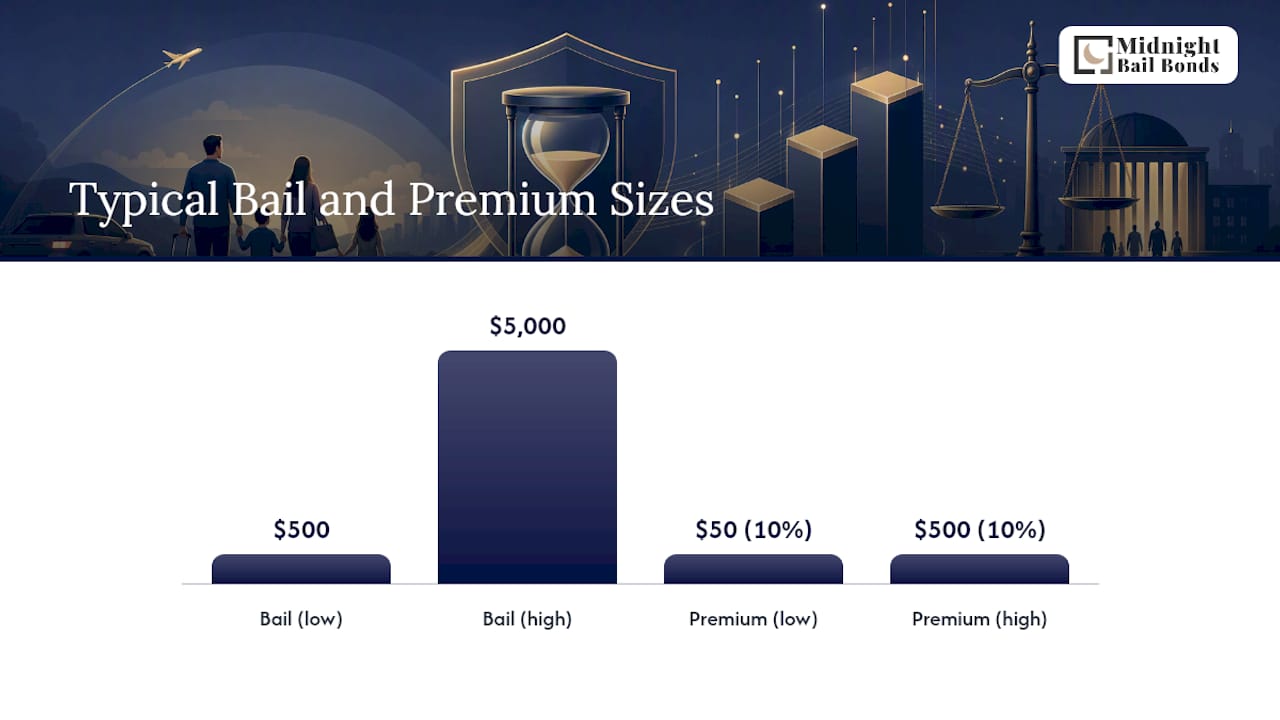
Statistic callout: Misdemeanor shoplifting bail typically runs $500 to $5,000, with a surety bond premium landing around 10% of that figure, meaning $50 to $500 out of pocket in most misdemeanor cases.
Beyond the premium, families should budget for a few extra line items:
- Court administrative fees, which apply even with cash bail.
- Appraisal and title fees if going the property bond route.
- Full bail forfeiture if the defendant fails to appear, on top of losing the nonrefundable premium already paid.
Bail bond premiums are effectively gone once paid, even if the case gets dismissed later. Confirm exactly what's refundable, and what isn't, before signing anything.
How Long the Whole Process Takes
Booking itself usually takes a few hours. Once a bail agent has the paperwork, posting a bond can happen in under an hour; getting released from the jail afterward typically adds another one to three hours depending on facility traffic.
What slows things down:
- Weekend or holiday arrests, since court and jail staffing drop.
- Missing booking information, which stalls the agent before they can even start.
- Outstanding warrants discovered during processing.
Working with an agent who operates 24/7 removes one variable entirely. Having the booking number and jail name ready before you dial removes another.
What Families Get Wrong About Bail
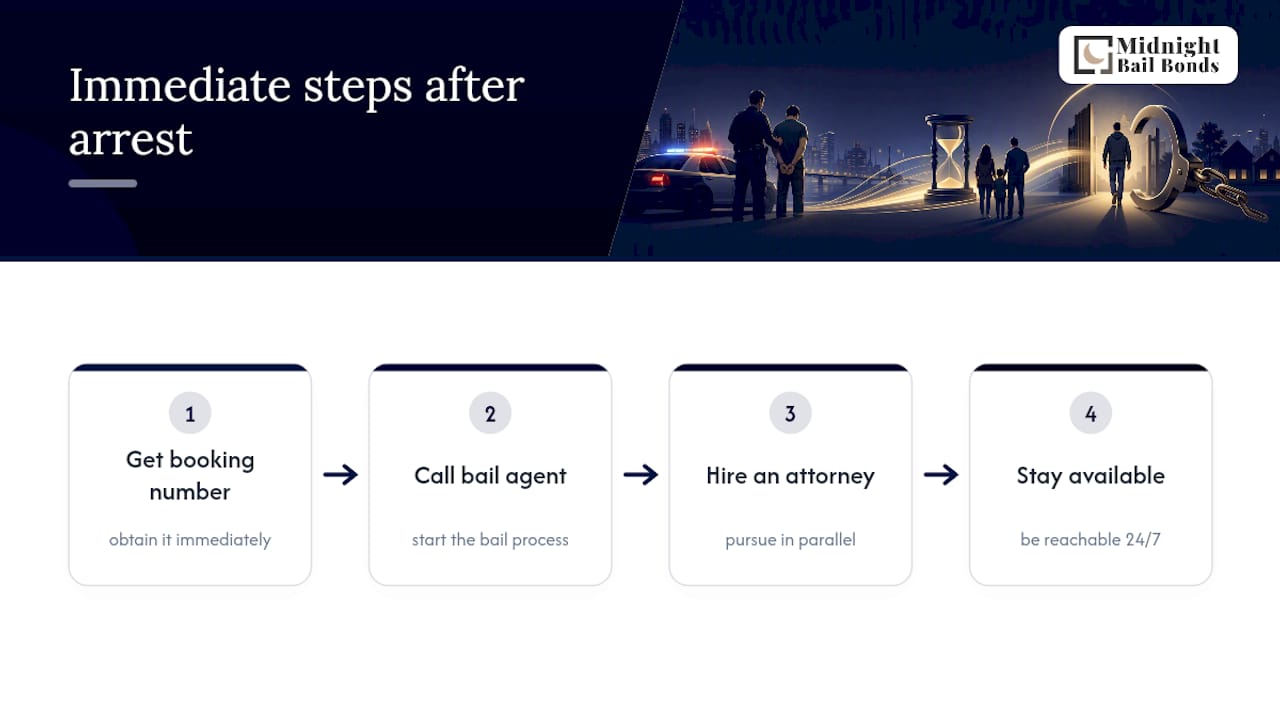
The biggest mistake we see is families waiting until they've spoken to an attorney before calling a bail agent. Those two things aren't sequential. You can start the bail process the moment you have a booking number, and sort out legal representation in parallel.
The second mistake is assuming every bond requires collateral. Many families qualify for no-collateral options, but only if they ask early, before they've already spent hours trying to scrape together cash or convinced themselves a property bond is the only path.
Pro Tip: If you're co-signing a bond, understand you're personally on the hook for the full bail amount if the defendant misses court. Read the agreement before you sign, not after.
Being available around the clock matters more than people expect. Arrests don't happen on a schedule, and a family calling at 2 a.m. needs the same answers as one calling at 2 p.m.
— Jake
Get Help Posting Bail Right Now
An alternative to sitting on hold with a jail's automated line at 3 a.m. are licensed bail agents available 24/7, with options such as no-collateral bonds for qualifying clients and flexible payment plans that spread the premium over time instead of requiring full payment upfront.
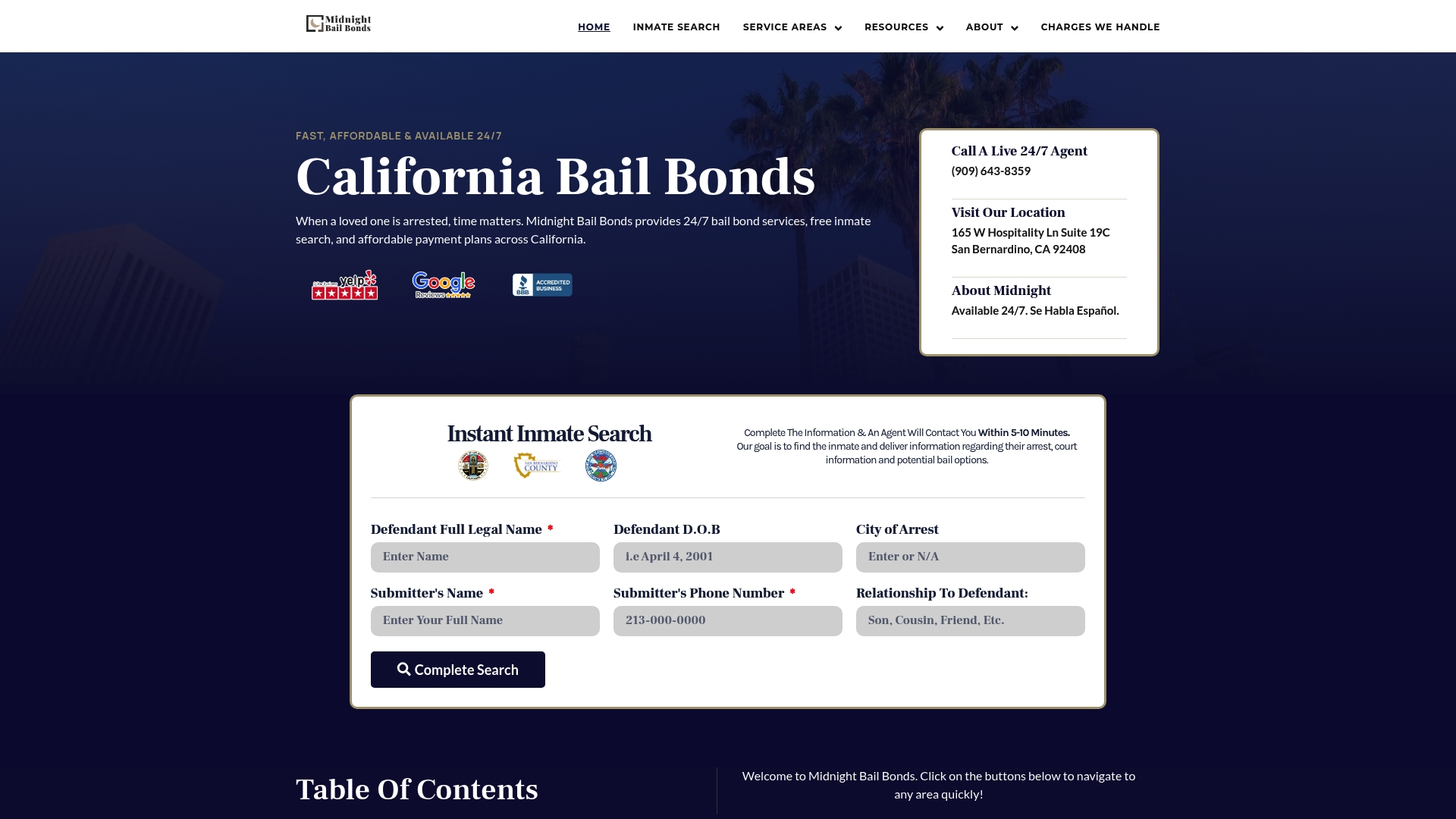
If you already know the jail and the person's name, start with the inmate search tool to confirm the booking number and facility before you call. From there, Midnightbail's theft bail bonds service walks you through the agreement and payment options in a single call, and bilingual agents are available if English isn't the easiest language for the conversation. Head to Midnightbail to start the process now, day or night.
Where to Check Local Bail Figures
- The Santa Clara County criminal bail schedule lists exact dollar amounts for theft and shoplifting codes.
- Cornell Law's Wex entry on theft explains how value thresholds separate misdemeanor from felony charges.
- Goss Law's overview of California shoplifting arrests breaks down booking versus citation practices.
- LegalClarity's bail cost breakdown gives typical bail ranges by offense level.
This article is general information, not a substitute for advice from a qualified lawyer. Consult a qualified legal professional about your own circumstances before acting on anything here.
Sources
- SUPERIOR COURT OF THE STATE OF CALIFORNIA SANTA CLARA COUNTY — Criminal bail schedule 2025
- Cornell Law School — Wex: Theft
- Goss Law — What happens after a shoplifting arrest: the CA legal process
- LegalClarity — How much is bail for a shoplifting charge?
FAQ
How Much Is Bail for Shoplifting?
Misdemeanor shoplifting bail typically ranges from $500 to $5,000, while felony theft cases can carry bail of $10,000 or more depending on the value stolen and prior record.
What Is the Best Defense for Shoplifting?
Defense strategy depends heavily on the facts of the arrest, including intent and the value of the merchandise, so this is a question for a defense attorney rather than a general answer, but showing up prepared with documentation for a bail reduction hearing helps regardless of the ultimate defense.
Should You Go Back and Pay After Shoplifting?
Returning to pay after leaving the store rarely stops an arrest or charge once store security or police are involved, and it can complicate the case; the better move is contacting a defense attorney immediately.
Can You Go to Jail for Accidentally Shoplifting?
Yes, an arrest can happen even when someone claims it was accidental, though many low-value, first-time cases end in a citation rather than a full booking, and intent becomes a central issue at trial rather than at the moment of arrest.