
No legitimate bail agency will demand or accept bail payments through Zelle. Verify any payment request independently through the agency's official website. A request to pay bail through Zelle that you did not start yourself is a common scam. Hang up on unsolicited calls, then confirm everything through the agency's official website. Below, we explain how to verify, send safely, and respond if something goes wrong.
TL;DR:
- Scammers may cite accurate booking details, impersonate officials, and pressure families with urgent emotional demands, so familiarity with the case does not prove legitimacy.
- Call the number on the agency’s official website to confirm the agent, bond amount, booking number, and release timeline, then obtain written terms.
- A written bond contract or clear receipt process should precede payment, and the agency should provide consistent recipient details through a number you verified.
- Zelle transfers you authorize are often difficult to reverse; banks may reimburse qualifying impersonation scam victims after investigation, but recovery is not guaranteed.
- After sending money, contact your bank immediately, report the scam to the FTC and FBI’s Internet Crime Complaint Center, and preserve transaction records.
Table of Contents
- Why bail payments requested through Zelle are a scam
- Step-by-step: verify the agent and send a Zelle payment
- How scammers use Zelle in bail scams
- If you already sent money or suspect a scam
- Why independent verification matters
- How we can help you right now
- FAQ
- Sources
Why bail payments requested through Zelle are a scam
Zelle moves money from one bank account to another. According to Zelle's own getting started guide, the usual flow is to enroll, choose a recipient by email or U.S. mobile number, enter an amount, and send. When both sides are enrolled, payments typically arrive within minutes. That speed is convenient when someone is sitting in jail, but it also means the transfer is hard to undo.

Zelle is built for transfers between people who know and trust each other. Because you authorize the payment yourself, banks often treat it as final. Even if the recipient appears to be a licensed agency, do not send bail money through Zelle.
A legitimate agency will give you:
- An official business phone number and email that match its website
- A written estimate or bond contract before you send money
- A receipt or bonding confirmation after you pay
- The same recipient details every time you ask, from a number you verified yourself
Never rely only on payment details given in an unsolicited call or text. Even if the caller knows the arrestee's name, look up the agency's number on its official website and call that instead.
Our guide on how to pay bail online walks through valid online payment workflows and receipts in more detail.
Step-by-step: verify the agent and send a Zelle payment
Follow these steps in order. Skip none of them, even when you feel rushed.
- Find the agency's official website and its licensed-agent information. Take the phone number from that site, never from the person who contacted you.
- Call that verified office number. Ask the agent to confirm the exact Zelle recipient email or phone number, the bond amount, the inmate's booking number, and the expected release timeline.
- Ask for a written bond contract, or at least a clear method for getting a receipt, before any money moves. Our breakdown of bail bond contract terms shows what a proper contract covers.
- Do not send a test payment or a full bail payment through Zelle, even if the recipient claims to represent an agency.
- Save everything: screenshots, confirmation numbers, the agent's name, the booking details, and the time of each call.
- Ask when the jail will register the payment, then check on release progress with the agent.
Pro Tip: Ask how and when you will receive a written receipt, and when the jail will register the payment, so you can confirm release progress instead of waiting in the dark.
Phone calls are where most mistakes happen, so it helps to know what to verify when posting bail by phone before you dial.
How scammers use Zelle in bail scams
Scammers count on panic. Prosecutors in Essex County, New Jersey warn that fraudsters impersonate authority figures, use urgent and emotional language, and may quote accurate public details about the arrestee to sound real. The same office states that no legitimate law enforcement agency, court, or attorney will demand or accept bail through mobile apps like Zelle. Treat any such request as a scam.
Watch for these red flags:
- An unsolicited call or text demanding payment right now
- A refusal to provide written bond documents
- A phone number in a text or email that differs from the one on the official website
- Instructions to send money to a personal email or phone number, or to hand cash to a courier
- A request to "reverse" or "resend" a payment, a tactic Zelle itself warns about
These schemes are not harmless nuisance calls. A federal case, a Florida man sentenced to 36 months in prison for defrauding Zelle users, shows that prosecutors pursue Zelle-based fraud and order restitution.
Federal prosecutors have charged and convicted defendants who used Zelle-based scams, which shows these schemes are a real, prosecuted crime and not just a rumor.
If anything feels off, hang up, verify independently, and report it to law enforcement.
If you already sent money or suspect a scam
Speed matters. Work through this list right away:
- Call your bank or credit union and ask how it handles Zelle payments and imposter-scam investigations. Zelle notes that banks may reimburse qualifying imposter-scam victims after investigation, though user-authorized transfers are often hard to recover.
- File a report with the FTC at reportfraud.ftc.gov and with the FBI's Internet Crime Complaint Center at ic3.gov. The Consumer Financial Protection Bureau points victims to these same channels, plus your state attorney general and local police, using trusted phone numbers and websites.
- Call local police and ask for an official report number.
- Hand investigators every piece of evidence: transaction screenshots, the agent's name and number, booking information, and any courier details.
- Keep records of every call and email with your bank, in case you need to follow up.
Be honest with yourself about the odds. A payment you authorized is often final, so reimbursement is possible, not guaranteed. Report the suspected scam as soon as possible.
Why independent verification matters
Here is my view after weighing all of this: the problem is who told you where to send the money. Verify any payment request through the agency's official website and phone number. Contact Midnight Bail Bonds directly to ask about its services. Always call the number you verified yourself before sending a dollar.
— Jake
How we can help you right now
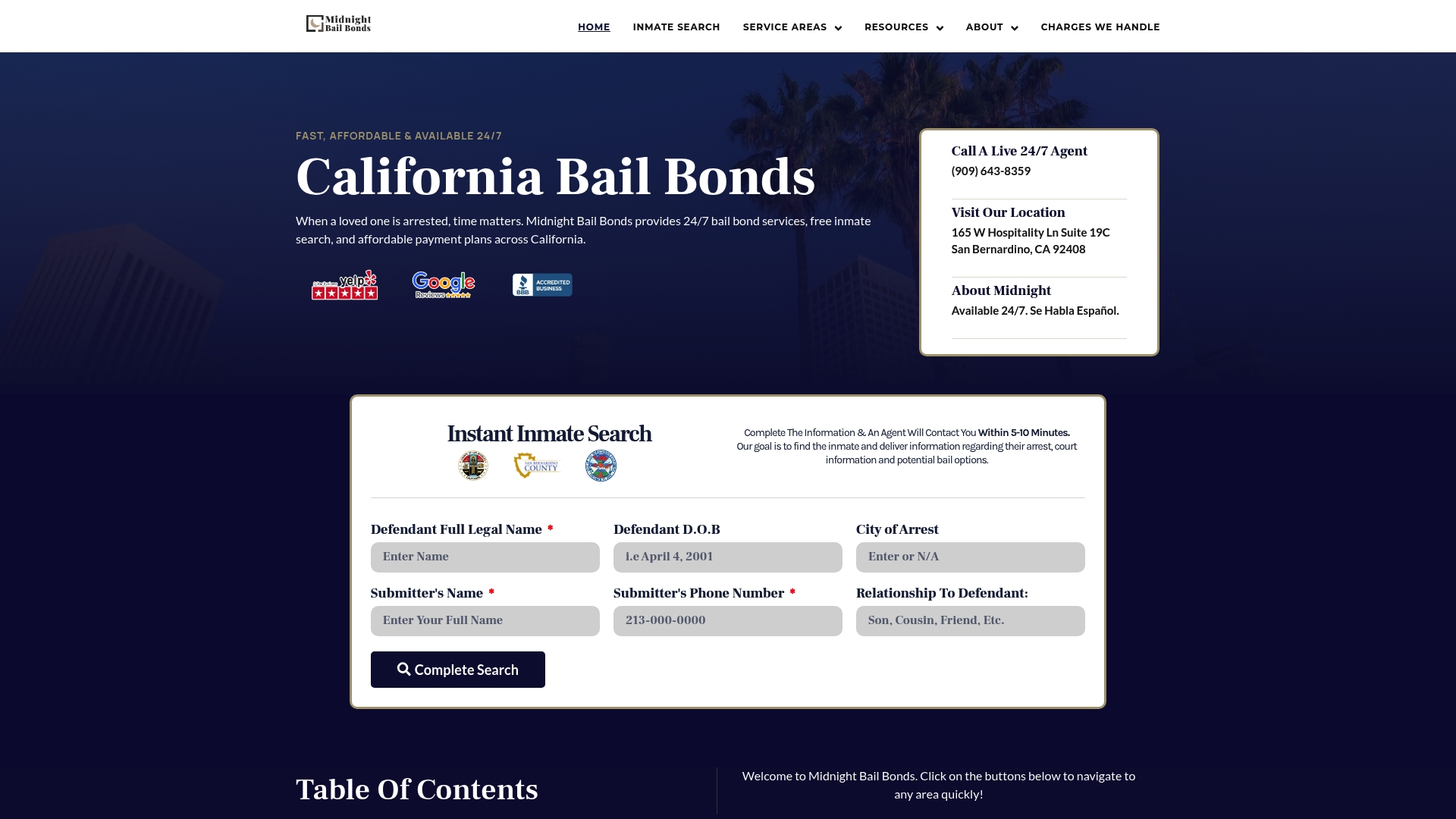
When someone you love is in custody, you should not have to guess who is on the other end of the line. We answer calls directly at any hour, and our licensed agents will confirm the details before you send anything.
Here is what you get from us:
- A free instant inmate search to confirm booking details
- Bilingual English and Spanish support
- Accepted payment methods that include cash, credit and debit, Zelle, and financing
- Flexible payment plans, and bail without collateral in many cases
California bail bonds carry a 10% premium, and we explain every cost upfront. You can also start from your phone through our online bail bonds page. Before you send any funds, call the official number on Midnightbail and we will confirm the payment details with you.
FAQ
How much is bail on a $1000 bond?
In California, a bail bond premium is typically 10% of the total bail amount. The premium is non-refundable. See our guide to California bail bond fees for what to ask.
How much does a $75000 bail bond cost?
At the standard 10% California premium, large bonds can be costly. Payment plans and financing can make that easier to manage, and some bonds can be written without collateral.
Will a bail bondsman take payments?
Many will. We offer flexible payment plans and financing, so ask the agent about options before you sign. Get any payment arrangement in writing.
Can I pay a bail bondsman with Zelle?
Do not use Zelle to pay bail. Verify any payment request directly with the agency using its official website and phone number. Zelle transfers are often final, as Zelle's fact sheet explains.
Sources
- Scammers Target Families with Fake Bail Demands – Essex County Prosecutor's Office
- Who do I contact for help with a scam or fraud? | Consumer Financial Protection Bureau
- Florida Man Sentenced to 36 Months in Federal Prison for Defrauding Zelle Users