
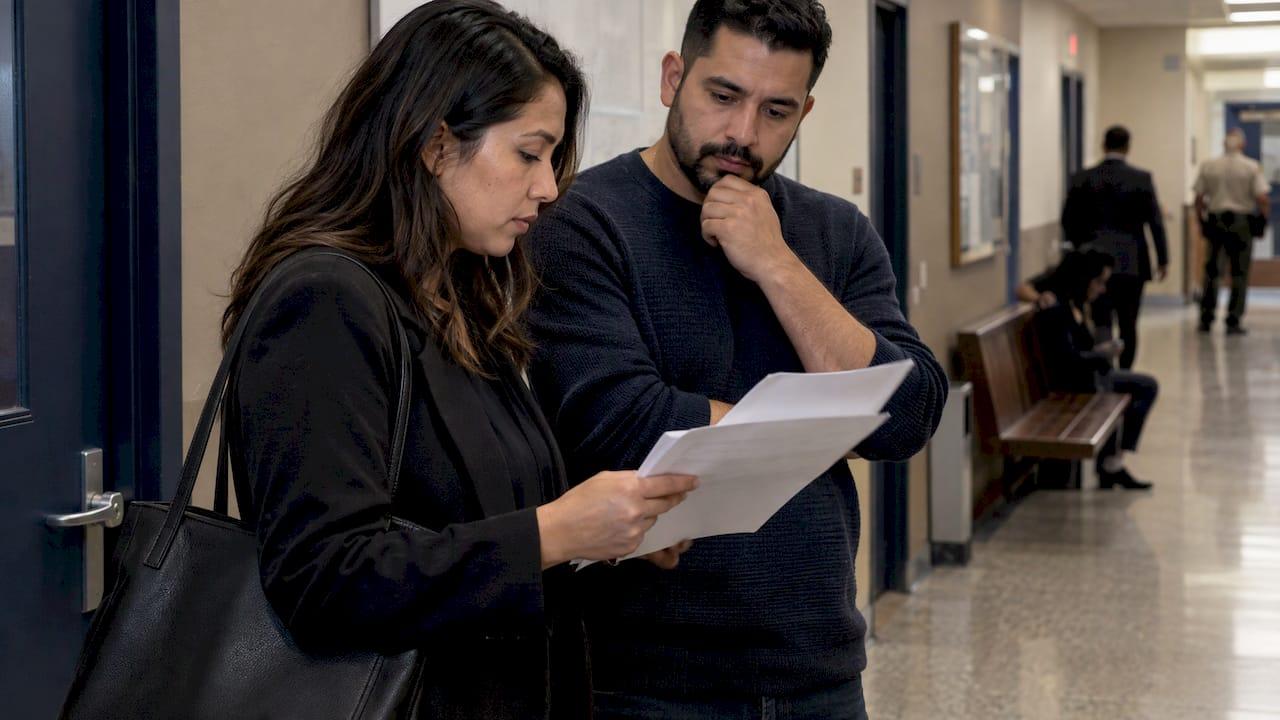
Both are fully licensed criminal defense lawyers. The real differences are who pays, who picks the lawyer, and how much time that lawyer has for your case. If you cannot afford a lawyer, a judge can appoint a public defender at no upfront charge. If you can pay, you choose a private attorney yourself. Serious felonies and complicated cases are where many families decide the extra cost is worth it. Minor charges are where a public defender is often a reasonable fit.
This guide walks through the choice step by step. It also covers the question families ask in the first hours after an arrest: how paying for a lawyer relates to paying for bail.
TL;DR
- A public defender is appointed by the court if you cannot afford a lawyer. A private attorney is someone you choose and pay yourself.
- A judge decides eligibility after reviewing your finances. There is no single income cutoff, and the process varies by court.
- Private attorneys usually cost more, but you choose them, and many handle fewer cases at a time. Fees in the thousands of dollars are common.
- Research on outcomes is mixed. Some studies favor retained counsel in felony trials, and others find roughly equal results overall.
- Bail and a lawyer are two separate decisions. Getting your loved one out of jail makes it easier to work with whichever lawyer they end up with.
Table of Contents
- The core difference: who appoints, who pays, who chooses
- Who qualifies for a public defender and how to ask for one
- What each option costs
- Choice, time and resources
- What the research says about outcomes
- When hiring a private attorney makes sense
- Bail and a lawyer are two separate decisions
- How we can help you get a loved one home
- Our perspective
- FAQ
- Sources
The core difference: who appoints, who pays, who chooses
Illinois Legal Aid Online describes a public defender as a lawyer the court appoints for people who cannot afford to hire one, while a private lawyer is someone you choose and pay on your own. Cornell's Legal Information Institute uses the same framing: a defense attorney represents a defendant in a criminal prosecution, and when a defendant cannot afford one, the court provides a public defender.
The American Bar Association adds a point many families miss. In its review of appointed and retained counsel, only defendants who pay their attorneys have a right to choose them. With appointed counsel, the court or the office assigns the lawyer.
Public defenders are not second-rate lawyers. UCLA School of Law's guide for families says public defenders are lawyers, most often very good ones, who are ethically required to provide the best representation they can. The differences that matter are about resources, time and choice, not about whether the lawyer is real.

Who qualifies for a public defender and how to ask for one
The U.S. Constitution guarantees a lawyer in cases where a person could be locked up for six months or more. If the person cannot afford one, the judge will appoint a private lawyer or the government's public defender at no charge, according to the American Bar Association. Nolo likewise explains that judges must provide counsel to defendants who can show they lack the means to pay, based on the Sixth Amendment.
How appointment works in practice
Only a judge can appoint a public defender, after looking at your finances. Illinois Legal Aid Online says this is done through a financial affidavit. The steps differ by court, so read your own county's instructions.
- California: The Orange County Superior Court says that in a misdemeanor or felony case, you tell the judge at arraignment that you cannot afford a lawyer. You may be asked to fill out a Financial Affidavit (CR-105). If you want to understand that first hearing, our guide to booking vs. arraignment explains what each step means.
- Cook County, Illinois: The public defender's office says the court has people fill out an Affidavit of Assets and Liabilities at the first appearance, and the judge decides whether to appoint.
- DuPage County, Illinois: The county says you generally ask the assigned judge in court, and the public defender is assigned to a particular courtroom.
- Oklahoma: Legal Aid Services of Oklahoma says that if a defendant has not bonded out, the court automatically appoints a public defender at the first court date. If the defendant has bonded out, they must apply and show financial need to the judge.
That Oklahoma detail is worth knowing for any family weighing bail. In some places, being out of jail means you have to ask for a public defender rather than receive one automatically. Ask the court clerk or the jail how your county handles it, and say clearly at the first hearing that you need a lawyer appointed if you cannot afford one.
There is no magic income number
Oklahoma Legal Aid Services says there is no fixed income amount. The judge looks at income, savings, assets, debts and obligations. Someone who earns a steady wage but carries heavy debt may still qualify. Someone who looks "middle class" on paper may not. In one judicial district's public defender office, applicants who are only partly indigent can be charged additional fees. Apply honestly and let the judge decide.
What each option costs
Public defender
A public defender is not paid by the client in the usual sense. DuPage County says clients generally do not pay the public defender or the office. The county adds that the court can assess fees for public defender services afterward. Some offices also charge an application fee. One judicial district's office lists a non-refundable $40 application fee. So "free" can still mean small costs, depending on where you are. Ask the court exactly what applies.
Private attorney

Private lawyers set their own fees. The ABA notes that retained clients typically pay for the attorney's time and for extra costs like investigation and experts. Private firms also carry overhead such as rent and staff.
Here are published examples. They are not quotes, and your price will depend on your lawyer and your court:
| Charge or area | Published range | Source |
|---|---|---|
| DUI, private lawyer | $1,000 to $5,000, more if the case goes to trial | Nolo |
| Misdemeanor, San Francisco | $2,000 to $15,000+; hourly $250 to $500 | ASH Legal, 2026 |
| Misdemeanor, general | Flat fees of $2,000 to $10,000; hourly $200 to $500; more for felonies | The People Foundation, 2025 |
If you do not qualify for a public defender and cannot afford full private rates, you still have options. Illinois Legal Aid Online mentions limited-scope representation, where a lawyer handles only part of the case, as a possibly more affordable route. Ask any attorney you call whether they offer it or a payment plan.
Choice, time and resources
Choice
With a private attorney, you pick the person. You can look for someone who focuses on your type of charge, such as DUI or drug cases. With a public defender, you usually get the lawyer assigned to your courtroom or case.
Caseload and attention
This is where private counsel often has an edge. Public defender offices are frequently stretched. National standards cited in a 2012 report recommend that a public defender not exceed 150 felonies or 400 misdemeanors per year. Many offices carry heavier loads than that, and more time per client usually means more calls returned and more preparation.
Public defenders also have strengths. Cook County's office says its lawyers are supported by investigators, mitigation specialists, case workers and forensic experts. They try cases constantly and know the local judges and prosecutors. A public defender in a well-resourced office can be an excellent choice.
Communication
Expect to hear from a private attorney more easily, because you are a client they chose to take on and your case is a larger share of their work. With a public defender, plan ahead. Write down your questions, bring documents to every court date and give the office reliable contact information.
What the research says about outcomes
Honest answer: it depends on the study, the charge and the type of counsel being compared.
- Philadelphia murder cases. The National Institute of Justice reported that defendants randomly assigned a public defender had a 19% lower murder conviction rate and a 62% lower chance of a life sentence than those with court-appointed private lawyers. This compared public defenders with appointed private counsel, not with privately hired lawyers. Interviewees pointed to the incentives built into the appointment system.
- Felony jury trials. A paper in the Albany Law Review looked at 314 felony jury trials in four urban jurisdictions. It found defendants with public defenders were about twice as likely to be convicted as those who hired private attorneys. Case characteristics and evidence did not explain the gap.
- Older nine-county survey. A 1992 study by the National Center for State Courts, cited by Anthem EAP, found 76% of public defender clients were convicted versus 74% of private counsel clients, roughly equal results overall.
Take from this that no study says "public defenders lose." The takeaway is about time, resources and fit. Those matter most when the stakes are high.
When hiring a private attorney makes sense
Guzman Law suggests a private attorney may be worth considering for serious felonies, complex cases with extensive evidence or multiple witnesses, and cases that could bring long prison sentences or permanent records. For first-time or minor misdemeanors, the same firm says a public defender may be a reasonable option.
A practical way to decide:
- List what is at stake. Prison time, a felony record, a professional license, a driver's license, immigration status.
- Check your budget honestly. Include a possible payment plan from the lawyer.
- Apply for a public defender anyway if you are unsure. You are not locked in. You can usually hire a private lawyer later, though the court may need to be told.
- Talk to a few attorneys. Many criminal defense lawyers offer an initial consultation. Ask about their experience with your charge and your court, what the fee covers, and who will actually appear at hearings.
- If immigration status is a factor, ask the lawyer about it before any plea. Our article on bail and immigration status covers what families should know after posting bail.
Bail and a lawyer are two separate decisions
Families often feel they must choose between paying for bail and paying for a lawyer. They are different things. Bail is the money that secures release from jail before the case ends. A lawyer defends the case itself.
UCLA's guide for families lists three ways to pay bail: the full amount (returned at the end of the case), a community bail fund, or a bail bonds company, which generally charges 10% of the bail amount, for example $6,000 on a $60,000 bail, and that fee is not returned. Plan your budget with both lines in it: the bail premium, and the lawyer, whether appointed or retained.
Why does release matter for the defense? Someone who is out can meet their lawyer, gather documents, keep their job and help prepare. Our guide on the bail hearing process shows how the court sets bail, and what happens after bail explains the court dates that follow. For the first hours, our three immediate steps after an arrest is a good place to start.
How we can help you get a loved one home
We write bail bonds across California, day and night. When you call, a licensed agent answers. We offer bilingual English and Spanish support, a free instant inmate search, and flexible payment plans. In many cases we can write bail without collateral. Our no-collateral bail bonds page explains how that works.
The state-mandated premium is typically 10% of the total bail amount, and we are upfront about costs. If you are also budgeting for a private attorney, a payment plan on the bail premium can leave more room for legal fees. Start at Midnight Bail Bonds and tell us who was arrested and where they are held. We will take it from there.
Our perspective
In our work with families, the hardest hour is the first one. Someone is in custody, the phone is ringing, and every question lands at once: Who do we call? How much? Which lawyer?
Our view is simple. Do not let the lawyer question delay the release question. A person who is home can sit down with a public defender or a private attorney, share their side, and help prepare. A person who is still in custody is doing that through a phone line and a glass window.
That is why licensed agents answer our calls at any hour, why we offer bail without collateral in many cases, and why we offer payment plans. We want the cost of release to be clear from the first call, so families can plan for everything else, including a lawyer.
We do not choose your lawyer for you, and we would not try to. We recommend asking for a public defender if you cannot afford counsel, or interviewing private attorneys if you can. Either way, getting your person home gives them the best chance to take part in their own defense.
Jake
FAQ
Is a public defender a real lawyer?
Yes. Public defenders are licensed attorneys who owe their clients the same ethical duties as any other lawyer. UCLA's guide for families says they are ethically required to provide the best representation they can. The practical differences are caseload, choice and resources.
Can I switch from a public defender to a private attorney?
In general, if your finances change or you decide to pay, you can hire a private lawyer. Tell the court and your public defender so the case is handed over cleanly. Rules and timing differ by court, so ask the clerk and the new attorney about your specific case before a hearing date.
Does posting bail affect whether I get a public defender?
It can, depending on the court. In Oklahoma, for example, bonded-out defendants must apply and show financial need, while those still in custody are appointed automatically. In California, you tell the judge at arraignment that you need a lawyer, as the Orange County Superior Court explains. Ask your court how it works.
What if I cannot afford either one?
Apply for a public defender and let the judge review your finances, since there is no fixed income cutoff. If you are turned down and cannot afford full private fees, ask about limited-scope help or a lawyer's payment plan. Illinois Legal Aid Online also points to free or lower-cost resources for people who must represent themselves.
Is a private lawyer worth the money?
It depends on the stakes. For serious felonies, complex evidence or the risk of long sentences, many families decide the extra time and choice are worth paying for. For minor first-time charges, a public defender can be a reasonable option. Talk to a criminal defense attorney in your county for advice on your case.
Sources
- Public defenders common questions (FAQ), Illinois Legal Aid Online
- Defense attorney, Cornell Legal Information Institute
- Differences Between Appointed and Retained Counsel, American Bar Association
- Know Your Rights guide for families, UCLA School of Law
- When You Need a Lawyer, American Bar Association
- Your Right to a Public Defender, Nolo
- Asking for a public defender, Illinois Legal Aid Online
- Obtaining An Attorney, Superior Court of California, County of Orange
- Public Defender FAQ, Cook County Public Defender
- FAQs, DuPage County, IL
- Getting a public defender, Legal Aid Services of Oklahoma
- FAQs, Office of the Public Defender, District 22
- Do I Need a DUI Lawyer?, Nolo
- How Much Does a Criminal Defense Lawyer Cost in San Francisco, ASH Legal
- Navigating Legal Representation After an Arrest, The People Foundation
- Sustaining and Improving Public Defense With Data (2012 report)
- How Much Difference Does the Lawyer Make?, National Institute of Justice
- The Trials of Indigent Defense, Albany Law Review
- Is the public defender a real lawyer?, Anthem EAP
- Private Lawyer vs Public Defender, Guzman Law