
Most people arrested for vandalism in California can get out on bail the same day, either by paying cash, hiring a licensed bail bond agent for a nonrefundable fee, or qualifying for release on their own recognizance. Amounts hinge on whether the damage cleared $400 and which county set the schedule. Your first moves: get the booking number, call a bail agent or attorney, and line up a cosigner and payment method.
TL;DR:
- Bail amounts for vandalism depend heavily on whether damages are under or over $400, with felony bail schedules often several times higher than misdemeanor ones.
- The severity of the target, such as religious or school property, can trigger additional bail elevations, especially for aggravated vandalism cases.
- County judges have discretion to raise or lower bail based on criminal history, community ties, and flight risk factors, often deviating from the standard bail schedule.
- Faster release options include paying cash, hiring a bail bond agent charging up to 10% fee, or qualifying for own recognizance release for low-level misdemeanor cases.
- A bail reduction or release on own recognizance is more likely if evidence shows strong local ties, no criminal record, and the case involves non-violent vandalism.
Table of Contents
- Understanding the Vandalism Bail Process Under Penal Code §594
- How Courts Actually Set Bail Amounts for Vandalism Charges
- What Bail Actually Costs for Vandalism Charges in California
- How to Post Bail for Vandalism Charges Right Now
- How to Get Bail Reduced or Fight for OR Release
- Your First 24 Hours After a Vandalism Arrest
- Why the Bail Number Isn't the Whole Story
- Getting Bail Started With Midnight Bail Bonds
- Sources
- FAQ
Understanding the Vandalism Bail Process Under Penal Code §594
California defines vandalism under Penal Code §594 as maliciously defacing, damaging, or destroying someone else's property without their consent. Spray paint on a wall, a keyed car door, a smashed window. All of it falls under the same statute, and the dollar amount of the damage is what decides how the case gets charged.
Damage under $400 is a misdemeanor. Cross that line, and the district attorney gets to choose between a misdemeanor and a felony filing. Prosecutors call that a "wobbler," and it matters enormously for bail because felony bail schedules run far higher than misdemeanor ones. A first-time spray paint tag on a fence might land someone in the low end of a county's misdemeanor schedule. The same act against a school, a church, or a cemetery can trigger a separate, harsher code section entirely.
Here's what most people don't realize going in:
- Vandalism can be charged as a misdemeanor, a wobbler, or a straight felony depending on damage amount and target.
- The $400 threshold is the single biggest lever in how the charge, and therefore the bail number, gets set.
- Vandalism against religious property, schools, or cemeteries often carries its own enhanced bail category.
- Multiple counts (say, three cars keyed in one night) can stack, pushing total bail well past what a single-incident schedule shows.
The California Supreme Court has also made clear that a jail cell shouldn't be the default answer just because someone can't write a check. Courts are required to weigh alternatives to cash detention, including release on own recognizance when the facts support it. That principle runs through every stage of the vandalism bail process, from the moment bail is set to any later request for a reduction.
How Courts Actually Set Bail Amounts for Vandalism Charges
Every county in California runs its own bail schedule, a preset list of dollar amounts tied to specific charge codes. When someone is arrested and books into county jail before seeing a judge, that schedule is usually what determines the bail amount for vandalism charges on the spot. Nobody has to wait for a courtroom appearance to know the number; the jail staff pulls it straight from the document.
But the schedule is a starting point, not the final word. Under Penal Code §1269b and §1275, a judge at arraignment has full discretion to raise or lower that figure based on the specifics of the case. This is the part families often miss: the number on the schedule and the number the judge sets can be two very different figures.
When judges typically move bail up:
- A prior criminal record, especially prior vandalism or property crime convictions.
- Multiple victims or multiple separate incidents charged together.
- Evidence suggesting the person is a flight risk (no local ties, out-of-state ID, prior failures to appear).
- Sentencing enhancements attached to the charge, such as gang allegations or hate-crime findings.
When judges typically move bail down:
- Strong community ties: local job, family, stable address.
- No criminal history.
- A defense attorney presenting a credible argument that the person poses no danger and isn't going anywhere.
Solano County's own bail guidance notes that families should expect judges to weigh criminal history and victim count rather than treat the schedule as final. That discretion cuts both ways, and it's exactly why the same charge can carry wildly different bail amounts in two neighboring counties, or even two courtrooms in the same building.
What Bail Actually Costs for Vandalism Charges in California
Bail amount for vandalism charges varies more than people expect, and county bail schedules are the clearest window into why. Uniform county schedules typically set misdemeanor vandalism (under $400 in damage) somewhere in the low thousands, often in a range that a family can realistically cover with cash or a small bond. Cross into felony territory and the number jumps hard.
San Joaquin County's schedule, for instance, lists a specific bail figure for vandalism over $400 under PC §594(b)(1), and that figure sits well above the misdemeanor tier. Santa Clara County's criminal bail schedule follows the same pattern: dollar-for-dollar increases tied directly to the severity code, not a flat number across the board.
Here's roughly how the tiers tend to break down across counties:
- Misdemeanor vandalism (damage under $400): typically the lowest bracket on a county's schedule, often payable in cash by many families without a bond.
- Felony vandalism (damage $400 or more): a substantially higher fixed amount.
- Aggravated vandalism (targeting a place of worship, cemetery, or school) can carry its own elevated bail line entirely separate from standard property-damage vandalism, according to the same uniform schedule.
The math compounds fast with multiple counts. Three separate vandalism incidents charged together don't average out to one bail figure. Each count typically carries its own line on the schedule, and a judge can order them added together or set as a single combined amount. Someone facing three counts of felony vandalism could see a bail number three or four times what a single incident would generate, especially if a hate-crime or gang enhancement gets attached to any one of the counts.
How to Post Bail for Vandalism Charges Right Now
Once you know the amount, you have four realistic paths to getting someone out. Speed and cost differ sharply between them.
- Pay cash bail directly at the jail. Call the facility or check the inmate search page to confirm the booking number and exact bail figure, then pay the full amount at the jail's cashier window. If the person shows up to every court date, the county refunds the money after the case closes. Miss a date, and the court keeps it.
- Hire a licensed bail bond agent. In California, agents charge a premium, usually up to 10% of the total bail, and that fee is nonrefundable regardless of case outcome. A cosigner signs the paperwork and takes on financial responsibility if the defendant skips court; some agents write bonds without requiring collateral, which speeds things up considerably.
- Post a property bond. Real estate can secure release instead of cash, but the county has to appraise the property's equity first, which routinely adds days to a process that a cash or bond payment finishes in hours.
- Request OR release or a cite-and-release. For low-level, non-violent misdemeanor vandalism, an officer may issue a citation with a promise to appear instead of booking the person at all, or a judge may grant own recognizance release with no money changing hands.
Pro Tip: Have the booking number and exact charge code ready before you call anyone. A bail agent can move faster once they know the precise figure instead of guessing off a general charge description.
How to Get Bail Reduced or Fight for OR Release
If the number set at booking feels impossible to cover, you don't have to accept it. A defense attorney can request a bail reduction hearing, sometimes called a Humphrey hearing after the California Supreme Court ruling that reshaped how judges must handle inability to pay.
That ruling requires courts to genuinely consider whether someone can afford the bail set against them, and to weigh non-monetary alternatives before defaulting to a dollar figure that keeps a person in custody purely because they're broke.
At a reduction hearing, an attorney typically presents:
- Proof of local ties: a lease, a job, family members willing to testify to community connection.
- A clean or minimal record, or context around any prior record.
- Evidence the person isn't a flight risk, such as a valid California ID and stable address.
- A treatment or counseling plan already in motion, which judges often view favorably in vandalism cases tied to substance use or impulse-control issues.
Timing matters. Motions can typically be filed within days of arraignment, and the paperwork should include proof of income, proof of residence, and any documentation supporting community ties. Bringing this material to the first attorney consultation, rather than scrambling for it later, shaves real time off the process.
Your First 24 Hours After a Vandalism Arrest
The clock matters more than most people realize. Here's the order that actually gets someone home fastest:
- Get the exact booking number, the specific charge code, and the name of the holding facility.
- Confirm the bail amount through the jail's inmate search system rather than relying on secondhand information.
- Call a criminal defense attorney first if the facts are contested or a felony enhancement is possible; call a licensed bail agent first if the goal is simply fast release on a straightforward misdemeanor.
- Line up a cosigner and decide how the premium or cash amount will be paid.
- Avoid making statements about the incident to anyone but an attorney.
- Once released, write down every court date and every condition attached to the release immediately.
Pro Tip: Photograph any relevant evidence, like the alleged damage or receipts showing prior ownership of the property, before it's cleaned up or repaired. It can matter later if the damage amount, and therefore the charge level, gets disputed.
Why the Bail Number Isn't the Whole Story
People fixate on the dollar figure, and I get why. It's the first concrete thing anyone hears after an arrest. But the number on a bail schedule is a starting position, not a verdict on the case, and treating it that way leads to bad decisions under pressure.
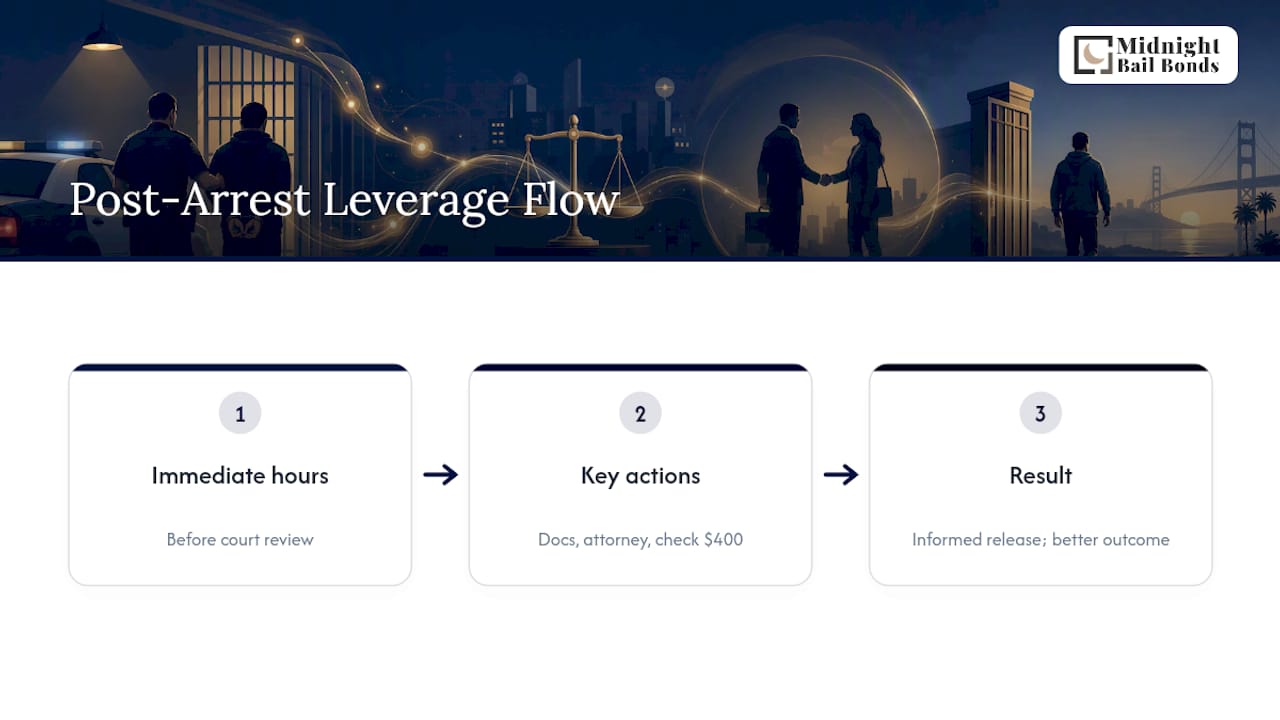
The real leverage point in the vandalism bail process is almost never the schedule. It's what happens in the hours right after arrest, before the court even sees the file. A family that documents community ties, gets an attorney involved early, and understands the $400 threshold well enough to push back on an inflated felony filing has a fundamentally different outcome than one that just pays whatever number the jail hands them.
There's also a quieter issue nobody likes to talk about: bail forfeiture. If someone misses a court date, the county keeps the cash, or the bond company can pursue the cosigner for the full amount, and a warrant issues. That risk doesn't disappear once someone's out. It just moves from "get released" to "show up every single time," and families sometimes underestimate how strictly that gets enforced, especially for juveniles, where a separate 48-hour hearing window and different release standards apply compared to adult defendants.
None of that means the schedule doesn't matter. It sets the floor for negotiation. But the process itself, who you call first, what evidence gets gathered, whether a Humphrey hearing gets requested, matters more than the raw figure ever will.
— Jake
Getting Bail Started With Midnight Bail Bonds
Waiting on hold with a jail clerk while a family member sits in custody is its own kind of stress. Midnightbail runs licensed agents around the clock, every day of the year, so the call that starts the bail process doesn't have to wait until business hours.
Have the booking number, the person's full legal name, the county of arrest, and the bail amount ready if you already have it. Midnightbail's agents work directly with jail staff to move paperwork quickly, and many vandalism bonds can be written without requiring collateral, which matters when a family needs a fast answer, not a property appraisal. Support is available in English and Spanish, and payment options include cash, credit and debit, Zelle, and financing plans for families who need to spread out the premium. California law caps that premium at 10% of the total bail, and Midnightbail states costs upfront before any paperwork gets signed.
Start a request through the main bail request page or explore online bail bonds if you'd rather begin the process from a phone before ever setting foot at the jail.
This article is general information, not a substitute for advice from a qualified lawyer. Consult a qualified legal professional about your own circumstances before acting on anything here.
Sources
- California Supreme Court opinion and related guidance
- Bail information | Superior Court of California | County of Solano
- 2025 Uniform County Bail Schedule (San Joaquin example)
- How the Bail System Works in California (practitioner overview)
FAQ
How Long Does Someone Stay in Jail for Vandalism?
Someone can be held from a few hours to several days, depending on when bail is posted and the nature of the charge.
What Happens if You're Found Guilty of Vandalism?
Consequences scale with the damage amount and criminal history: misdemeanor convictions can bring fines, restitution to the property owner, and up to a year in county jail, while felony convictions carry state prison exposure. Courts frequently order restitution covering the full cost of repair regardless of the sentence length.
What Evidence Is Needed for a Vandalism Conviction?
Prosecutors generally need proof that the person intentionally damaged property they didn't own or have permission to alter, often through witness testimony, surveillance footage, or physical evidence like paint or tools linked to the suspect. Photographs documenting the damage amount also matter heavily, since that figure decides whether the $400 felony threshold under Penal Code §594 applies.
How Do I Bail Someone Out for Vandalism?
Confirm the exact bail amount through the jail's inmate search system, then choose between paying cash directly, hiring a licensed bail bond agent for a nonrefundable premium, or requesting OR release if the case qualifies. Midnightbail's agents are available at any hour to start that process and can often write vandalism bonds without requiring collateral.
Does a Prior Record Affect Bail for Vandalism Charges?
Yes. A prior criminal record, especially previous property crime or vandalism convictions, is one of the main factors judges cite when setting bail above the standard county schedule. A clean record, by contrast, often supports an attorney's request for a lower amount or OR release.