
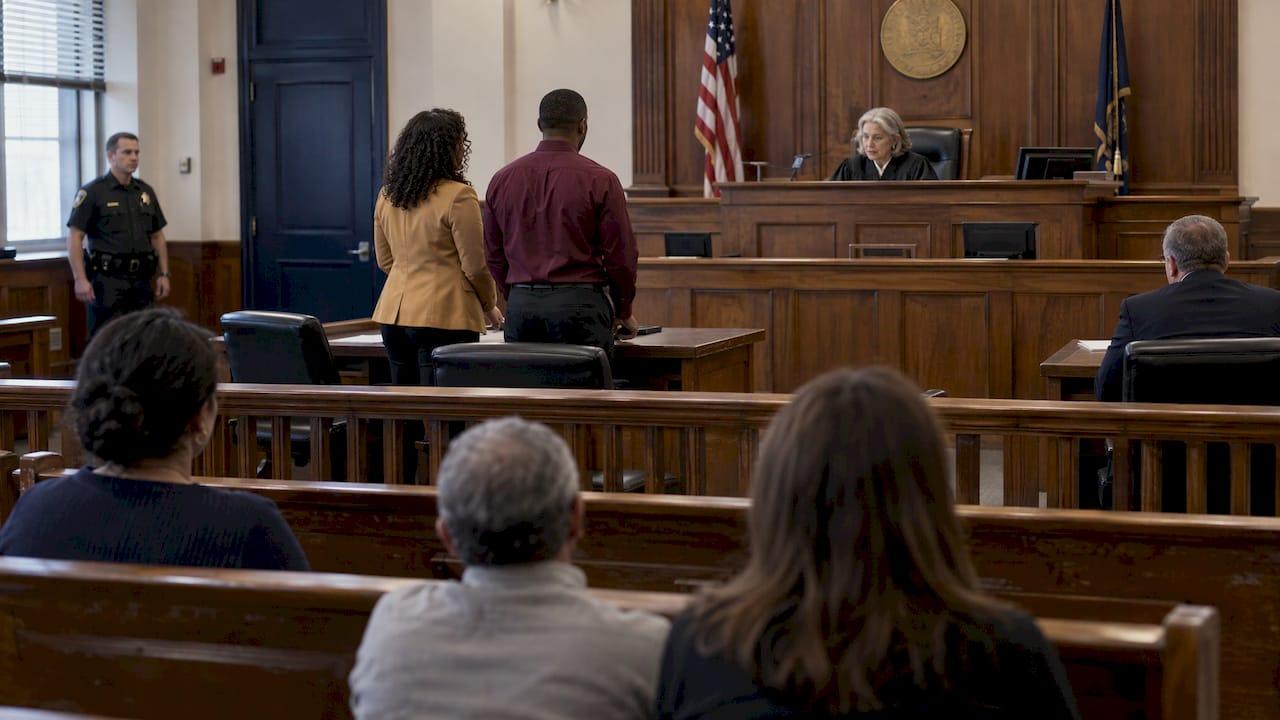
When bail is denied, the person stays in custody and a bail bond cannot be posted, because the court has not approved release at all. That is different from bail being set at an amount you cannot pay. You still have options: ask for a new hearing based on new information, challenge the decision in a higher court, or propose release conditions that answer the judge's concerns. A defense attorney is the person who files all of these.
TL;DR
- Denied bail means the judge has not allowed release on bail. A bail bond only helps once bail is set, so a bond cannot fix a denial.
- Judges deny bail mainly over flight risk, danger to the public, or a very serious charge.
- The usual routes are a renewed request based on new facts, a review or appeal in a higher court, and a proposal for non-monetary conditions such as supervision or electronic monitoring.
- Deadlines and procedures differ by state and court, so get a defense attorney involved right away.
- If a judge later sets bail, call us any hour. We can start a bond the same night.
Table of Contents
- What it means when bail is denied
- Why judges deny bail
- Your options after bail is denied
- What the family can do this week
- When a bail bond comes back into the picture
- Our perspective
- Start a bond the moment bail is set
- FAQ
- Sources
What it means when bail is denied
If bail is refused, the person remains in custody until the court hears and decides the case, as Victoria's justice department describes it. A court in Canada says the same in its own words: the person is held until trial or further order of the court, according to Alberta Courts.
Families often mix up two situations that look alike from the outside:
| Situation | What the court decided | What can happen next |
|---|---|---|
| Bail set, but unaffordable | Release is allowed on payment | A bail bond, a payment plan or a bail reduction request can get the person out |
| Bail denied ("no bail" or "no bond") | Release on bail is not approved | A new hearing, review or appeal, or release on conditions |
The first case is where a bail bond works. In the second, a Texas law firm's explanation draws the same line: a person who cannot pay may still be in custody, while a denial means the court has not approved release on bail. Before you do anything else, find out which one you are dealing with. The jail's inmate lookup or the court clerk can usually tell you whether bail has been set and at what amount.
One more point: a first appearance is not always the last word. In Queensland, for example, a person who is not given bail stays in jail until the next court date, when they can apply to the court for bail, according to Legal Aid Queensland. Most court systems build in a second look of some kind, and the details depend on where the case is.
Why judges deny bail
Judges are not punishing anyone when they deny bail. They are answering two questions: will this person come back to court, and will releasing them put anyone at risk?
A federal overview from the Congressional Research Service explains that a judge may deny bail if no amount of security or set of conditions will ensure public safety or the defendant's later appearance. Nolo's guide to how bail is set adds that bail can be denied for some very serious charges, such as first-degree murder where the presumption of guilt is great, or when the defendant is likely to flee.
In practice, these factors tend to sit behind a denial:
- Flight risk. No local ties, no steady address or job, a history of missed court dates, or resources and contacts elsewhere.
- Danger to others. Violent allegations, a named victim, or a pattern that suggests the risk continues. If a protective order is involved, our guide on when judges can deny release after a restraining order violation explains how that works.
- Being on probation, parole or other release. A new arrest while already under supervision weighs heavily. See what happens when someone is arrested while already on bail.
- Prior failures to appear. A missed court date in the past is one of the quickest ways to lose the benefit of the doubt.
- The nature of the charges. Several charges at once can change how the court views risk. Our page on how bail works when multiple charges are filed walks through it.
The standard also varies by place. In Victoria, Australia, bail is refused when the risk is unacceptable and conditions cannot bring it down to an acceptable level, per the state's bail guidance. In the United States, each state sets its own rules, and federal courts follow a separate statute. That is why the next steps below depend on the court your loved one is in.
Your options after bail is denied
No single path fits every case. The options below are the ones courts commonly recognize, roughly in the order families should consider them.

1. Get a defense attorney involved immediately
This is the step everything else depends on. The National Association of Criminal Defense Lawyers explains in its pretrial release guidance that defense counsel can present verified favorable information, challenge probable cause or the sufficiency of the charges, and propose the least restrictive conditions that address court attendance and safety. A judge is far more likely to reconsider when someone brings a concrete plan than when the family simply asks again.
If the person cannot afford a lawyer, they can ask for a public defender at the first court appearance. Do not wait for the next hearing to raise it.
2. Ask the same court to look again with new facts
The most common route is a renewed request, which usually has to show something that was not before the judge the first time. A Suffolk University Law School teaching text says decisions can be reconsidered or appealed, usually by showing "new facts" (a material change) or a legal error, and that deadlines and procedures vary by jurisdiction.
Federal law uses the same idea. A detention hearing may be reopened if information the movant did not know at the time has a material bearing on whether conditions can reasonably assure appearance and safety, as explained by a federal defense firm.
What counts as new in a real case:
- A verified address and a relative willing to house the person
- A job offer or letter from an employer
- Enrollment in a treatment program or a confirmed treatment bed
- A surrendered passport
- A witness or record that weakens the evidence
- A changed charge, such as a reduction from a felony to a misdemeanor
What does not count: the same arguments made louder. Courts in other countries make this explicit. South African courts, for instance, use the new-facts requirement to prevent repeated applications on the same facts, according to one local law firm. The principle carries over: bring something different.
3. Seek a review or appeal in a higher court
If the judge applied the wrong standard or ignored the evidence, the denial can be challenged above. Virginia, for example, lets a person appeal a bail decision step by step up to the state Supreme Court where the law permits, under Va. Code § 19.2-124. In Massachusetts, a bail appeal to the Superior Court is decided fresh and should be heard the same day or the next business day if possible, per the Suffolk University text.
Outside the U.S. the structure looks similar. In Canada, a person can seek a review in the superior court of their province, which requires a bail review application served on the Crown and filed with the court, and the Canadian Judicial Council notes that transcripts can make this costly, in its Criminal Law Handbook. In England and Wales, the Criminal Procedure Rules 2025 let a defendant apply in writing to the Crown Court as soon as practicable after a magistrates' court withholds bail.
If your case is in California, the attorney handling it will know which court hears the challenge and how fast it has to be filed. Ask on the first call, because speed matters.
4. Propose release conditions instead of money
A judge who will not accept a bond may still accept a supervised plan. Courts generally have to consider the least restrictive option first. Under federal law, the judge may release an accused on the least restrictive conditions that reasonably assure appearance and public safety, and the options include supervision, travel limits, treatment and electronic monitoring, per the Congressional Research Service. Missouri's Rule 33 requires courts to set the least restrictive necessary conditions and look at non-monetary ones first. New York's bench card lists third-party supervision, travel restrictions, mental-health or chemical-dependency programming, and electronic monitoring only if nothing else realistic would suffice, according to the Data Collaborative for Justice.
Your attorney can build this package: a named supervisor in the family, a treatment intake letter, a stable address, a check-in schedule. For a look at what California courts can require, see conditions of release in California and bail conditions in California.
5. Gather the records
Ask for the official record of the detention, the charge and the court's stated reasons for denying bail. Without the reasons, nobody can write a request that answers them. The clerk's office and the defense attorney can both help with this.
What the family can do this week
Families feel helpless in these first days. These steps are concrete and useful to the attorney:
- Confirm the status. Is bail denied, or set at an amount? Check the booking record and the next hearing date.
- Write down the hearing date and courtroom. Everything else is built around it.
- Collect proof of ties. Lease or utility bill, pay stubs, school records for children, letters from family and employers.
- Line up a supervisor. Someone responsible who agrees to attend court and check in.
- Find treatment options if relevant. For a DUI or drug case, an intake appointment shows a plan.
- Keep communication clean. Calls from jail are recorded. Tell your loved one not to discuss the case on the phone.
- Show up. Family in the courtroom, dressed neatly and on time, is part of the picture of a person with community ties.
Our guides to the bail hearing process and the first three steps after an arrest cover what happens in the room and what to do before it.
A note on conduct: the way a defendant acts in court counts. Disrespect toward the judge or the prosecutor can hurt a later request, so coach your loved one to stay calm and let the attorney speak.
When a bail bond comes back into the picture
A denial can turn into a bail amount. After a new hearing, a reconsideration or a successful review, the judge may set bail where there was none. At that point the clock matters, because every hour in custody counts.
In California, the premium on a bond is state-regulated and is typically 10% of the total bail amount, and it is non-refundable. Bail is not always out of reach: we offer payment plans and financing, and in many cases bail without collateral. You can pay by cash, credit or debit card, Zelle or financing.
If the person was also held on a separate hold, the process is different. Our page on 1275 hold bail bonds explains the immigration-related hold situation, and our guide to bail and immigration status covers what comes after release.
Our perspective
Families call us at 2 a.m. after hearing the words "no bail," and the first thing we do is slow the conversation down. Denied is not the same as unaffordable, and the right next call depends on which one it is.
If bail has been set at any amount, we can help the same night. Our licensed agents answer every call directly at any hour, we give clear costs up front, and we write many bonds without collateral. Spanish-speaking families get bilingual support on every shift.
If bail has been denied, we will tell you honestly that a bond is not the tool yet. Get a defense attorney moving on a new request, collect the paperwork that shows your loved one will return to court, and call us the moment a judge sets a number. We have local offices and work directly with jails and courts, so when the door opens we can move quickly.
Jake
Start a bond the moment bail is set
If a judge has set a bail amount, or you are not sure whether one has been set, we can look up the booking record and explain the cost before you commit. Use our free instant inmate search, then talk to a licensed agent about no-collateral bail bonds or our 24-hour bail bond service. We handle DUI, drug, domestic violence, theft, assault and failure to appear cases across California.

You can also start online from your phone and a licensed agent will follow up.
FAQ
What happens if you are not granted bail?
The person stays in custody, often called remand or pretrial detention, until the next court date or the end of the case. Depending on the court, they may be able to ask for a new hearing or a review. The details of that process depend on the state and court, so a defense attorney should confirm the timeline.
Can a bail bond get someone out if bail is denied?
No. A bail bond pays an amount the court has set, so it only works once a judge sets bail. If the court has refused bail, the goal is to get the denial reconsidered, reviewed or replaced with conditions. Once bail is set, we can start the bond right away.
Can a bail denial be appealed?
Yes, in most court systems. Decisions can generally be reconsidered or appealed by showing new facts or a legal error, according to a Suffolk University Law School text. Deadlines and procedures vary by jurisdiction, so speak with a defense attorney quickly.
What are the main reasons a judge denies bail?
The most common are a belief that the person will not return to court, a concern for public safety, and the seriousness of the charge. A history of missed court dates or an arrest while already on release adds weight. Each of these can be answered with a specific plan and documents.
Is it the same thing to be denied bail and to be unable to afford bail?
No. When bail is set but unaffordable, release is allowed on payment, so a bond, a payment plan or a bail reduction request may help. When bail is denied, the court has not approved release on bail at all.
Sources
- How bail works, Victoria Department of Justice and Community Safety
- What you need to know if you have been charged with a crime, Alberta Courts
- Denial of Bail in Texas, Dunham Law
- Prison, Legal Aid Queensland
- Bail: An Abridged Overview of Federal Criminal Law, Congressional Research Service
- How Bail Is Set: What Judges Consider, Nolo
- NACDL, Pretrial Release Advocacy
- Pretrial release, bail and pretrial detention, Suffolk University Law School
- Reopening or appealing a federal detention order, Spodek Law Group
- What Are New Facts in a Bail Application?, Burger Huyser Attorneys
- Virginia Code § 19.2-124
- Criminal Law Handbook, Canadian Judicial Council
- The Criminal Procedure Rules 2025, legislation.gov.uk
- Missouri Supreme Court Rule 33
- Bench Card: New York's Bail Statute, Data Collaborative for Justice