
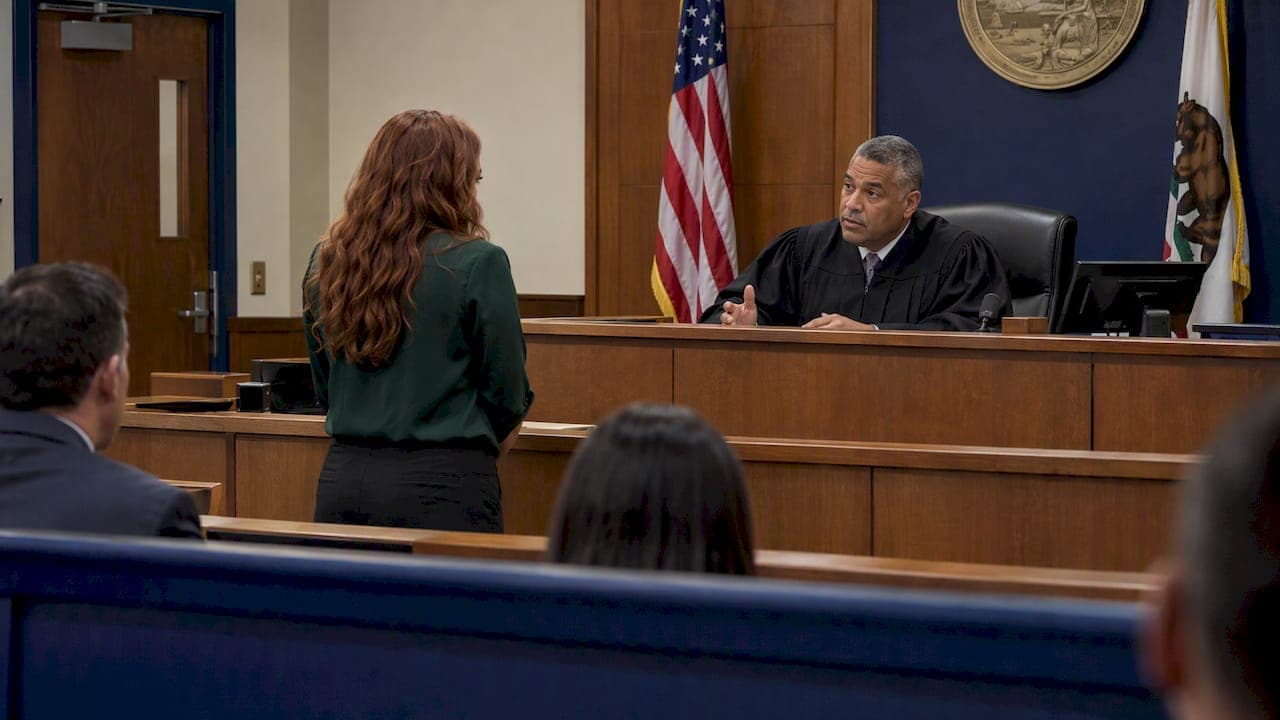
When a California court lets someone out of jail before trial, it does not simply open the door. The release comes with rules. Some apply to everyone, such as showing up to every court date and not committing a new offense. Others are tailored to the person and the charge: electronic monitoring, regular check-ins, stay-away orders, alcohol testing or travel limits. Breaking any of them can put the person back in custody and put the bail money at risk.
This guide explains which conditions California courts can set, how a judge chooses them, what is different for DUI cases, and what to do if a condition is violated or needs to change.
TL;DR
- Every release, whether on your own recognizance, on bail or under supervision, comes with conditions. The core ones are appearing in court as ordered, obeying the court's reasonable conditions and staying in California unless the court allows otherwise.
- Judges can add targeted conditions, including electronic monitoring, check-ins with a pretrial case manager, treatment, stay-away orders and testing. They are supposed to use the least restrictive conditions that reasonably protect public safety and ensure return to court.
- Missing a court date without a good excuse leads to bail forfeiture. If the defendant appears within 180 days, the forfeiture can be vacated.
- Conditions can be changed later for good cause, at the court's own initiative or at a party's request.
- A bail bond and release conditions are separate things: the bond gets someone out, the conditions are what they must live by afterward.
Table of Contents
- What "conditions of release" means
- The baseline promises every defendant makes
- Conditions a judge can add
- How a judge decides what to impose
- Conditions in DUI cases
- What happens when a condition is violated
- Changing conditions after they are set
- Bail, the bond and the conditions: how they fit together
- Our perspective
- Arranging a bond while conditions are being set
- FAQ
- Sources
What "conditions of release" means
In California, a judge or a pretrial program has several ways to handle someone arrested for a crime. According to the California Courts self-help guide on arraignment, at arraignment a judge may let a defendant stay out of jail under supervision, such as home detention or wearing an ankle monitor. The options are usually described as release on the person's own recognizance (their written promise to return), release on bail, release with conditions, or detention.
These options overlap. Someone can post a bail bond and still be ordered to wear a monitor. Someone released on their own recognizance can still be told to stay away from a named person. When people search for "conditions of release," they usually mean the rules that ride along with any of these outcomes. For a deeper look at how bail itself and its conditions fit together, see our guide to bail conditions in California.
The baseline promises every defendant makes
The starting point is the law on release on one's own recognizance. Under California Penal Code Section 1318, a defendant released this way must sign an agreement. In it, the person promises to:
- appear in court as ordered;
- obey the reasonable conditions the court sets;
- not leave the state without the court's permission;
- waive extradition if they are arrested outside California after failing to appear;
- acknowledge that they were told the consequences and penalties for violating the conditions.
The same logic applies when a bail bond is involved. The bond is a financial guarantee that the defendant returns, and the court expects the same behavior. Our explainer on own recognizance release covers who tends to qualify.
Conditions a judge can add
Beyond the baseline, California courts have a menu of options. Official court materials describe several.
Supervision and monitoring. The San Francisco Superior Court's bail fact sheet lists nonfinancial conditions such as electronic monitoring, regular check-ins with a pretrial case manager, community housing or shelter, and drug or alcohol treatment.
Public-safety conditions. According to the Judicial Council's overview of pretrial law and procedure, courts may impose reasonable conditions related to public safety, including random testing and search and seizure in felony drug cases. The same overview notes that random searches have been held invalid as a release condition for misdemeanor drug offenses. That distinction matters: a condition that is routine for one charge can be improper for another.
Contact and location limits. In practice, defense attorneys also see stay-away and no-contact orders, travel restrictions and curfews. These come up most often in domestic violence and assault cases, where the court wants to separate the defendant from the person who made the complaint. The exact wording of the order controls, so read it carefully, and ask the court clerk or your attorney if anything is unclear.
A quick reference
| Condition | What it usually means | Typical situations |
|---|---|---|
| Appear at all court dates | Show up on time, every time | All cases |
| No new offenses | Any new arrest can lead to revocation | All cases |
| Stay in California | Leave only with court permission | OR releases and most bonds |
| Pretrial check-ins | Regular contact with a case manager | Supervised release |
| Electronic monitoring | Ankle monitor, sometimes with home detention | Higher-risk or felony cases |
| Treatment or testing | Drug or alcohol programs, random testing | Drug and DUI-related cases |
| Stay-away or no-contact | Keep distance from named people or places | Domestic violence, assault |
This table is a general orientation, not a list of what any particular judge will order. Conditions are set case by case.
How a judge decides what to impose
Three things shape the decision: the risk the judge sees, the law's preference for the least restrictive option, and the defendant's finances.
According to the SF BAIL fact sheet, courts weigh the seriousness of the crime, the person's criminal record, public and victim safety, and flight risk. Under the California Supreme Court's 2021 decision in In re Humphrey, courts should ask whether nonfinancial conditions can reasonably address those risks. If bail is necessary, they must consider the defendant's ability to pay. The fact sheet says detention or unaffordable bail is permitted only when less restrictive alternatives would not work and clear and convincing evidence shows it is necessary.

The Judicial Council's summary of release and detention under SB 10 adds that conditions must be the least restrictive ones reasonably necessary to assure public safety and the person's return to court. It also says eligible people may be released on their own recognizance or on supervised OR without being required to pay for the conditions imposed.
For violent felonies, the court must state its reasons for granting or denying own-recognizance release, and those reasons go in the court minutes, per the pretrial law overview.
If you want to see where this happens in the process, read our walkthrough of the bail hearing process.
What this means for families
If you are helping someone who was just arrested, three practical points follow:
- Ask what was ordered, in writing. Verbal summaries from jail staff or from the defendant are easy to get wrong. The release paperwork and the court's order are what count.
- Raise cost and hardship early. If a condition, such as a monitoring fee or a distant treatment program, will be impossible to meet, say so at the hearing or through the defense attorney. Do not wait for a violation.
- Treat every date as fixed. Courts can change dates, so confirm them with the clerk, not just from memory.
Conditions in DUI cases
DUI cases combine criminal court conditions and a separate track at the Department of Motor Vehicles. Families often mix them up.
The promise to appear. When someone is released on a traffic notice to appear, Vehicle Code section 40504 requires a written promise to appear, and section 40508 makes a willful violation of that promise a misdemeanor.
The DMV process. The DMV's DUI guidance says an alcohol-related arrest can trigger an administrative license suspension or revocation, independent of the criminal case, when the chemical-test threshold is met or the person refuses or fails to complete the test. That is a DMV action, not necessarily a court-ordered release condition. A person 21 or older arrested for a first DUI with a BAC of 0.08% or more may apply right away for a restricted license with an ignition interlock device by providing proof of DUI-program enrollment, SR-22 insurance and device installation, and by paying the $125 APS fee. Check the DMV for the current requirements before acting.
Who may not get a quick release. The SB 10 summary lists a third DUI within 10 years, a DUI causing injury, and a DUI with a blood-alcohol concentration of 0.20 or above as exceptions to the streamlined misdemeanor booking-and-release procedures and to prearraignment release by Pretrial Assessment Services. Other disqualifiers it lists include high risk, specified serious or violent felonies, recent failures to appear, pending criminal matters and earlier violations of pretrial release conditions.
In plain terms: a routine first DUI may be handled quickly, while an aggravated one often means waiting for a judge. If your family member was arrested for DUI, our DUI bail bond service can walk you through what is likely to happen next.

What happens when a condition is violated
Not every violation is treated the same way. Missing court is the most financially serious.
Missing a court date
Under Penal Code Section 1305, the court must declare bail forfeited if the defendant, without sufficient excuse, fails to appear for arraignment, trial, judgment or another occasion when their presence is lawfully required. Section 1318 says the same about own-recognizance releases.
There is a recovery window. Under the same statute, if the defendant appears in court voluntarily or in custody within 180 days of the forfeiture, the court shall vacate the forfeiture and exonerate the bond on just terms. Time matters here. Our guides on bail forfeiture in California and on fixing forfeited bail within 180 days explain the steps.
Other violations
For failures other than missing court, such as skipping a check-in, testing positive or contacting a protected person, the consequence depends on the judge and the order. Possible outcomes include a warning, tighter conditions, a hearing on revocation or a return to custody. A new arrest is the most likely to lead to a hearing, and the SB 10 summary lists prior violations of pretrial release conditions among the factors that can block simplified release in the future.
If you cosigned a bond, a violation can also affect you. The bond company is responsible to the court for the defendant's appearance, and it will contact you if there is a problem. Talk to the agent as soon as you know something went wrong, not after the court acts.
Changing conditions after they are set
Conditions are not permanent. According to the SB 10 summary, for good cause a California court may modify release conditions at any time, on its own motion or at the request of any party.
Good reasons might include a new job that conflicts with a curfew, a medical need, a change of address, or months of full compliance. The usual route is to have the defense attorney file a request or raise it at the next hearing. Do not stop following a condition because you expect it to be changed. Until the judge changes it, it applies.
Bail, the bond and the conditions: how they fit together
A bail bond is one way to meet the financial side of a release. A bonding agent posts the bail with the court, and the defendant or their family pays a premium. That premium is typically 10% of the total bail amount and is non-refundable. The bond does not replace the conditions. A bond is a promise that the defendant will return, and the conditions are the daily rules that make that return more likely.
Some families ask whether they get the bail money back. For cash bail posted directly with the court, the Santa Clara Superior Court's criminal FAQs say the refund is mailed to the depositor within 30 business days after the case is resolved or an order of exoneration is entered. A bond premium paid to a bail agent is different, since it is the fee for the service and is not returned.
After release, the first days matter. Our guide to what happens after bail lists the steps, and the list of documents that speed up a bond can save time when you are arranging one.
Our perspective
Most families call us at 2 a.m. with one question: how fast can they get out? We understand that. But the calls that go badly are rarely about the money. They are about a condition nobody explained.
Here is what we tell every family. First, get the conditions on paper before the person walks out, and read them together. Second, put every court date in two calendars and give the bail agent a number that actually gets answered. Third, if something goes wrong, whether it is a missed check-in or a flat tire on the way to court, call us and the defense attorney the same day. Courts are far more forgiving of someone who reports a problem than of someone who disappears.
We also see how conditions interact with cost. A monitor, a treatment program and a bond premium can pile up. We write many bonds without collateral and offer payment plans, so the bond itself does not have to be the thing that breaks a family's budget. Our agents are licensed, answer around the clock, and speak English and Spanish on every shift, so a parent or spouse can understand the paperwork in the language they think in.
— Jake
Arranging a bond while conditions are being set
If your loved one is in custody and you are waiting to learn what the judge will order, you do not have to wait to start the bond process. Our 24-hour bail bond service is staffed by licensed agents at any hour, and you can look up an inmate's booking information for free. Families short on cash or property can read about our no-collateral bail bonds, or contact Midnight Bail Bonds to get a clear quote before you commit to anything.
FAQ
What are the conditions to be released on bail in California?
The baseline conditions are to appear at every court date, obey the court's reasonable conditions and not leave California without permission. A judge can add others, such as electronic monitoring, check-ins, treatment, testing or stay-away orders. The choice depends on the charge, the person's record and the risk to safety or of missing court.
Can a judge change my release conditions later?
Yes. For good cause, a California court can modify conditions at any time, either on its own or at the request of a party. Your attorney is the right person to ask. Keep following the current order until the judge approves a change.
What happens if I miss a court date while out on bail?
If there is no sufficient excuse, the court must declare the bail forfeited. If the defendant appears in court, voluntarily or in custody, within 180 days of the forfeiture, the court shall vacate it and exonerate the bond on just terms. Contact your bail agent and attorney immediately, because delay narrows your options.
Do I get my bail money back in California?
For cash bail deposited with the court, the depositor's refund is mailed within 30 business days after the case ends or an exoneration order is entered. The premium paid to a bail bond agent is a non-refundable fee for the bond and is not returned.
Sources
- California Penal Code Section 1318
- California Penal Code, bail forfeiture provisions (Section 1305)
- California Vehicle Code, notice to appear provisions
- California Courts Self-Help Guide: The arraignment
- San Francisco Superior Court: SF BAIL fact sheet
- California Judicial Branch: Pretrial Law and Procedure overview
- California Judicial Branch: Summary of release and detention process under SB 10
- California DMV: DUI guidance for alcohol-involved offenders
- Superior Court of Santa Clara County: Criminal FAQs