
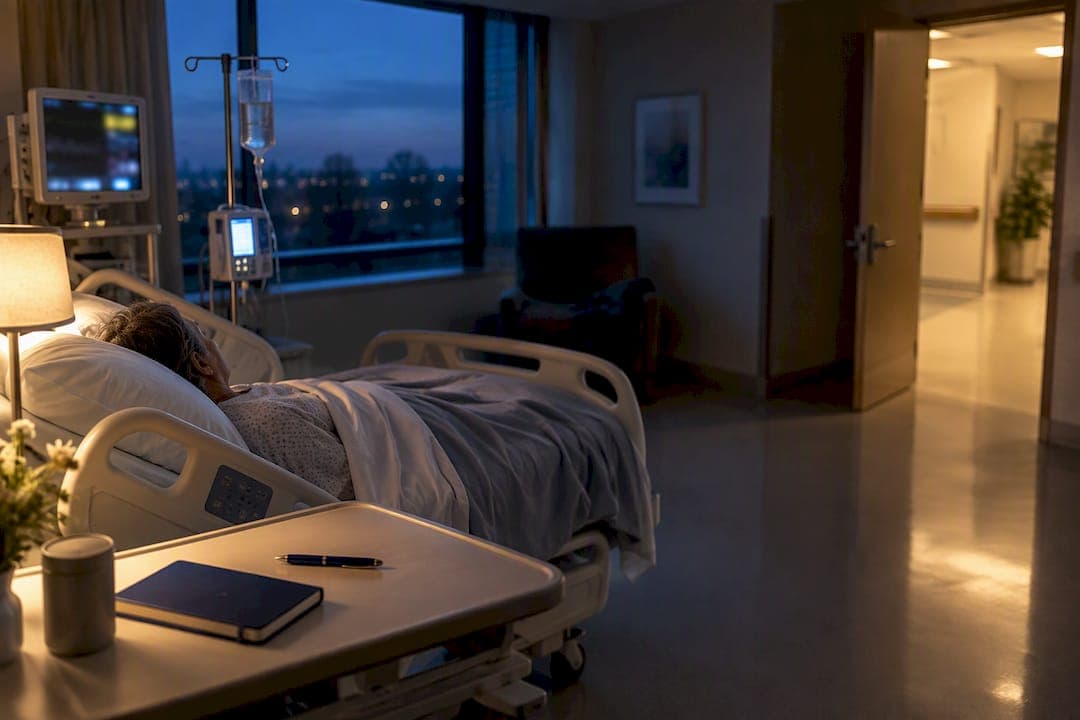
Yes, a documented hospitalization can excuse a missed court date or support a medical release in many places, but it does not automatically protect a bail bond. The court and defense counsel must be notified immediately, in writing, with medical proof, or the case can move toward a bench warrant and bail forfeiture regardless of how serious the illness is.
TL;DR:
- Hospital stays do not automatically protect a bail bond; immediate written notification with medical proof is necessary to prevent forfeiture or warrant issues.
- Courts consider whether the illness genuinely prevented appearance, if jail medical staff could have managed it, and the risk to public safety before granting relief.
- Rapid legal action, including timely motions and detailed medical documentation, is crucial for preserving bail after hospitalization.
- Different jurisdictions, like California, NSW, and India, have specific rules and procedures for handling bail during medical emergencies.
- Conditions imposed on medical releases often include stay-in-hospital orders, reporting requirements, or travel restrictions to ensure appearance and safety.
Table of Contents
- How courts treat hospitalization: legal bases and likely outcomes
- Immediate steps to protect bail when hospitalization occurs
- What medical documentation and motions judges expect
- Common conditions courts place on medical release and what families should expect
- Jurisdictional examples and statutes: California, NSW, and illustrative international cases
- Differences in bail treatment for voluntary vs. involuntary hospitalization
- Realistic trade-offs and common pitfalls for families
- How Midnight Bail Bonds can help when hospitalization affects bail
- Authoritative statutes, practice notes, and case examples
- Sources
- FAQ
How courts treat hospitalization: legal bases and likely outcomes
Judges do not treat a hospital stay as a blanket excuse. They look at whether the illness genuinely prevented the person from appearing, whether jail medical staff could have managed the condition instead, and whether releasing the person creates any real risk to public safety. Several legal tools come into play, and they work differently depending on where the case sits.
Temporary disability rules let a court pause, or toll, the clock on statutory appearance and forfeiture periods while someone is medically unable to attend. California's Penal Code includes a framework that allows tolling of the appearance period when a defendant is temporarily unable to appear due to illness, and it sets out separate conditions for vacating forfeiture in cases of permanent disability. That distinction matters: temporary and permanent disability trigger different procedures, and neither one applies automatically without the right filing.
Interim medical bail is a separate mechanism, used when continued custody would worsen a person's condition or when the facility cannot provide necessary treatment. Judges weigh:
- The severity of the medical condition and whether it can be safely managed inside a jail's medical unit.
- Flight risk, since a hospital stay does not remove a judge's concern about the person disappearing once discharged.
- Public safety factors, particularly for violent or repeat offenses.
- Whether the request is timely, since a motion filed weeks after a missed date carries less weight than one filed the same day.
A useful illustration comes from India, where the Delhi High Court granted a interim bail for a limited period to a defendant with serious coronary artery disease after finding that the jail dispensary lacked the equipment needed to treat him. The court's reasoning is a good model for how judges elsewhere approach the question: not whether the person is sick, but whether the facility that holds them can actually care for that specific illness.
Courts do not automatically toll or extend appearance periods. A California appellate brief describes strict, limited statutory methods for extending these deadlines, meaning a family cannot assume a hospitalization alone buys extra time. Someone still has to ask, on the record, before the deadline closes.
Immediate steps to protect bail when hospitalization occurs
The single biggest factor in whether a bond survives a hospitalization is speed. Courts and bail agents can work with a documented medical emergency, but they cannot work with silence. Once someone is hospitalized and a court date is at risk, the following order of operations gives the case the best chance of staying intact.
- Call the defense attorney first, even before sorting out visiting hours or insurance paperwork. Counsel needs to know the moment hospitalization becomes likely to interfere with a court date.
- Call the bail agent next, since they have a direct stake in the bond and often maintain working relationships with local court clerks.
- Have the attorney contact the court clerk and the prosecutor the same day, stating plainly that the defendant is hospitalized and cannot appear.
- Request the treating hospital provide an admission record showing the date and reason for admission.
- Ask the treating physician for a short written statement confirming the patient cannot travel or appear in court.
- Build a simple timeline document showing exactly when the missed court date fell relative to admission, treatment, and expected discharge.
- Have the attorney file an emergency motion or ex parte application asking the court to recall or hold any warrant and to toll the relevant deadline.
- Follow up in writing, since a phone call alone rarely satisfies a court's evidentiary standard.
Losing a day here can be the difference between a routine continuance and a forfeiture proceeding. Our internal guide on clearing a California bench warrant walks through what happens once a warrant is already active, and how a recall request typically works.
Pro Tip: Keep a physical folder, not just phone photos, of every hospital document from the moment of admission: courts and clerks still often want a signed, dated hard copy attached to a motion.

What medical documentation and motions judges expect
Judges are not persuaded by a general claim of illness. They want specific, verifiable records that tie the hospitalization directly to the missed appearance. The strongest filings typically include:
- Admission and discharge notes from the hospital, showing exact dates and the diagnosis.
- A treating physician's declaration, written on letterhead, stating in plain terms that the patient was medically unable to travel or appear.
- Relevant test results or imaging reports when the condition is serious enough to require them.
- Contact information for the treating clinician, so the court or prosecutor can verify the record if needed.
An affidavit that simply says "the defendant was sick" rarely moves a judge. One that cites specific dates, names the treating physician, and states clearly that appearance was medically impossible carries far more weight.
Timing framework matters as much as the paperwork itself. California law recognizes an appearance period, often discussed as a certain appearance period during which a surety or defendant can seek relief from forfeiture. Temporary disability can toll part of that period, but a California appellate brief warns that these extensions follow narrow statutory procedures, not judicial discretion alone. In practice, that means a bail agent or surety who wants to rely on tolling has to file the right motion within the right window, sometimes with prosecutorial agreement, rather than assuming the court will extend things automatically. Our post on what happens after a missed court date in California breaks down that 180 day mechanic in more detail.
Common conditions courts place on medical release and what families should expect
When a judge does grant bail or release tied to a hospitalization, it almost never comes without strings attached. The conditions exist to balance the person's medical need against the court's interest in making sure they eventually show up and do not pose a risk while free.
- Stay-in-hospital orders, which prohibit discharge without prior court approval.
- Supervised release, often requiring a family member or third party to confirm the person's location.
- Travel limits, restricting movement to the hospital, a specific treatment facility, or home once discharged.
- Reporting requirements, such as regular check-ins with a bail agent, probation officer, or the court itself.
- Electronic monitoring, sometimes layered onto inpatient treatment orders for higher-risk cases.
A reported case in Australia shows how far these conditions can go: a court there granted bail on the condition that the accused remain in hospital as an involuntary patient until a formal review, rather than allowing an open-ended release. Families should expect a review hearing once treatment concludes or the condition stabilizes, and it helps to arrive at that hearing with updated medical records showing exactly what has changed since the original order. Our overview of common bail conditions in California covers how monitoring and reporting requirements typically get structured outside the medical context as well.
Jurisdictional examples and statutes: California, NSW, and illustrative international cases
Bail and hospitalization rules are not uniform, and families should never assume that a rule from one state or country applies somewhere else. Three examples show how differently the mechanics can work.
- California relies on statutory tolling and forfeiture provisions built into the Penal Code, with strict filing windows for sureties and defendants alike.
- New South Wales, Australia allows certain police decision-makers to handle bail directly at a hospital and uses dedicated administrative forms to let a person appear from a hospital rather than being transported to court.
- India has produced reported interim-bail grants when a jail's medical resources cannot meet a defendant's treatment needs, illustrating a similar underlying principle applied through different procedure.
| Jurisdiction | Mechanism | Key source |
|---|---|---|
| California | Statutory tolling of the appearance and forfeiture period for temporary disability | California Penal Code |
| New South Wales | Police-authorized hospital bail decisions and hospital appearance forms | NSW Bail Act provisions |
| India | Interim bail granted where jail medical care is inadequate | Delhi High Court report |
In New South Wales, a sergeant or more senior officer can make a bail decision at the hospital bedside, and local court practice notes include forms that let an accused appear from hospital rather than being moved. That structure removes a lot of the guesswork that families in other jurisdictions face, since the process is designed around the hospital setting from the start rather than requiring an emergency motion to catch up after the fact.
Differences in bail treatment for voluntary vs. involuntary hospitalization

Courts generally look at voluntary and involuntary hospitalization differently, even though both can support a medical excuse. Voluntary hospitalization, where the person chose to seek treatment, usually requires clearer proof that the stay was medically necessary and not a convenient way to avoid a court date. Judges tend to scrutinize timing closely: admission the same day as a scheduled hearing draws more questions than one that began days earlier.
Involuntary hospitalization, such as a psychiatric hold or an emergency admission after an accident, is often treated as a stronger excuse because the person had no control over the timing or decision to be admitted. That said, involuntary holds can also raise separate questions about competency or capacity that affect how a case proceeds once the person is stable. A reported case involving a court ordering that a defendant remain an involuntary patient until a formal review, discussed above, shows how a court can fold both the medical order and the bail condition into a single, tightly monitored arrangement. Either way, the practical advice is the same: get documentation, whatever the admission type, and get it to the court fast.
Realistic trade-offs and common pitfalls for families
Hospitalization genuinely helps a case, but only when it is paired with fast legal action. Delayed notice is the single most common reason a bond falls apart, not the illness itself. Families often assume that being visibly, seriously sick is enough, then get blindsided when a bench warrant issues anyway because nobody told the clerk in writing.
Precision matters more than families expect. A vague note from a nurse rarely satisfies a judge, while a dated, specific physician declaration usually does. When time is short, prioritize getting the bond in place or preserved first, then let the attorney litigate the medical-excuse motion in parallel. Waiting to resolve the legal question before addressing custody status often costs more than it saves.
— Jake
How Midnight Bail Bonds can help when hospitalization affects bail
A medical emergency does not wait for court hours, and neither do we. Midnight Bail Bonds keeps licensed agents available around the clock across California, so a family dealing with a hospitalization at 2 AM is not stuck waiting until morning to start the release process.

- Bilingual agents are available every shift for families who need support in English or Spanish.
- Flexible payment plans and bail bond options without collateral help families move quickly without waiting to arrange assets.
- Instant inmate lookup lets you confirm booking details before you even call, so the process starts faster.
If a medical-excuse motion is still pending, posting bail can let treatment continue without interruption while your attorney works on tolling the appearance period or recalling a warrant. Start online or call directly, and have the booking number, court date, and any medical records ready. Visit Midnight Bail Bonds to begin, or explore our 24-hour bail bond service built for exactly this kind of urgent situation.
Authoritative statutes, practice notes, and case examples
This article draws on California's Penal Code tolling provisions, a California appellate brief on forfeiture procedure, New South Wales bail statutes and court practice notes, and a reported Delhi High Court interim bail decision.
This article is general information, not a substitute for advice from a qualified lawyer. Consult a qualified legal professional about your own circumstances before acting on anything here.
Sources
- Bail Act provisions and NSW procedural notes permitting hospital bail decisions and forms
- Respondent's brief (California Supreme Court) — procedural limits on tolling and appearance periods
FAQ
Can someone get bail for serious physical injuries?
Yes, serious physical injuries can support a bail request, especially when a jail's medical unit cannot provide the required treatment. Courts weigh the severity of the injury against flight risk and public safety before granting release, as shown in the Delhi High Court's interim bail decision involving inadequate jail medical equipment.
How long are you in jail before bail?
This depends entirely on the charge, the jurisdiction, and how quickly a bail hearing can be scheduled, so there is no single fixed timeline. In California, a bail bond can often be posted and processing started as soon as booking is complete, which is why services offering 24-hour bail bonds exist to shorten that wait.
On what grounds can bail be granted?
Judges typically weigh flight risk, danger to the community, the severity of the charge, and any medical or personal circumstances, including hospitalization. A documented medical need, paired with the right motion, is one recognized ground for release under frameworks like California's tolling provisions for temporary disability.
Is it better to pay bail or bond?
Paying the full bail amount directly returns that money after the case concludes, while a bail bond requires a smaller, non-refundable premium, commonly 10% of the total bail amount in California, paid to a licensed agent. For families facing a sudden expense during a medical emergency, a bond often preserves cash for hospital costs while still securing release.