
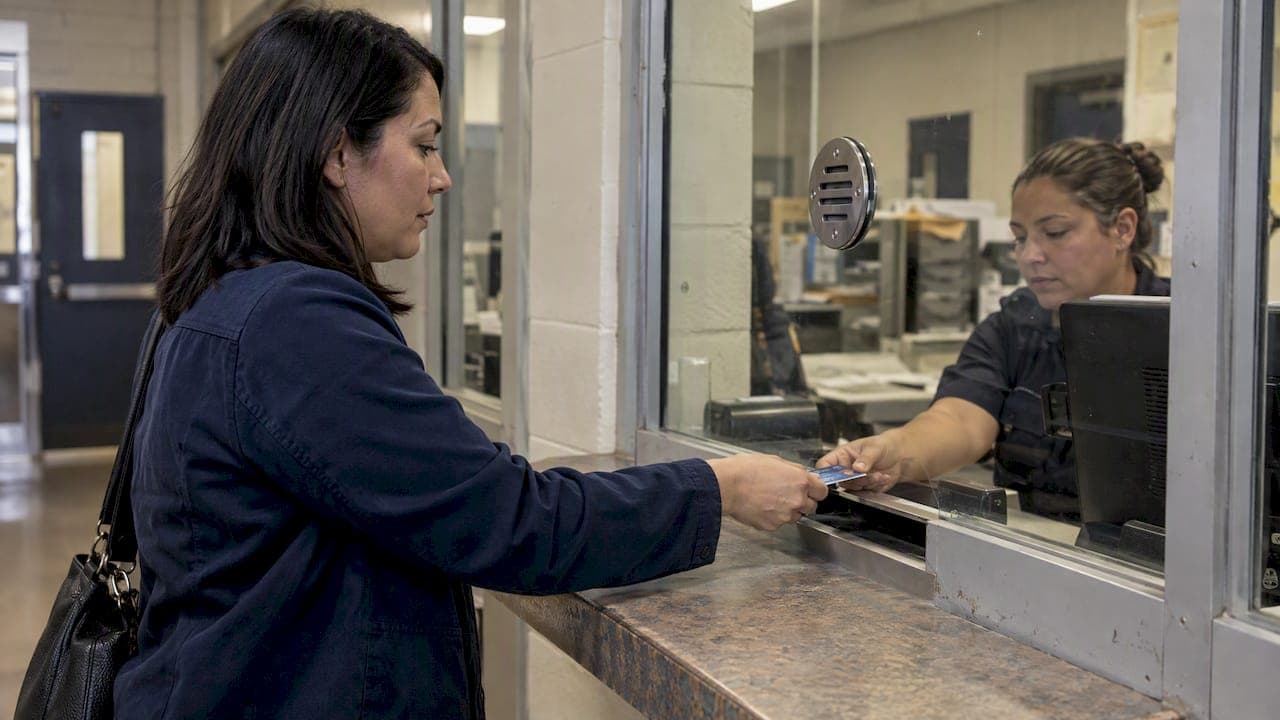
Felony DUI bail in California usually starts around $20,000 and can pass $100,000 when someone was hurt. A bail bond lets a family post it for a non-refundable premium, typically 10% of the bail amount. The exact figure depends on the county's bail schedule, the facts of the arrest and any decision a judge makes at the first hearing. This guide covers what makes a DUI a felony, what bail tends to look like, what a bond really costs, and how to act in the first hours.
TL;DR
- Felony DUI bail in California often runs from about $20,000 to $100,000 or more, depending on the county schedule and whether anyone was injured, according to the Riverside County bail schedule.
- A bond premium is non-refundable and usually 10% of the bail, so $20,000 bail means about $2,000 in premium. Ask us about 1% and 2% options before you decide.
- Before paying anything, ask whether your loved one can be considered for supervised release or for a bail reduction at the first court hearing.
- Call a licensed agent as soon as you know the booking location. Bail can only be posted once the jail has finished booking, and that takes time.
Table of Contents
- What makes a DUI a felony in California
- How much felony DUI bail is in California
- What a felony DUI bond costs you
- Ways to get out before you pay a premium
- The DUI bail hearing process
- How to post felony DUI bail, step by step
- What happens after release, and what a felony DUI can mean
- Our perspective: what we tell families on the first call
- Getting help from Midnight Bail Bonds
- Frequently asked questions
- Sources
What makes a DUI a felony in California
Most DUI arrests in California are misdemeanors. A DUI becomes a felony in a few specific situations.
The first is a fourth offense. Under Vehicle Code section 23550, a DUI that happens within ten years of three or more prior convictions can be charged as a felony. A DUI within ten years of an earlier felony DUI is also a felony under section 23550.5, as the same source explains.
The second is a DUI that injures someone. Driving under the influence and causing injury is a separate charge that prosecutors can file as a felony. The third is a death. Gross vehicular manslaughter while intoxicated carries the highest bail on most schedules. Fresno County, for example, lists it at $250,000.
If you are not sure which one applies, ask the jail or read the booking record. The charge code and the bail amount are listed there. Our free inmate search shows booking details, and our jail booking checklist explains what the wait looks like.
How much felony DUI bail is in California

California does not have one statewide number. Each county's superior court adopts its own schedule every year under Penal Code 1269b, and the Santa Cruz County schedule states that duty plainly. That is why the same charge can carry different amounts in Riverside, San Diego or Santa Clara.
The Riverside schedule gives a useful range. Standard felony DUI charges are often around $20,000, and cases involving gross negligence or serious injury can reach $100,000 or more. Extreme cases, such as multiple deaths, can go to $1,000,000. For comparison, a standard misdemeanor DUI is frequently $2,500, and aggravated misdemeanors (high BAC, priors) can run from $5,000 to $15,000, per the same schedule.
| Situation | Typical bail range (Riverside schedule) |
|---|---|
| Standard misdemeanor DUI | About $2,500 |
| Aggravated misdemeanor DUI | $5,000 to $15,000 |
| Standard felony DUI | About $20,000 |
| Felony DUI with gross negligence or serious injury | $100,000 or more |
| Extreme cases, multiple deaths | Up to $1,000,000 |
Treat these as a guide, not a quote. Your county's current schedule is the number that counts, and a judge can set something different.
The bail stacking trap
When someone is booked on several charges, families sometimes add every line together and panic at the total. Courts generally stack bail for separate charges, but not when the charges come from one indivisible course of conduct. A DUI charged under more than one Vehicle Code subsection is the usual example, and in that case the court typically imposes only the single highest amount, according to the San Diego schedule. Check the actual bail figure on the booking record before you work out a premium.
What a felony DUI bond costs you
A bail bond is a service. A licensed agent and a surety company promise the court the full bail amount if the defendant does not appear, and you pay a premium for that promise. You do not get the premium back, even if charges are dropped or the case ends in an acquittal, as Made For Law's California guide explains.
The premium is commonly 10%. Strictly, it is not a rate the state sets by statute. It is the rate the surety files with the California Department of Insurance, and agents must charge that filed rate. The same guide notes that some sureties file reduced rates, as low as 8%, for groups such as veterans, union members or people with private counsel. For a deeper look at how this works, read our piece on how California law lets bondsmen charge a 10% premium.
Worked examples at 10%:
- $20,000 bail: $2,000 premium
- $50,000 bail: $5,000 premium
- $100,000 bail: $10,000 premium
This is why the next section matters. At felony levels, a successful bail reduction can save more than any discount on the bond.
Ways to get out before you pay a premium
Paying a bondsman is not the only route, and it is not always the cheapest.
Supervised own recognizance. Some counties' schedules say all DUI defendants, including felony cases, can be considered for release without cash bail or a bond. Santa Clara's schedule asks pretrial services to consider conditions such as alcohol monitoring, testing or check-ins. Ask the jail or the defense attorney whether an evaluation is possible. Eligibility depends on the county and the facts, and a felony with injury or priors is less likely to qualify.
A bail reduction. A judge can lower the amount at an early hearing. Defense attorneys can argue community ties and low flight risk, and that approach can cost families far less than a non-refundable premium. That article is about Colorado, but the logic of a motion to reduce bail applies in California as well.
Reform and local policy. Courts in California have moved toward limiting pretrial detention for people who are not dangerous. That does not mean felony DUI defendants are routinely released without bail. County rules can differ, so ask what applies where the arrest happened. A summary from a California firm points to the In re Humphrey decision as a reason courts must consider ability to pay.

The DUI bail hearing process
The first appearance before a judge typically happens within 24 hours of arrest, according to Responsibility.org. In California, the arraignment is often the first real chance to challenge the scheduled amount. Here is how it tends to go:
- Booking. Fingerprints, photographs, and a chemical test if one has not been done. Release is not possible until this finishes.
- Bail schedule. The jail applies the county's amount for the charge. If a warrant or earlier judge set a different amount, that figure controls.
- Arraignment or advisement. The judge reads the charges. The defense can ask for lower bail, supervised release or release on own recognizance.
- Decision. The judge weighs the court-appearance risk and public safety. High BAC, prior convictions, and an accident with injuries all push toward higher bail or conditions, as DUI.org describes.
- Conditions. Release often comes with rules: no driving, alcohol testing, staying away from any victim. Our guide to bail conditions in California lists the common ones.
Be ready to speak to the factors the judge cares about: a job, family nearby, a fixed address, treatment already started. The defense attorney should carry the argument, but you can supply the paperwork.
How to post felony DUI bail, step by step
- Find where your loved one is held and the bail amount. Use the county jail's inmate locator or our free inmate search. Note the booking number and charges.
- Confirm the amount is final. If an arraignment is coming within a day or so, decide whether waiting for a possible reduction makes sense. Ask the attorney, not the bondsman, since only the attorney can tell you if the facts support a reduction.
- Call a licensed agent. Have the booking number, full name, date of birth, and the bail figure ready. If you want to start from a phone, we offer online bail bonds.
- Review the contract. Check the premium, the payment plan, any collateral request, and what happens if a court date is missed. Our guide to bail bond contract terms gives the three questions to ask.
- Pay the premium and sign. The cosigner, often a family member, takes responsibility for making sure the defendant attends every hearing.
- Wait for release. The timing depends on the jail. Booking can take one to two hours or much longer, and busy county jails may take several hours after the bond posts.
- Go to every court date. A missed appearance triggers a warrant, and the bond can be forfeited. Madeforlaw.com notes that after a failure to appear, bondsmen have 185 days to return the defendant.
What happens after release, and what a felony DUI can mean
Posting bail does not resolve the case. It only returns your loved one home while the case proceeds. The court date, the plea, and any trial still lie ahead.
If convicted of a fourth-offense felony DUI, the statute provides for a term under Penal Code 1170(h) or county jail of 180 days to one year, a fine of $390 to $1,000, and a three-year habitual traffic offender designation, as the Parkhurst Law summary reads. Injury and death cases carry heavier penalties, and a license suspension or revocation through the DMV usually follows. A defense attorney can give the specifics for your case. A bondsman cannot, and should not try.
Our perspective: what we tell families on the first call
We see the same pattern again and again. A family calls at 2 a.m. with a bail number and a lot of fear. The first thing we do is slow things down by about five minutes.
First, we confirm the real number. Stacked or misread charges inflate bail in families' minds, and the premium is calculated on the actual figure. Second, we ask if there is an attorney, because at felony levels a bail reduction hearing can matter more than any bond. We will not tell you to skip a bond if your loved one is not getting out otherwise, but we also will not push you to pay a non-refundable premium that a judge might make unnecessary tomorrow morning.
Third, we explain the cost plainly. The premium is non-refundable, and it is a filed rate rather than something negotiated at the counter. We tell you the number up front, and where we can, we write bonds without collateral, so a family is not asked to put up a house or a car in the middle of the night. Spanish-speaking relatives talk to a bilingual agent on every shift, because nobody should have to translate a contract while stressed.
The biggest regret we hear is not the premium. It is a missed court date. Put every hearing on a shared calendar, and make sure the defendant knows that the bond depends on showing up.
— Jake
Getting help from Midnight Bail Bonds
If you have decided to post bail, our licensed agents answer around the clock, and we handle all major charge types, including felony and DUI cases. We offer flexible payment plans and accept cash, credit and debit cards, Zelle, and financing. Many bonds can be written without collateral. Start with our page on DUI bail bonds in California, or see how no-collateral bail bonds work. If it is late at night, our 24-hour bail bonds page tells you what to have ready.
For injury cases, read how counties handle DUI with injury bail. For a drug-related DUI, see our guide to drug DUI bail.
Frequently asked questions
Can you get bail for a felony DUI in California?
Yes, in most cases. Felony DUI is a bailable offense, and the amount comes from the county schedule or from a judge. The exceptions are rare situations where a judge holds someone without bail, and those usually involve serious public safety concerns. Ask the jail or an attorney how your county handles it.
How much does a felony DUI bond cost?
The premium is typically 10% of the bail amount, so $20,000 bail comes to $2,000, and $100,000 comes to $10,000. It is non-refundable. Rates are filed with the California Department of Insurance, and some qualifying people may get a reduced rate.
How fast can someone get out after bail is posted?
It depends on the jail and how far booking has progressed. Release can take a few hours, and longer in busy counties. Posting early in the process with correct booking details helps.
Is it better to wait for the bail hearing?
Sometimes. If the arraignment is within a day and the facts support a lower amount or supervised release, waiting can save thousands. If your loved one needs to be home sooner, for a medical reason or a job, a bond may be worth the premium. A defense attorney can advise on which makes sense in your case.
Sources
- Riverside County Superior Court: Felony and Misdemeanor Bail Schedule
- Santa Cruz County Superior Court: Criminal Bail Schedules, 2026
- Fresno County Superior Court: Bail Schedules
- San Diego County Superior Court: Bail Schedule
- Santa Clara County Superior Court: Criminal Bail Schedule 2025
- Made For Law: California Bail Bond Calculator
- Parkhurst Law: Felony DUI in California
- Orr Law: Can You Get Bail for a Felony DUI in Denver?
- Responsibility.org: Pre-Trial Process for DUI Cases
- DUI.org: Difference Between Bail Bond and ROR
- The H Firm: Bail Bonds in California