
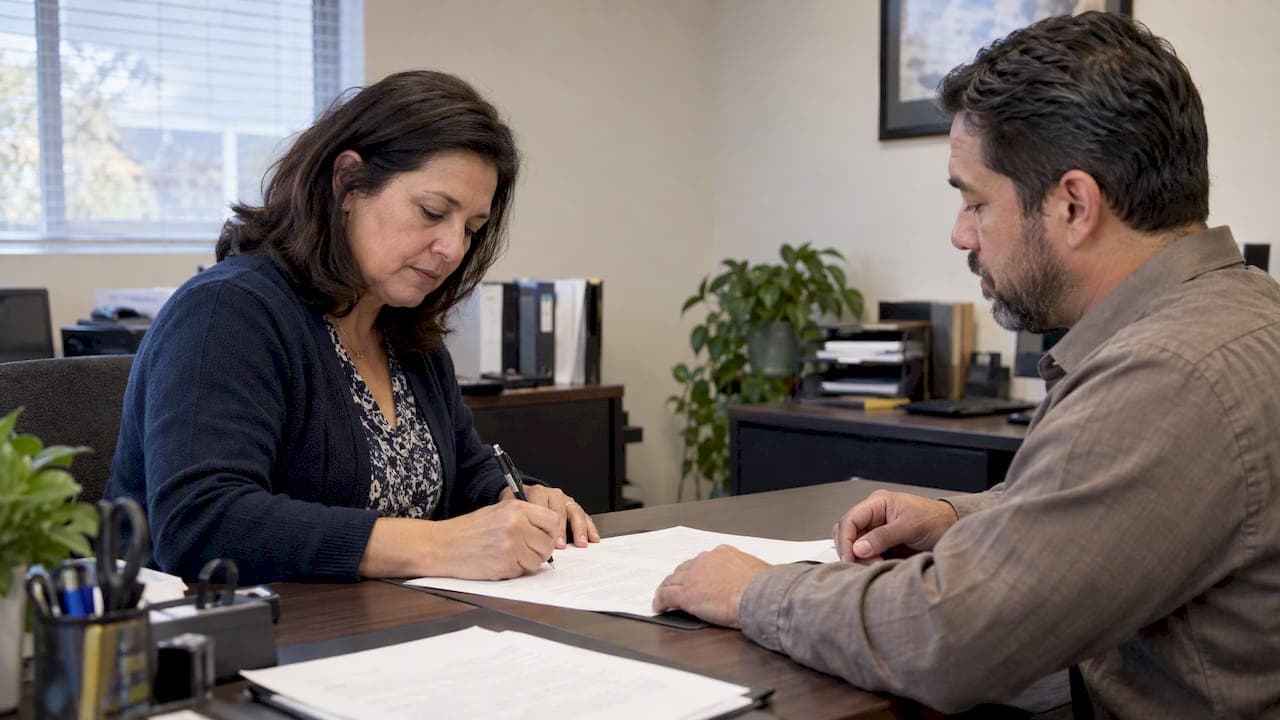
Yes, a house can secure a bail bond, and courts across the country allow it for large bail amounts when the owner has enough equity to cover the sum. Pledging a home creates a formal lien recorded against the title, requires notarized paperwork, and puts the property at risk of forfeiture proceedings if the defendant misses a court date.
TL;DR:
- Courts calculate usable equity by subtracting mortgages, liens, and judgments from the home’s assessed value, and they generally require a cushion above the bail amount.
- Property bonds require notarized deeds of trust and promissory notes, proof of equity, owner identification, county recording, and court approval, sometimes after a hearing.
- If the defendant misses court, the bond can be forfeited and enforcement may lead to a forced sale; contact the bail agent and court immediately.
- After the case ends, the lien remains on the title until the court issues an exoneration order and the county records a reconveyance.
Table of Contents
- Types of collateral courts and bail agents accept
- How pledging a house for bail actually works
- How equity is calculated for a property bond
- What happens if the defendant misses a court date
- Clearing the lien after the case closes
- A step-by-step checklist for pledging a house
- How an experienced bail agent helps when a house is on the line
- Why the paperwork matters more than the pitch
- Get bail help now, with or without collateral
- FAQ
- Sources
Types of collateral courts and bail agents accept
Bail agents work with several forms of collateral, and which one makes sense depends on the bail amount and how quickly a family needs cash. Common options include:
- Cash, which is the fastest to process but requires having the full premium on hand
- Vehicle titles, useful for mid-range bonds when the car is paid off
- Jewelry or other high-value personal property
- Stocks, bonds, or other securities
- Real estate, typically used when the bail amount is too large for cash or personal property to cover
Real estate gets used for the biggest bonds because home equity can back far more value than a car title or a stock portfolio usually can. The trade-off is liquidity: a house takes weeks to convert into usable funds, while cash is immediate. Some bail providers, including Midnight Bail, may offer options to post bail without property collateral in many cases, which is worth asking about before committing a family home to the process.
How pledging a house for bail actually works
Posting a property bond is closer to a mortgage closing than a simple handshake agreement. Courts require signed, notarized instruments to formalize the arrangement, and the process typically unfolds in this order:
- The bail agent or court identifies the bail amount and confirms the property owner has sufficient equity.
- The owner signs a Deed of Trust and a promissory note, both notarized, along with proof of equity and government-issued identification.
- These documents are recorded with the county recorder's office, which is the step that creates the court's lien on the property.
- The court reviews and approves the bond, sometimes requiring a hearing before the property bond is accepted.
This instrument set, the Deed of Trust, promissory note, and proof of equity, are court-approved and notarized before anything gets recorded. Recording with the county is what makes the lien enforceable and gives the court legal standing against the property.
Pro Tip: Order a payoff statement from your mortgage lender before you start the paperwork. It speeds up the equity verification step considerably.
How equity is calculated for a property bond
Equity is the gap between what a home is worth and what is owed against it, and courts want a cushion, not a number that just barely covers the bail. A few things to understand before pledging a house:
- Market value can be established through a formal appraisal, a comparative market analysis, or county tax assessment records
- Equity equals market value minus any outstanding mortgages, liens, or judgments
- Courts and bondsmen typically want unencumbered equity that comfortably exceeds the bail amount, not just matches it
- A second mortgage, a tax lien, or an unresolved judgment against the property will reduce the equity that actually qualifies
Valuation methods used to assess qualifying equity include formal appraisals, comparative market analyses, or county records, and whichever method is used, existing encumbrances come off the top first. A family that assumes their home's full market value will count as collateral is often surprised to learn how much less is actually usable once liens are subtracted.
What happens if the defendant misses a court date
Missing a court date after pledging a house as collateral sets off a chain of legal consequences that moves faster than most families expect. The court first declares the bond forfeited, which starts the clock on collection efforts against the property.
- The court issues a forfeiture declaration once the defendant fails to appear
- If the defendant isn't located or returned to custody within the applicable window, the surety or court can begin enforcement against the property
- Enforcement can escalate to a forced sale or foreclosure action to recover the forfeited bail amount
- Some jurisdictions allow a notice or cure period before enforcement proceeds, so acting quickly matters
If a defendant fails to appear, authorities can initiate actions against the property used as collateral, including foreclosure, to recover forfeited bail monies. Contacting the bail agent and the court immediately after a missed date, rather than waiting, is the single biggest factor in avoiding escalation toward a forced sale.
Clearing the lien after the case closes
Once a case resolves, whether through dismissal, acquittal, or the defendant completing all required court appearances, the lien on the house doesn't disappear automatically. Clearing it involves specific steps:
- Confirm the court has issued an order of exoneration releasing the bond obligation.
- Request the exoneration paperwork from the court clerk or bail agent handling the case.
- File the reconveyance document with the county recorder's office to formally remove the lien from title.
- Keep copies of every filing in case the lien shows up unexpectedly during a future sale or refinance.
A lien remains attached to title until the court issues an order of exoneration and the county records a reconveyance, and families often overlook this step until a title search during a home sale flags the old lien.
Pro Tip: Set a calendar reminder to confirm exoneration within 30 days of the case closing. Delays in filing are the most common cause of title surprises later.
A step-by-step checklist for pledging a house
Families facing this decision under time pressure benefit from a clear sequence rather than scattered advice. Before approaching a bail agent, gather:
- The recorded deed, current mortgage statements, and payoff figures for any outstanding liens
- Government-issued photo ID for every owner listed on the title
- Homeowners insurance documentation
- Contact information for a bail agent, the court clerk's office, and, where the situation is complex, a real estate attorney
Practical documents families commonly prepare include the recorded deed, mortgage statements, photo ID, homeowners insurance information, and payoff statements for outstanding liens. Ask early about premium costs and whether a no-collateral or low-collateral path might apply instead, since that can save weeks of paperwork and avoid tying up the family home entirely.
How an experienced bail agent helps when a house is on the line
Coordinating a property bond means managing moving pieces across a bail office, a notary, a county recorder, and a court clerk, often within a single business day. We operate as licensed agents available 24/7, which matters when a family is trying to pledge a home for someone still sitting in custody overnight. Our agents walk families through notarization and recording logistics, and instant inmate search helps confirm booking details before any paperwork starts.
Licensed bail agents and experienced firms can help coordinate documentation, county recording, and follow-up to obtain reconveyance after case closure, which is often the step families forget until it causes a problem. We also offer flexible payment plans and, in many cases, bail bond options that don't require collateral at all, which can spare a family from pledging their home in the first place.

Why the paperwork matters more than the pitch

The conventional advice on house collateral focuses almost entirely on qualifying for the bond: how much equity you need, which documents to sign, how fast you can close. That's useful, but it skips the part that causes the most damage later: the exoneration step. Families treat the lien like it vanishes the moment a case ends, and it doesn't. It sits on title, quietly, until someone files the paperwork to remove it.
My take is that the equity conversation gets too much attention and the reconveyance conversation gets too little. A family that pledges a home under pressure, gets the defendant released, and then forgets to confirm exoneration is setting up a problem for the next home sale or refinance, sometimes years down the line. If you take one thing from this guide, make it this: write down who is responsible for filing the reconveyance, and follow up on it the same way you'd follow up on any other lien against your property.
— Jake
Get bail help now, with or without collateral
If someone you care about is in custody, we're available right now at Midnight Bail Bonds. Our licensed agents answer calls around the clock, explain costs upfront, and write many bonds without requiring any collateral at all.
Before you call, have ready:
- The full name and booking number of the person in custody
- The charge type, if known
- Basic property information, only if you're considering using a house or other real estate as collateral
Our team and flexible payment plans are built for exactly this kind of urgent, middle-of-the-night decision.
This article is general information, not a substitute for advice from a qualified lawyer. Consult a qualified legal professional about your own circumstances before acting on anything here.
FAQ
How does collateral work for a bail bond?
Collateral is an asset, such as a house, vehicle, or cash, pledged to guarantee that the full bail amount can be recovered if the defendant fails to appear in court. For real estate, this means signing a Deed of Trust and promissory note that get recorded with the county, creating a legal lien until the case resolves and the court issues an exoneration order.
What does a secured bond mean?
A secured bond is backed by collateral, such as property or other assets, rather than relying solely on a cash premium. When real estate secures the bond, the lien recorded against the property functions much like a mortgage, encumbering the title until the court releases the obligation.
Can I get a bail bond without using collateral?
Some bail providers, including Midnight Bail, offer options to post bail without requiring property or other collateral in many cases, depending on the charge and the defendant's circumstances. It's worth asking a licensed agent directly about eligibility before assuming a house or other asset needs to be pledged.
How much does a bail bond cost?
Bail bond premiums are typically a percentage of the total bail amount set by the court, and that percentage is set by state regulation rather than negotiated case by case. You can get a cost estimate for your specific situation using a bail bond calculator or by speaking directly with a licensed agent.
Sources
- Fix Forfeited Bail in 180 Days: What California Families Must Do
- Secured vs Unsecured Bond: What Families Need to Know
- California Bail Forfeiture: What Defendants and Sureties Must Know
- Midnight Bail Bonds
- No Collateral Bail Bonds In California
- Theft & Burglary Bail Bonds bond calculator