
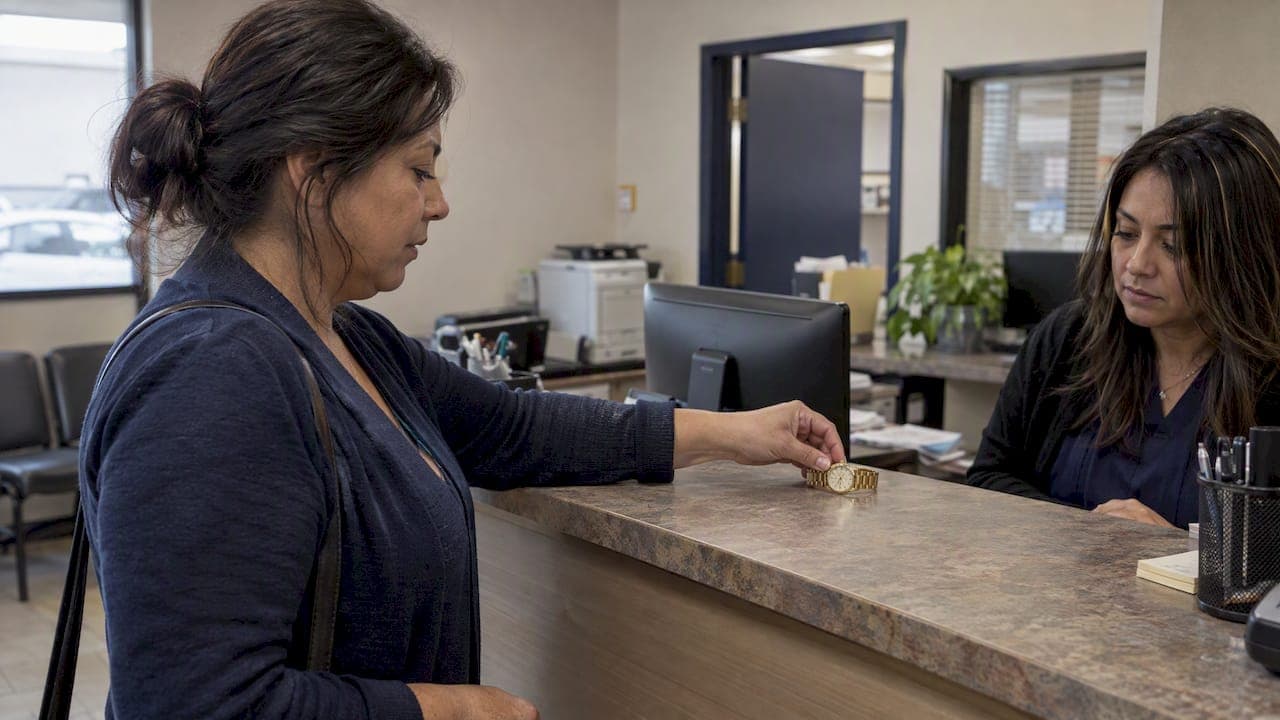
Yes, jewelry can be pledged as collateral for a bail bond in California, but it is rarely the easiest asset to use, and many bonds need no collateral at all. If a loved one is in jail tonight, the fastest path is usually a bond with no collateral, and we can tell you quickly whether that applies. If you do pledge a ring, a watch or a necklace, you need a written receipt, a clear contract and a firm understanding of when the piece comes back.
One note for anyone who landed here by accident: "bail" also names the small loop that attaches a pendant to a chain. If that is your problem, skip to the short section near the end. Everything else here is about bail bonds.
TL;DR
- California law treats jewelry as personal property that can be pledged as collateral, but bail agents must hold it in a fiduciary capacity and keep detailed records.
- Many bonds need no collateral. Ask first, before you hand over anything valuable.
- Get a written receipt and a written contract. Never rely on a verbal promise about what happens to your property.
- Collateral is returned after the court exonerates the bond, not when the person is released from jail.
- If the defendant misses court, the pledged item can be used to cover the forfeited amount.
Table of Contents
- What bail collateral is, and why a bondsman asks for it
- Can you use jewelry as collateral?
- What you should get in writing
- You are guaranteeing the bond, not just the premium
- When do you get the jewelry back?
- Before you pledge jewelry, ask whether you need to
- Jewelry versus other collateral
- Our perspective on pledging jewelry
- Need a bond tonight?
- A quick word if you meant the pendant bail
- FAQ
- Sources
What bail collateral is, and why a bondsman asks for it
When a bail agent posts a bond, the agent (and the insurance company behind it) is promising the court that the defendant will appear at every hearing. The California Department of Insurance describes a bail bond as a surety bond posted to guarantee the arrestee's appearance. If the defendant does not show up, the bond company is on the hook for the full bail amount.
Collateral is the safety net for that risk. It is something of value pledged to secure the bond, over and above the premium you pay. Whether an agent asks for it depends on the bail amount, the charge, the defendant's ties to the community, and who is signing on the bond.
Collateral is not the same as the fee. The premium is the price of the service. In California it is typically 10% of the total bail, and it is nonrefundable, even if charges are never filed or are dropped. Collateral, by contrast, is meant to come back to you.
A quick example of the difference. On a $50,000 bail, a 10% premium is $5,000, and that money is spent. If the agent also asks you to pledge a watch, that watch is held as security and is supposed to be returned once the case ends and the bond is discharged. For more on how the fee works, see our guide to how California law lets bondsmen charge a 10% premium.

Can you use jewelry as collateral?
California regulations classify jewelry as personal property that may serve as collateral, and they put tight rules around how agents handle it. According to the Department of Insurance, bail licensees must hold collateral in a fiduciary capacity and keep it in separate collateral trust accounts, and they may not collect fees or collateral except to pay the premium, secure the bond, or reimburse reasonable, necessary expenses. The charges an agent is allowed to collect are spelled out in 10 CCR § 2081.
In practice, though, jewelry is not what most agents want. The state's own exam objectives for bail agents list collateral as a core topic, including definitions, types of collateral and handling. Real estate carries established legal tools such as a recorded deed of trust. Jewelry carries different burdens:
- Valuation. A "gold chain" can be worth a lot or very little. An agent may want an appraisal, a receipt for the original purchase, or a certificate of authenticity.
- Secure storage. The agent has to keep the item safe, separate and accounted for.
- Documentation. Because the item must be logged and tracked, the paperwork is heavier than for a simple signature.
- Sentimental value. A wedding ring or a family heirloom is worth more to you than its resale price. Weigh that before you pledge it.
Some agents will accept jewelry in part, for example to cover a gap between what a family can sign for and what the agent needs. Others will decline it altogether. That is a business decision, and it is a good reason to ask early.
What you should get in writing
The single most common mistake families make is handing over property on a handshake. California consumer guidance is consistent here: insist on documentation. Here is the minimum.
- A written receipt that describes each item: type, metal, stones, weight if known, engravings, condition and any appraised value.
- A copy of the bail contract that states what is pledged, for which bond, and under what conditions it is returned or can be sold.
- The agent's license number, which you can check on the Department of Insurance website. The Attorney General's office also advises being wary of bail scams and of agents who solicit inside jails or police stations.
- Photos. Take your own photos of the pieces before you hand them over. It costs nothing.
- A name and number for who to call about the status of your collateral.
The bail agent must keep a detailed record in the collateral trust account, and you have the right to ask about the status of what you pledged. If an agent will not put it in writing, walk away. Our post on bail bond contracts and three questions to ask walks through the clauses worth reading before you sign, and the list of documents to have ready will help you move faster.
You are guaranteeing the bond, not just the premium
This is the part people miss at 2 a.m. The Los Angeles County Department of Consumer and Business Affairs, writing about using a home for bail, explains that a bail company can record a deed of trust against a property used for bail. The same logic applies to any asset. Whoever pledges collateral or co-signs is on the hook for the full bond amount if the defendant does not appear, not only the premium.
That changes how you should think about a piece of jewelry. A $3,000 ring pledged against a $50,000 bond does not cap your exposure at $3,000. The collateral is what the agent holds first. The signed indemnity agreement is what the agent can pursue if the collateral falls short. Read the contract with that in mind, and think carefully about who signs.

When do you get the jewelry back?
Not when your loved one walks out of jail. Collateral and liens are not released until the bail is paid and the case is settled, with the bond exonerated. Exoneration happens when the court discharges the bond, typically after the defendant has made all required appearances or the case is resolved.
After that, the agent has a legal duty to return it. Under 10 CCR § 2088.2, collateral is returned to the person who deposited it, or to that person's assignee, once the obligation is discharged. If you do not hear anything after the case ends, call the agent, quote your receipt number and ask for the exoneration date.
Here is a simple timeline:
| Stage | What happens to the jewelry |
|---|---|
| Bond posted | You hand over the item and receive a written receipt |
| Case pending | The agent holds it in a collateral trust account |
| Defendant appears at all hearings | Stays in storage until the bond is discharged |
| Court exonerates the bond | The agent must return it to you |
| Defendant misses court and bail is forfeited | The agent may use legal remedies to convert it to cover the forfeited amount |
A missed court date does not always mean instant loss. California has procedures around forfeiture, including time to bring the defendant back. Our explainer on bail forfeiture in California covers what defendants and co-signers can do.
Before you pledge jewelry, ask whether you need to
Families often assume that a bondsman will demand valuables. In many cases that is not so. Whether collateral is needed varies with the bail amount, the charge and the people involved. Many of the bonds we write require none.
Here are the questions to put to any agent before you offer anything:
- Is any collateral required for this bond, or is it optional?
- If so, is there a payment plan or a co-signer who could replace it?
- What exactly is the premium, and is it the only cost?
- What does the contract say about the item if the defendant misses court?
- When will it be returned, and who do I call?
If the answer to the first question is "none needed," you have just saved yourself a lot of risk. Read our page on no collateral bail bonds in California for how that works. If you would rather not tie up a car title either, see bail without pledging a car title. And if real estate is the only thing on the table, pledging a house for bail explains the steps and how families clear the lien afterward.
Jewelry versus other collateral
| Type | Strengths | Drawbacks |
|---|---|---|
| Jewelry | Easy to hand over, quick to document if you have receipts | Hard to value, needs secure storage, often sentimental |
| Car title | Simple, familiar | Ties up your vehicle paperwork |
| Real estate | Well-established legal process | Slower, involves a recorded lien, needs to be cleared later |
| Cash | Simplest | Many families do not have it on hand |
| None (signature and payment plan) | No risk to your property | Depends on the case, the amount and the co-signer |
There is no universal best answer. The right choice is the one that gets the person out safely without putting something irreplaceable at risk.
Our perspective on pledging jewelry
We see families reach for jewelry because it is the only thing they can find in the middle of the night. Our advice is to slow down for ten minutes. Call us first, tell us the charge and the bail amount, and find out whether a bond with no collateral is available. Our licensed agents answer directly at any hour, and we have real local offices and working relationships with jails and courts, which helps move releases along.
If collateral is genuinely needed, we want it handled the right way: itemized, receipted, in the contract, and returned after exoneration. A wedding band should never leave your hands on a verbal promise. We also offer payment plans, and bilingual English and Spanish support on every shift, so that the person signing understands every line. If you want to confirm a Spanish-speaking agent is properly licensed, our guide to verifying licensing and knowing what you sign is a good start.
The cheapest bond is not worth it if you lose a family heirloom over a misunderstanding. Ask, read, photograph, and keep your copy.
— Jake
Need a bond tonight?
We post bail across California at any hour, for DUI, drug, domestic violence, theft, assault and failure-to-appear charges, among others. Start with an instant inmate search and a call to our 24-hour line, or read about online bail bonds if you would rather begin from your phone. The California premium is 10% of the total bail, and we will go over the full cost with you before you sign.
A quick word if you meant the pendant bail
In jewelry, a bail (rhymes with "mail") is the small loop that joins a pendant to a chain. It is a high-wear part, and when it thins or cracks it can be repaired or replaced by a jeweler, including by laser welding that spares heat-sensitive stones. Jewelers of America suggests having a professional evaluate the whole piece rather than attempting a DIY fix, since a worn bail can signal that the chain or clasp is tiring too. We are a bail bond company, not a jeweler, so for that job see a local jeweler you trust.
FAQ
Will a bail bondsman take jewelry instead of cash?
Sometimes. Jewelry is a recognized type of personal property for collateral in California, but it does not replace the premium, which is the fee for the bond. Many agents prefer assets that are easier to value and secure, so ask whether collateral is needed at all before you offer anything.
How do I get my jewelry back after bail?
Your property is returned after the court exonerates the bond. California rules require the agent to return collateral to the person who deposited it once the obligation is discharged. Bring your receipt, and if the case has ended and you have not heard back, call the agent and ask for the exoneration date.
What happens to the jewelry if the defendant misses court?
If bail is forfeited, the bond company may use legal remedies to convert collateral to cover the forfeited amount and related expenses. Act quickly: contact the agent and the defendant's attorney right away, because there may be options to resolve the missed date.
Can I get bail with no collateral at all?
In many cases, yes. Whether it is possible depends on the bail amount, the charge and the people signing. Call us with the booking details and we will tell you what applies to that case.
How do I check that a bail agent is legitimate?
Ask for the agent's license number and verify it on the California Department of Insurance website. Avoid anyone who solicits inside a jail or police station, and never hand over property without a written receipt and contract.
Sources
- California Department of Insurance: Bail Bonds
- CDI: Tips to Avoid Bail Agent Scams
- 10 CCR § 2081: Collection and Charges Permitted
- 10 CCR § 2088.2: Return of Collateral
- CDI: Bail Agent Educational Objectives
- California Attorney General: laws that protect co-signers on bail bonds
- Los Angeles County DCBA: Using Your Home for Bail
- Van Adams Jewelers: How Jewelers Repair or Replace a Worn Pendant Bail
- Jewelers of America: Jewelry Repair