
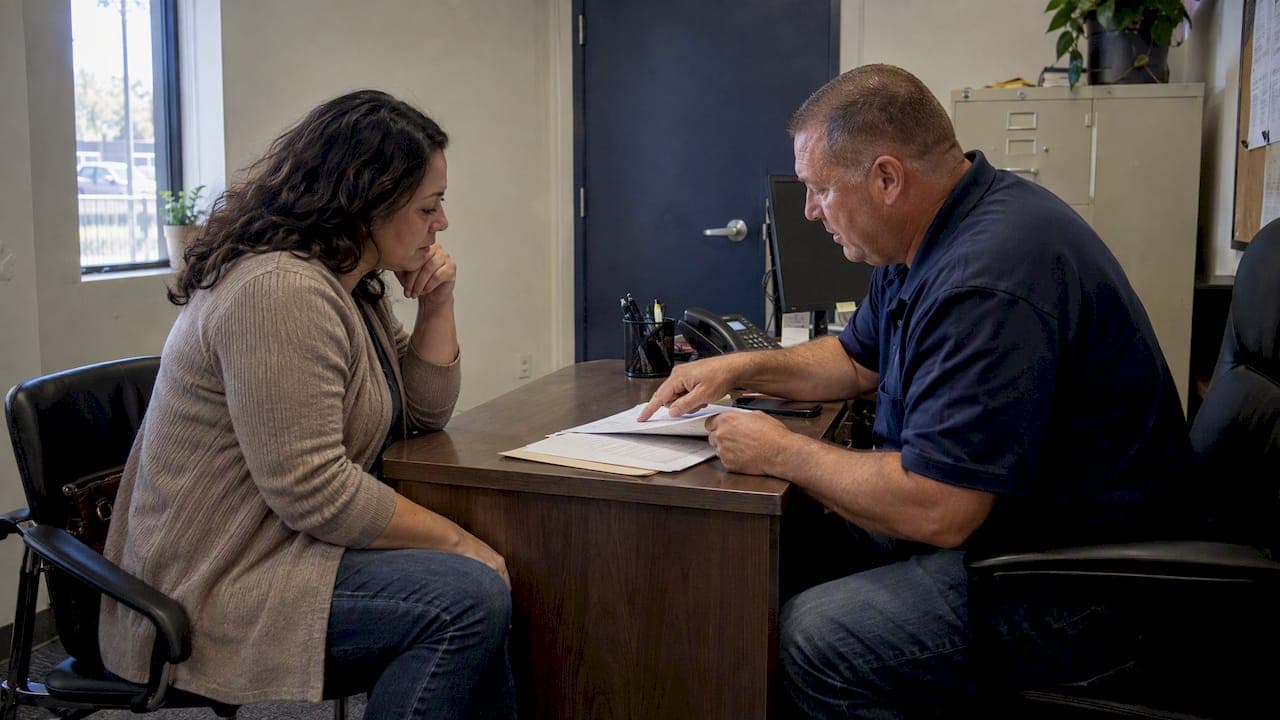
Ask about six things before you sign anything: the total bail and the exact premium, whether collateral is required, what you owe if the defendant misses court, how check-ins work, what the payment plan costs, and whether you can take the paperwork home. Get every answer in writing. The questions below are written for California, where the Department of Insurance regulates bail agents, and they work whether you are calling at 2 a.m. or reading this in a jail lobby.
TL;DR
- Ask for two numbers: the full bail amount and the premium you pay today. The premium is the fee. The full bail is what a cosigner can owe if things go wrong.
- Premium and collateral are different. The premium is not refunded. Collateral should come back once the bond is exonerated, and you should get a receipt for each.
- A cosigner's liability is not capped at what they paid. A missed court date can put the full bond amount at risk.
- You can ask for the contract to read before signing. An agent who rushes you is a red flag.
Table of Contents
- Why the questions matter more than the price
- Before you call: what to have ready
- Questions about license and who you are talking to
- Questions about cost
- Questions about collateral
- Questions for the cosigner
- Questions about release conditions and check-ins
- Questions about the contract itself
- Our perspective
- If you are ready to start
- A one-page checklist to keep by the phone
- FAQ
- Sources
Why the questions matter more than the price
When someone you love is in custody, the pressure to say yes to the first voice on the phone is enormous. That is exactly when a short list of questions protects you. The California Attorney General has said that co-signers are often vulnerable in high-pressure, emotional situations and that they have a legal right to clear notices about their financial obligations before signing a financing agreement.
The California Department of Insurance has regulated the bail bond business since the Bail Bond Regulatory Act of 1937. It also describes a good agent as someone who explains the whole release process, including what counts as a violation of the bond and when and how collateral is returned. That is a fair standard to hold anyone to, including us.
Before you call: what to have ready
Agents can start faster when you can give them the basics. Have the defendant's full name, date of birth, booking number if you have it, and the city and county of the jail. If you do not have a booking number, an inmate search on the county sheriff's site, or our free instant inmate search, can usually find it. Our guide to the documents that speed up release lists what else to gather.
If the person has not yet been given a bail amount, ask the jail or the agent whether the amount comes from the county bail schedule or from a judge. Some people are also released on their own signature with no bond. Our explainer on own recognizance release covers when that happens.
Questions about license and who you are talking to
1. Are you a licensed California bail agent, and can I see the license number? Ask for the name and license number of the person you are dealing with, then check it with the Department of Insurance before you pay. Real agents expect this question.
2. Will I speak with a licensed agent now, or an answering service? At night this matters. A licensed agent can quote you, explain the contract and start paperwork. Someone taking messages cannot.
3. Do you have an office, and do you work with this jail and court? Agents who regularly post bonds in a county know the jail's booking and release routines. That experience can shorten the wait. Ask which county the agent usually serves.
4. Do you offer service in Spanish? If the cosigner or defendant is more comfortable in Spanish, ask for a bilingual agent for the whole conversation, including the contract. Signing something you cannot fully read is the biggest risk of all.
Questions about cost
What is the total bail, and what is the premium today?
You should hear both numbers, clearly. The premium is a percentage of the bail. The traditional California figure is 10%, so a $75,000 bail would mean a $7,500 premium. That is simple arithmetic, and the number to compare against whatever the agent quotes.
Is the premium negotiable?
More than most families realize. A California Law Revision Commission staff memo on bail and pretrial release describes the premium as a non-refundable payment and discusses recent developments around how rates are disclosed. Do not assume 10% is the only number. Ask directly whether a lower rate is available and what it depends on. We cover this in more depth in how California law lets bondsmen charge a 10% premium.
Some bonds are written at lower rates. We offer 1% bail bonds and 2% bail bonds, so ask which fits your situation and what qualifies you.
Are there any other fees?
Ask whether there are charges for paperwork, travel, financing interest or late payments. Every dollar should appear in the contract. If the answer is vague, ask for the contract to be emailed to you.
Can I pay in installments?
Many families cannot pay the whole premium at once. Ask for the down payment, the amount of each installment, the schedule, the total you will have paid at the end, and what happens if you miss one. If the payment plan is a separate financing agreement, the Attorney General's point about plain-language notices applies: you are entitled to understand it before signing. We take cash, cards, Zelle and financing, and we explain the plan before you commit.
What is the premium on a cheaper alternative?
Ask whether a cash bail posted directly with the court would make more sense. If you can pay the full bail, the court generally returns it at the end of the case, though fees and fines may be deducted. For most families the full bail is out of reach, which is why bonds exist. An honest agent will say so when cash is the better option. Our page on affordable bail bonds compares the choices.
Questions about collateral
Do you require collateral, and how much?
Some bonds need none, and some need a car title, a property lien or a cash deposit. Our no-collateral bail bonds are available in many cases, though not all. The answer depends on the bail amount, the charge, and the cosigner's income and stability.
One caution from the New York State Department of Financial Services applies as a general consumer principle: collateral should be reasonable and fully documented, and a request for an excessive amount, or a refusal to give a written receipt, is a reason to reconsider the agency. That is New York guidance, not California law, but the logic carries over. In California, you can take concerns to the Department of Insurance.
How and when do I get collateral back?
Collateral is security, not a fee. It should be returned when the case ends and the bond is exonerated. Ask: what event triggers the return, how long it takes after that, and what the agency needs from you. Make sure the contract states it.
Will I get an itemized receipt?
Ask for one at the time of payment, not later. It should separate the non-refundable premium from any collateral held. The Department of Insurance's consumer page points to receipts as your proof of what was paid and what you are owed.
Questions for the cosigner
A cosigner, also called an indemnitor, is the person who promises to pay if the defendant does not meet the bond's terms. This is the part families underestimate, so slow down here. The 4 contract protections cosigners should demand are worth reading first.
What exactly am I liable for?
A bail bond is a surety contract that promises the court the defendant will appear. According to the San Mateo County Superior Court's forfeiture procedures, if the defendant fails to appear, the bond is forfeited and the surety company and co-signer can be liable for the full bail amount. That means a $75,000 bond can become a $75,000 problem, far more than the $7,500 you paid up front.
What happens if the defendant misses court?
The same court document says the agent generally has 185 days from the notice of forfeiture to locate the defendant or seek relief before the full amount must be paid. Ask the agent what they do in that window, what they expect from you, and whether you will be contacted first. Our article on bail forfeiture in California walks through the stages.
A missed date can sometimes be fixed quickly if the defendant acts the same day, so tell the agent right away. Do not wait.
Can I come off the bond?
Ask what the process is to be released as cosigner if circumstances change, such as the defendant moving or the relationship breaking down. Do not assume it is possible without the agent's and court's approval.
Will you contact me about every court date?
The cosigner should know the schedule. Ask how reminders are sent, and how you can reach the agent when the defendant is not answering.
Questions about release conditions and check-ins
How long will release take?
No honest agent can promise an exact time. Booking, processing and the jail's own workload set the pace. Agents can often tell you what to expect at a given jail. Ask for the typical range, not a guarantee.
Why do I have to check in?
Because check-ins are a condition of release. In federal court, pretrial services officers supervise compliance with conditions such as employment or treatment, and that supervision can include phone calls, video check-ins, in-person meetings, electronic monitoring or testing. State practice differs, and in California some agents ask for periodic contact too. Ask the agent which check-ins are required by the court, which are the agency's own, how often, and what happens if one is missed.
The conditions themselves come from the judge. Our guide to bail conditions in California explains common ones like travel limits, no-contact orders and treatment requirements. A bondsman is not your lawyer, so for questions about the charge or the conditions, ask the defendant's attorney or the public defender.

What if the charge is a DUI, drug charge or domestic violence?
Tell the agent the charge and ask whether it affects timing, amount or conditions. Domestic violence arrests, for example, often carry protective-order conditions. For a DUI, see our page on DUI bail bonds in California. Ask the same cost and collateral questions regardless of the charge.
What is a 1275 hold?
If the person is on a 1275 hold, the jail may delay release for a review of the person's circumstances. Ask whether the agent has handled that situation. Our 1275 hold bail bonds page explains it.
Questions about the contract itself
- May I take the paperwork home or read it fully before signing? The New York City consumer bill of rights explicitly describes pressuring a signature as improper. It is NYC guidance, but the sentiment is a sound benchmark anywhere. If you are signing remotely, ask for the document in advance.
- Is every promise I heard on the phone in the contract? If an agent says no collateral, a payment amount or a refund condition, it should be on paper.
- Will I get a copy now? You should walk away with a copy of the signed agreement.
- Can I do this online? Many parts of the process can be started from a phone. See how to pay bail online and what remains in person. Read the contract terms carefully either way. Our piece on bail bond contract terms lists three more questions.
Our perspective
Most families who call us at night are not shopping. They are scared, and they will say yes to almost anything. That is why we want you to ask hard questions, and why we would rather you ask them of us as well as of anyone else.

We think a bail agent should do five things: answer the phone as a licensed agent at any hour, state the premium and the full bail plainly, say what collateral is needed and write it down, speak to you in English or Spanish, and give you time to read before you sign. Where we can, we write bonds without collateral, because families in crisis often do not have a title or deed to put up. Where we cannot, we say so at the start.
The most important question, in our experience, is the one families do not think to ask: "What happens to me if this goes wrong?" Cosigners should hear the answer before they sign. If the answer scares you, that is information, not a failure. It may mean a smaller bond, a different cosigner or a different path.
— Jake
If you are ready to start
If you want to put these questions to us, our licensed agents answer around the clock. You can look up the person in custody with our free inmate search, get an upfront cost, and start from your phone through online bail bonds, or reach us any hour through our 24-hour bail bonds line. We have a local office to serve Orange County and San Bernardino, and we offer bilingual support.
A one-page checklist to keep by the phone
| Ask | You want to hear |
|---|---|
| Are you licensed? | A name and license number you can verify |
| What is the total bail and today's premium? | Two clear numbers |
| Is the rate negotiable? | An explanation, not a flat refusal |
| Is collateral required? | Yes or no, with amount and type |
| How do I get collateral back? | A specific trigger and process in writing |
| What if they miss court? | The forfeiture timeline and who contacts whom |
| What other fees or interest? | A complete list in the contract |
| Can I read the contract first? | Yes, and a copy afterward |
| Do I get a receipt? | Itemized, premium separate from collateral |
FAQ
Is the bail bondsman's fee refundable?
No. The premium is a non-refundable fee for posting the bond, even if charges are dropped. Collateral is different: it should be returned once the bond is exonerated. Ask for an itemized receipt that separates the two.
How much does a $75,000 bail bond cost?
At the traditional 10% premium, it is $7,500. Lower rates may be possible, so ask whether one applies. Add any financing charges or fees listed in the contract, and confirm the total before you sign.
Why do I have to check in with a bail bondsman?
Check-ins help confirm the defendant is following release conditions and will make court dates. Some are set by the court or pretrial services, and some by the agency. Ask which apply, how often, and what happens if one is missed.
What if the defendant does not show up to court?
The court can forfeit the bond, and the cosigner can become liable for the full bail amount. Courts generally allow 185 days from the notice of forfeiture for the agent to locate the defendant or seek relief. Contact the agent immediately and speak with the defendant's attorney.
Sources
- California Department of Insurance: Bail Bonds
- California Attorney General: laws protect co-signers of bail bonds
- California Law Revision Commission, Staff Memorandum 2026-09
- San Mateo County Superior Court: bail bond forfeiture procedures
- U.S. Courts: Pretrial Services
- New York State Department of Financial Services: Bail Information for Consumers
- NYC Bail Bond Consumer Bill of Rights