
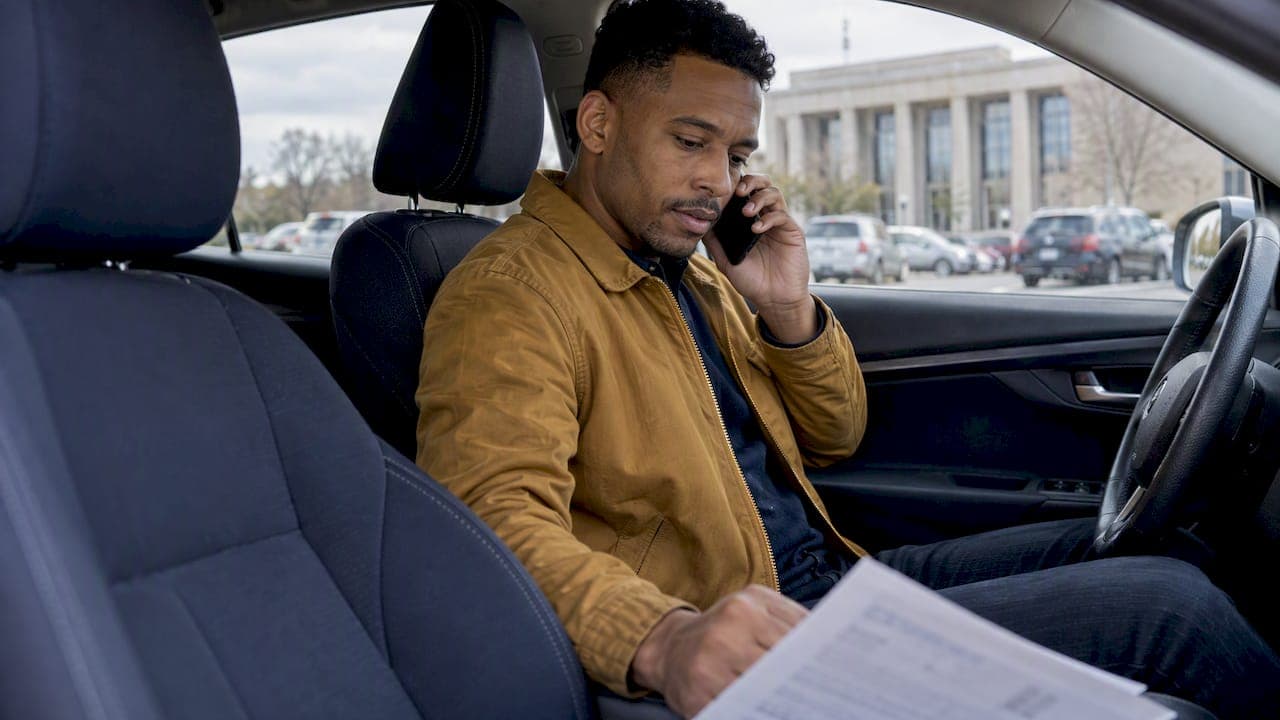
If you do not pay a court fine by its deadline, the court can issue a warrant, add penalties and, in some cases, send you to jail. Bail enters the picture when that warrant leads to an arrest: the court may set an amount you must post to be released while the matter is resolved. The fastest way to avoid that is to contact the court before the due date. If someone you love is already in custody over unpaid fines, a licensed bail agent can often arrange release the same day.
This guide explains how nonpayment turns into an arrest, how it differs from missing court, what your options are before and after an arrest, and how bail bonds work when the amount is out of reach. The legal examples focus on California, where we work, with notes on other states where the research supports them.
TL;DR
- Unpaid court fines can lead to an arrest warrant, extra civil penalties, collections and, in some cases, jail. Contacting the court before the due date is the best protection.
- In California, willfully failing to pay a Vehicle Code fine or agreed bail installment is a misdemeanor, even if you pay later.
- If you are arrested, a bail bond lets you pay a premium (typically 10% of the bail amount) instead of the full sum.
- Fine-only cases are treated differently in some states: a person truly unable to pay generally cannot be held on a money bond.
- Call a licensed agent right away if a family member is in custody. We answer 24/7.
Table of Contents
- How unpaid fines turn into a warrant
- What California law says about nonpayment
- Failure to pay versus failure to appear
- What to do before you are arrested
- If you or a loved one is arrested on a nonpayment warrant
- How a bail bond works when you cannot pay the full amount
- Perspective: what we see at the jail door
- Get a loved one out quickly
- Can unpaid fines or bail debts ever go away?
- Mistakes that make things worse
- FAQ
- Sources
How unpaid fines turn into a warrant
A court fine comes with a deadline. When it passes without payment or contact, the court does not usually jump straight to handcuffs, but each step makes the next one more likely.
The Superior Court of California, County of Orange lists the possible results of not complying with a court order: revocation of probation, a warrant, added charges, jail or prison, increased fines, civil penalties, and collection actions such as wage or bank garnishments and levies. The same page tells people who cannot pay to contact their attorney or the court before the due date.
Plumas County's Superior Court explains that a civil assessment of up to $100 can be imposed under Penal Code 1214.1(a) when a defendant, after notice and without good cause, fails to appear, fails to pay a court-ordered fine, or misses an agreed bail installment. The same page says failure to appear or pay may result in an arrest warrant.
In plain terms, the usual path looks like this:
- Notice. The court tells you how much you owe and by when.
- Missed deadline. Late penalties or a civil assessment may be added.
- Warrant. If the court believes nonpayment was willful, or you also skipped a hearing, it can issue a warrant.
- Arrest. A traffic stop, a background check or a routine encounter with police can end in custody on that warrant.
- Bail or release. The court may set an amount to be posted, or release you after a hearing.
Many people do not know a warrant exists until step 4. If you suspect one, our guide on how to check and clear a warrant walks through the process.
What California law says about nonpayment
California treats some nonpayment as a crime in its own right. Under Vehicle Code section 40508, willfully failing, without lawful excuse, to pay agreed-upon bail installments or a lawfully imposed fine for a Vehicle Code violation within the time the court allows is a misdemeanor. The statute says this holds even if the bail or fine is paid later.
Two words matter in that sentence: willfully and without lawful excuse. A person who can pay and ignores the order is in a very different position from a person who lost a job and told the court. That is why the first step is always communication, covered below.
The same section also makes it a misdemeanor to willfully violate a written promise to appear. That is the second trap, and it is distinct from nonpayment.
Failure to pay versus failure to appear
People mix these up, and the difference changes what you have to do.
| Failure to pay | Failure to appear | |
|---|---|---|
| What happened | A fine or installment was not paid by the deadline | You missed a scheduled court date |
| Typical court response | Civil assessment, collections, possible warrant | Warrant, and possible bail forfeiture if bail was posted |
| Bail bond effect | Usually relevant after arrest on the warrant | The bond can be forfeited, with the agent and the defendant facing consequences |
| First move | Contact the court or its collections unit | Contact the court or your attorney immediately |
A published court guide describes the bail side of this: when a defendant released before trial fails to appear or violates release conditions, the court can revoke release, forfeit bail, or both. If a bond is already posted and a court date was missed, time matters. Our article on fixing forfeited bail in California explains the 180-day window, and the bail forfeiture overview covers what defendants and sureties must know.
What to do before you are arrested
The best outcome is the one where bail never comes up. If you cannot pay a fine on time, act now.
Call the court before the deadline
The Orange County court says people can contact the Collections Unit before the due date to set up an installment payment plan. Other counties run their own collections programs, so look up the court that issued the fine.
Ask for a lower fine on a traffic ticket
For traffic tickets, the California Courts Self-Help Center explains how to ask the court for help when you cannot afford the fine. You will need to share information about your income and expenses, so gather pay stubs, benefit letters and a list of monthly bills first.
Keep proof
Write down the date and time you called, the name of the clerk and what you were told. Keep receipts for every partial payment. If a warrant is ever issued by mistake or despite an agreement, that record is what you will show.
Do not ignore mail
Notices are how a court builds its record that you had notice. A civil assessment applies when nonpayment happens after notice and without good cause, so a missed letter is no defense you should count on. Update your address with the court if you move.
This is general information, not legal advice. If you have an open case, a probation term or several unpaid matters, a criminal defense attorney or the public defender's office can tell you what applies to your file.
If you or a loved one is arrested on a nonpayment warrant
Arrest on a fine-related warrant is stressful because it can feel small and still lock someone up. A few facts help families think clearly.
Bail may be tied to the amount owed. In Massachusetts, for example, unpaid court fees or fines may lead to a default warrant, with the amount owed required as bail for release. Other states set the amount differently, so ask the jail or the court clerk what the warrant says.
Some states limit jail for fine-only cases. A Texas legal aid toolkit explains that a person unable to pay cannot be forced to pay a money bond as a condition of release in a fine-only case, and that more jail time should not follow unless a judge finds the nonpayment willful. The same guide says someone jailed for unpaid fines should receive at least $150 of credit for each 24 hours in custody. Those are Texas rules, not California ones, so do not assume they apply to a California warrant.

Waiting in jail costs more than money. The New York courts state plainly that if you cannot post bail, you stay in jail until the next court date. A Human Rights Watch report using 2008 New York City data found that nonfelony defendants who could not post bail of $1,000 or less spent an average of 15.7 days in pretrial detention, and 10 percent were still detained after 50 days. People lose shifts, jobs, housing and custody arrangements in that time. This is why many families look for a bond.
Step by step for families
- Find the person. Use the county jail's inmate locator or call us; we offer a free instant inmate search.
- Get the booking number and the bail amount. Ask whether the amount is tied to a warrant for nonpayment, failure to appear or a new charge.
- Ask about court options. Some courts allow a person to be released after a hearing, or to resolve the fine with an installment plan. A defense attorney can ask the court to revisit the amount.
- If the bail is out of reach, call a licensed bail agent. A bond lets you pay a fraction instead of the full figure.
- Plan for the court date. Missing it creates a bigger problem than the one you started with.
Our family guide to helping someone in jail covers the first hours in more detail.
How a bail bond works when you cannot pay the full amount

The court sets a bail amount. You can pay it in full to the court, or you can use a licensed bail agent. The San Mateo Superior Court notes that you or your family or friends may purchase a bond from a licensed agent instead of posting cash or property, and that agencies may require a premium, an indemnitor and collateral.
Here is how that looks with our fees:
| Bail amount | Typical 10% premium |
|---|---|
| $2,500 | $250 |
| $5,000 | $500 |
| $10,000 | $1,000 |
| $25,000 | $2,500 |
The premium is state-mandated, typically 10% of the total bail amount, and it is non-refundable, even if the charges are dropped. That is the price of the service, much like an insurance premium. The indemnitor is the person (often a relative or friend) who signs and takes responsibility for making sure the defendant appears. We also publish pages on 1% bail bonds and 2% bail bonds for eligible situations, so ask which applies to your case.
Collateral
Collateral is the part families fear most. In many cases we write bonds without it, which you can read about on our no collateral bail bonds page. Whether collateral is needed depends on the case and the people involved, and an agent will tell you upfront.
Is a bond right for a fine-related arrest?
Sometimes, and sometimes not. If the bail is small, equal to the fine, or the court will release the person after a short hearing, paying a non-refundable premium may be more than the situation requires. If bail is set high, the person has a job to protect, or the next court date is far away, a bond is often the practical choice. We will tell you honestly which one it looks like.
For traffic-related warrants specifically, see our traffic and Vehicle Code bail bonds page.
Perspective: what we see at the jail door
Most calls we get about fines are not from people who ignored a court. They come from people who hit a bad month, fell behind on an installment plan, and never learned that a quick call to the clerk could have kept a warrant from being issued. By the time the family calls us, it is 2 a.m. and someone is in a cell over an amount that was small compared with what a night in custody costs.
We built our service around that moment. Licensed agents answer directly at any hour, we tell you the cost before you sign, we write many bonds without collateral, and we offer bilingual English and Spanish support on every shift. We have real local offices and work directly with jails and courts, which helps release go as quickly as the jail allows.
Our advice, though, is the same every time: do not wait for a warrant to start the conversation. Call the court first. If it is too late for that, call us, and we will help you work out whether a bond, a hearing or a payment arrangement is the quickest way home.
— Jake
Get a loved one out quickly
If someone is in custody over unpaid fines, a missed installment or a related warrant, we can start the process by phone or from your phone online. Our 24-hour bail bonds service means a licensed agent answers at any hour, and we accept cash, credit and debit cards, Zelle and financing, with payment plans available.
You can start on our online bail bonds page, or reach us through midnightbail.com. If the arrest happened in Orange County, see our Orange County bail bonds page.
Can unpaid fines or bail debts ever go away?
People often ask whether fines disappear after seven years. The research we reviewed does not support a general rule that they do, and a warrant or collection debt can follow you. What does exist are specific, state-level rules. In Michigan, for instance, a court must set aside a forfeiture and discharge a bail or surety bond within one year of the forfeiture judgment if the defendant is apprehended, the ends of justice have not been thwarted, and the county has been repaid its apprehension costs.
That is Michigan's rule, not California's. For California, the safest assumption is that an unresolved fine or warrant stays active until the court says otherwise. Ask the court clerk or an attorney for the status of your specific case instead of waiting it out.
Mistakes that make things worse
- Waiting for the notice to go away. It does not. Penalties are added after notice and nonpayment.
- Paying part and saying nothing. A partial payment helps only if the court has agreed to an installment plan in writing.
- Skipping court because you cannot pay. Failure to appear is its own problem, and it can trigger warrants and forfeiture.
- Signing for a bond without reading it. Know who the indemnitor is, what the premium is and what happens if the defendant misses court.
- Assuming another state's rules apply. Texas credit for jail time or Massachusetts default warrant rules do not carry over to California.
If the arrest also involves a new charge, or the person was already out on bond, read what to do when arrested while on bail.
FAQ
Can you go to jail for not paying a fine?
Yes, in some cases. Courts can issue a warrant, and nonpayment can lead to jail or prison along with added penalties and collections. In California, willfully not paying a Vehicle Code fine or agreed bail installment is a misdemeanor. Contacting the court before the deadline is the best protection.
What happens if you can't afford to pay a court fine?
Contact the court or its collections unit before the due date and ask about an installment plan. For traffic tickets, California courts let you request help by sharing your income and expenses. Ignoring the fine is what typically leads to a warrant and added penalties.
How long do you stay in jail if you can't pay your bond?
In general, until the next court date, unless the court changes the amount or releases you. An attorney can ask the court to reconsider the original bond. A bail bond can shorten the stay by letting you pay a premium rather than the full amount.
Can a bail bond cover a fine-related warrant?
Often yes, if the court sets a bail amount on the warrant. Ask the jail or clerk what the warrant is for and how much is required, then call an agent to see whether a bond makes sense for that amount.
Do you need collateral for a bail bond?
Not always. Agencies may require a premium, an indemnitor and collateral, but in many cases we write bonds without collateral. An agent can tell you what applies to your situation before you sign.
Sources
- Paying Fines / Bail Refunds, Superior Court of California, County of Orange
- Criminal Division, Superior Court of California, County of Plumas
- California Vehicle Code section 40508
- If you can't afford to pay your traffic ticket, California Courts Self-Help
- Bail conditions, Mass.gov
- Can I Be Jailed for My Unpaid Ticket, Ticket Help Texas
- Bail, New York Courts
- The Price of Freedom, Human Rights Watch
- Bail Bond Forfeiture Procedures, San Mateo County Superior Court
- Bond Forfeiture, Michigan Courts
- How Bail Works: Getting Out of Jail, AllLaw